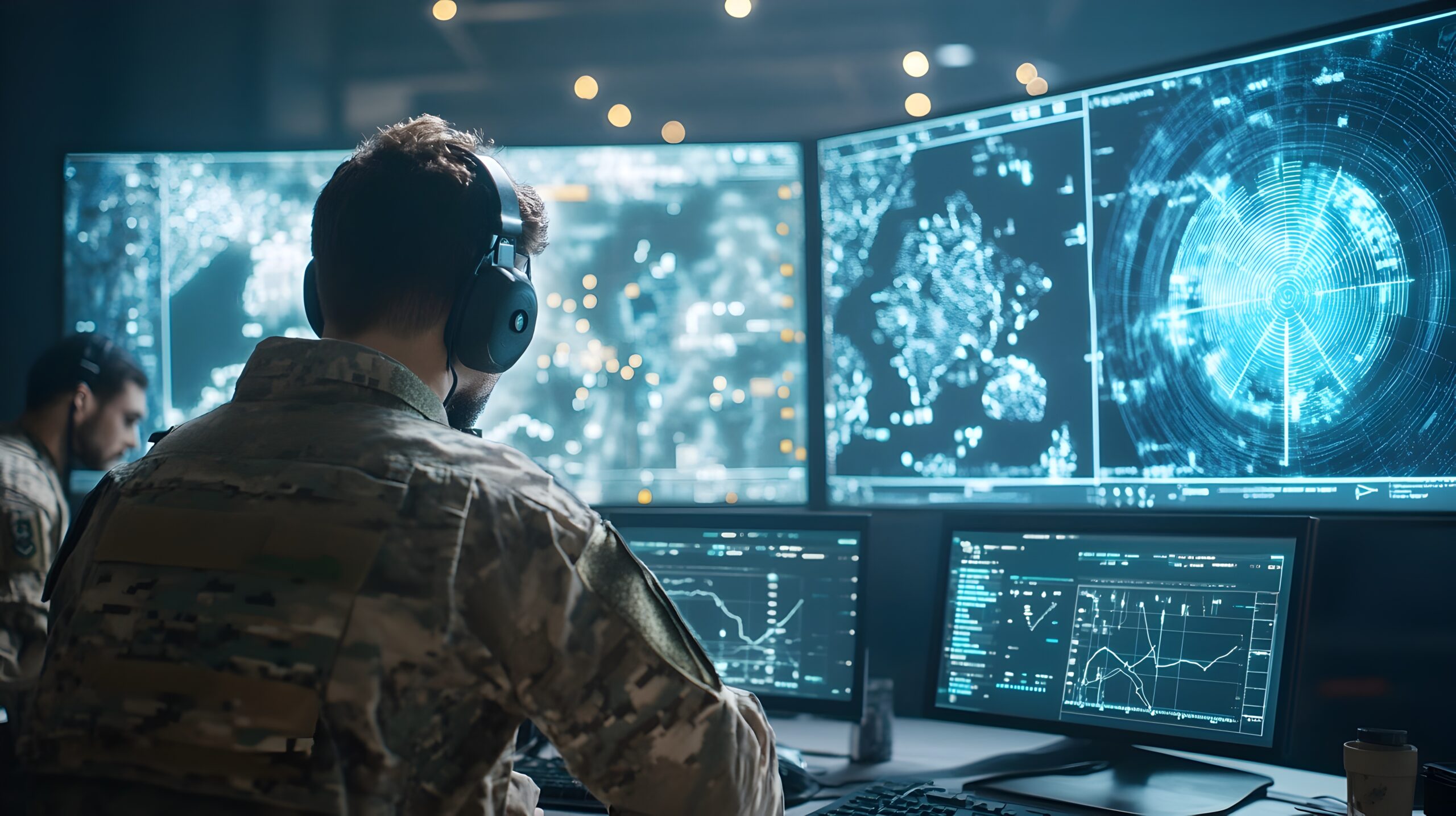
Artificial intelligence (AI) has rapidly evolved from a novelty to an essential tool in military operations, reshaping how armed forces around the world strategize and execute missions. In 2025, significant advancements in AI applications were highlighted by various military developments, particularly in the United States. New initiatives and technologies are enhancing capabilities, demonstrating that AI is now a cornerstone of modern warfare.
Major Investments and Infrastructure Updates
In January, newly inaugurated President Trump hosted OpenAI and other partners in the Oval Office to unveil a substantial investment plan called Stargate. This initiative aims to allocate $500 billion towards constructing new data centers, with the U.S. military identified as a key potential customer. By August, the Pentagon’s independent Chief Digital & AI Office was integrated into the traditional Research & Engineering undersecretariat, indicating a shift towards a more centralized approach to AI integration.
In December, Secretary Pete Hegseth and R&E Under Secretary Emil Michael introduced a new website, GenAI.mil. This platform will provide commercial large language model tools to all three million military and civilian personnel within the Department of Defense. This move signifies a broader institutional acceptance of AI technologies in military functions.
AI in Action: Key Developments
The U.S. military’s exploration of AI extends beyond communication technologies. Notable applications include airspace management in drone-filled battlefields and automated target recognition for conflict scenarios. These tools leverage various machine learning techniques, integrating generative AI with traditional software to enhance effectiveness and mitigate the risks associated with AI-generated errors.
Among the standout developments in 2025, five significant stories illustrate the breadth of AI’s impact on military operations:
1. **Ukraine Enhances Drone Efficiency**: In March, former Ukrainian defense official Kateryna Bondar reported on Ukraine’s innovative use of AI to improve its attack drones. By employing open-source AI models, Ukrainian forces were able to fine-tune targeting algorithms, significantly increasing the effectiveness of their operations against enemy targets. This model, combining robust back-end data processing with agile front-line algorithms, is one that the U.S. military is also beginning to adopt.
2. **NGA Embraces AI in Intelligence**: The National Geospatial-Imagery Agency (NGA) has become a leader in AI adoption, utilizing the technology to manage vast amounts of geospatial data. As part of its efforts, the NGA took over the geospatial component of the Pentagon’s Project Maven. By June, the agency’s director, Vice Adm. Frank Whitworth, announced the use of AI-generated reports, emphasizing that “no human hands actually participate” in the creation of certain standardized intelligence products.
3. **Transition of Joint Fires Network**: At the annual Air Force Association conference in September, Maj. Gen. Luke Cropsey revealed that the Joint Fires Network (JFN) would transition from research and development to a formal acquisition program. This move underscores the significance of JFN, which employs AI to assist in targeting enemy assets on a large scale, potentially streamlining operations across the Pacific theater in future conflicts.
4. **AI-Generated Battle Plans Raise Concerns**: Despite the advantages, the use of AI in military planning has revealed potential pitfalls. During an exercise dubbed DASH-2, AI-generated plans were produced at a remarkable speed—ten courses of action in approximately eight seconds, compared to three by humans in 16 minutes. However, Maj. Gen. Robert Claude noted that some AI recommendations were impractical, lacking the nuanced understanding necessary for successful mission execution.
5. **AI in Cyber Warfare**: The landscape of cyber warfare has also shifted, with reports of a Beijing-backed hacker group utilizing Claude AI for cyber attacks. This marked a worrying trend, as generative AI was employed to orchestrate attacks on approximately 30 government agencies and private companies. This incident highlights the dual-use nature of AI, where technology can serve both defensive and offensive objectives in a conflict.
The developments throughout 2025 indicate a profound integration of AI into military frameworks, raising questions about the implications for future conflicts and the ethical considerations surrounding autonomous technologies. As nations continue to innovate, the balance of power in warfare may increasingly hinge on the effectiveness and reliability of AI systems.