Photographs have uncovered the haunting reality of **Nicosia International Airport**, which has remained abandoned for nearly **50 years**. Once the primary gateway to **Cyprus**, this airport now stands as a poignant reminder of the island’s division due to a devastating conflict.
Originally constructed in the **1930s** as an RAF base, the airport transitioned into a civilian facility, accommodating travelers for decades. However, following the **Turkish invasion in 1974**, it quickly transformed into a battleground, suffering significant damage amid intense fighting. A ceasefire was negotiated, but the airport was designated a **United Nations Protected Area**, forming a part of the buffer zone that still exists today.
Commercial flights continued briefly after the ceasefire. In **1977**, **three Cyprus Airways** aircraft stranded on the runway were finally evacuated with the assistance of **British Airways** engineers. Despite these efforts, the airport never recovered fully and has remained largely untouched, effectively frozen in a moment of war.
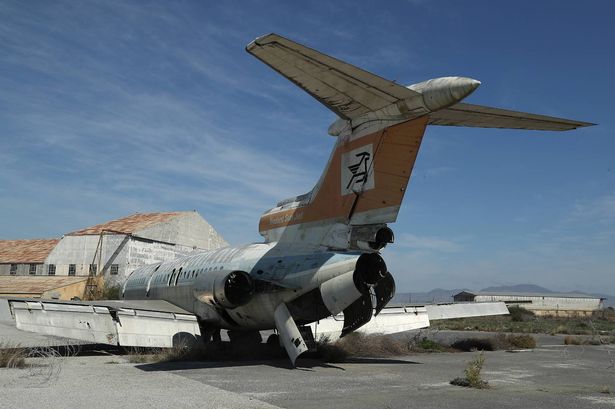
The terminal today reveals a landscape of decay, with dusty seats remaining where passengers once waited. Fading posters advertise sun-soaked vacations to distant destinations, while pigeons have taken up residence in the ceiling beams, filling the once-bustling space with only the sounds of nature. On the airfield, the remnants of a **Hawker Siddeley Trident**, stripped of its components, serve as a stark reminder of the airport’s past.
Though regular passenger flights ceased decades ago, Nicosia International Airport is not entirely abandoned. It now functions as the headquarters for the **UN Peacekeeping Force (UNFICYP)**, which maintains limited helicopter operations from the site. However, public access remains restricted due to safety concerns arising from years of neglect, meaning only a select few have the opportunity to witness the dilapidated terminals firsthand.
Over the years, discussions about reviving the airport have sparked glimmers of hope. In the **1990s**, **UN-led discussions** aimed to explore the possibility of reopening the facility. Yet, political disagreements have continually obstructed progress, preventing any actionable agreements from materializing. **Aleem Siddique**, spokesperson for the UN peacekeeping force in Cyprus, remarked on the situation, stating:
“It is actually frozen in time. Although there were several attempts over the years by the sides to reach an agreement, to see the airport being reopened, restored, and rehabilitated, the sides were unable to reach an agreement, so gradually the condition of the airport had deteriorated. No planes have left or arrived since **1974**.”
For those interested in experiencing the airport’s haunting atmosphere, the **Cyprus Institute** has developed a **digital reconstruction** project. The **“NIC Platform”** allows users to explore the airport virtually, navigating through offices, duty-free shops, and boarding gates, all captured in unsettling detail.
One local resident, who received special authorization to enter the airport, described the emotional impact of his visit. He recalled being only **four years old** at the time of the invasion and expressed:
“It’s eerie. It’s emotional. It’s frustrating. It’s sad. Believe me, your mind can make you hear the noise of a buzzing airport, passengers and planes and announcements and all. It’s insane. This is a time freeze that should never have occurred.”
As Nicosia International Airport remains a silent witness to history, its future remains uncertain. The echoes of the past linger, while the potential for revival continues to fade amidst ongoing political complexities.