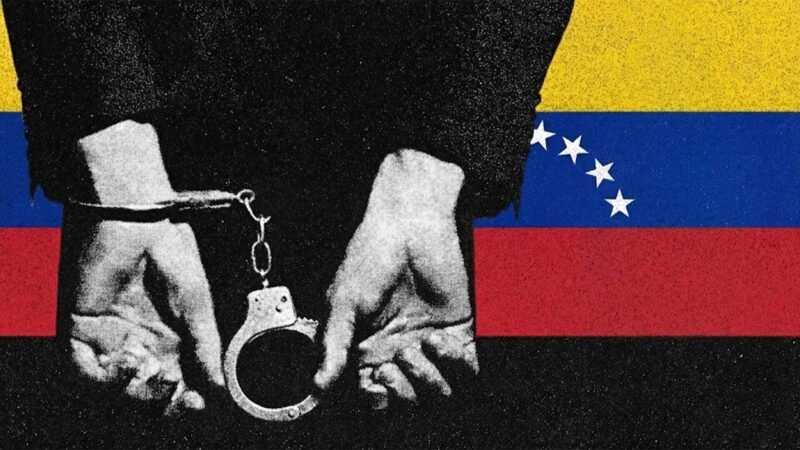
URGENT UPDATE: The Venezuelan regime has just announced the release of a “number of important” political prisoners as a “gesture” to promote peace. This shocking development was confirmed by Jorge Rodríguez, the president of Venezuela’s National Assembly and brother of acting dictator Delcy Rodríguez, earlier today.
While the names of those set to be freed remain undisclosed, reports confirm that prominent human rights lawyer Rocío San Miguel has already been released. Detained at Caracas’ main airport last February, her arrest sparked widespread outrage. San Miguel was accused of plotting to assassinate Nicolás Maduro and other officials, facing severe charges of treason and terrorism. She spent months in the infamous El Helicoide prison without access to legal representation or her family.
This release coincides with the ongoing plight of other political prisoners, including María Oropeza, a young libertarian activist arrested in 2024 for opposing the regime. Oropeza gained notoriety for livestreaming her arrest on social media, during which Venezuela’s military counterintelligence agency released a disturbing video of her confinement.
Additionally, the recent arrests of Pablo and Lubin Montilva have drawn attention. The duo was detained for allegedly firing a gun into the air during a moment of unrest following Maduro’s capture. They face serious charges that could lead to maximum sentences of up to 30 years, yet their current status remains unknown.
The situation in Venezuela is dire, with over 53,000 individuals reportedly victims of political detentions under Maduro’s regime, according to the human rights organization Provea. The regime’s “revolving door” tactic—releasing a few prisoners only to detain new ones—has been a hallmark of its oppressive strategy.
Reports of torture are rampant, exemplified by the tragic case of Fernando Albán, an opposition councilman who died in custody after being subjected to brutal treatment. His death and the conditions surrounding it have raised serious concerns about the safety of those still imprisoned.
Since Maduro’s detention, political repression has intensified. Rodríguez’s first action was to declare a state of emergency, ordering nationwide searches and arrests of anyone linked to the alleged armed attack supported by the United States. Numerous individuals have already been detained, including journalists covering the newly elected National Assembly, highlighting the regime’s crackdown on free expression.
The motivations behind the release of these political prisoners remain unclear, raising questions about whether it’s a strategic move to alleviate pressure from the U.S. or part of a broader shift toward democratic reform. As the situation develops, many are left wondering what comes next for these individuals and the future of political dissent in Venezuela.
Stay tuned for more updates as this story unfolds. The impact of these releases could resonate widely, potentially altering the landscape of political freedom in Venezuela and beyond.