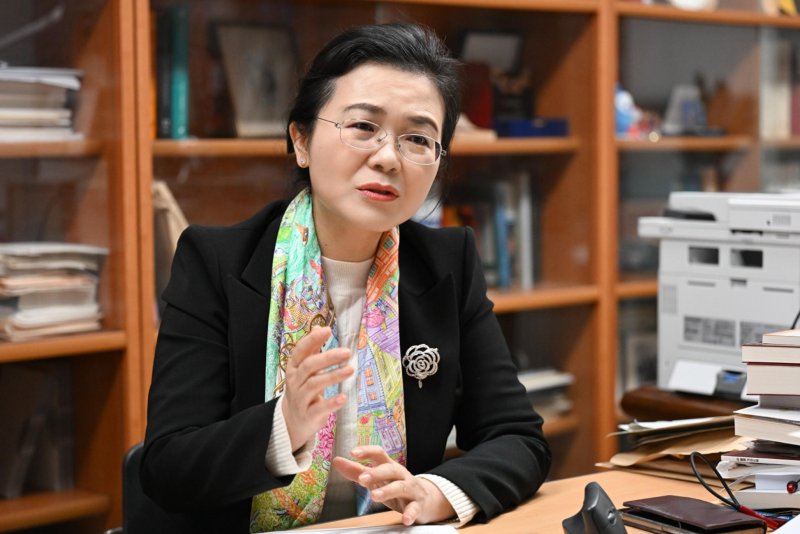
UPDATE: A Korea University law professor has issued an urgent warning regarding a series of proposed judicial reforms backed by South Korea’s ruling party, stating that these changes could significantly undermine judicial independence and the separation of powers. Cha Jin-ah, a constitutional law expert and former researcher at the Constitutional Court, emphasized that “unchecked power leads to dictatorship” in her interview conducted Tuesday, December 17.
These reforms include expanding the number of Supreme Court justices, creating a special appellate court, and introducing a controversial crime of “distorting the law.” Cha expressed concern that the rush to process these multiple bills simultaneously suggests a political agenda aimed at consolidating power.
What’s at stake? If these proposals are enacted, they could shift the balance of power in South Korea’s judicial system. Cha supports some aspects of the reforms, such as a modest increase in the number of justices, but she warns against excessive changes that could lead to blatant political appointments.
“Increasing the number of justices by 12 would double the full bench,” she stated. “Replacing that many people at once becomes a blatant political appointment.”
The proposed judicial changes also include abolishing the court administration office and establishing a judicial administration committee. Cha argues that stripping courts of their administrative authority violates the constitution, which grants judicial power to the courts.
In her view, the ruling party’s plan to introduce a special court for treason and a law against distorting the law raises significant constitutional issues.
“A special court for treason itself is unconstitutional,”
Cha warned.
“Fair trials become meaningless, and the result is a predetermined tribunal.”
The implications of these reforms are profound. If passed, they could lead to the politicization of the judiciary, endangering the rights of citizens and the integrity of legal proceedings. Cha contends that the term “distorting the law” could be weaponized against judges and prosecutors, pressuring them to conform to political demands.
As the ruling party holds a majority in the National Assembly, the risk of these bills becoming law is substantial. Cha asserts that public opinion is the only force that can halt this “legislative rampage.” She urges citizens to remain vigilant, stating,
“Democracy does not operate only on election day. The people must control power.”
The situation is developing rapidly, and its outcome could reshape South Korea’s democratic framework. Citizens and advocates are urged to voice their concerns to prevent potential abuses of power.
Stay tuned for further updates as this critical situation unfolds.