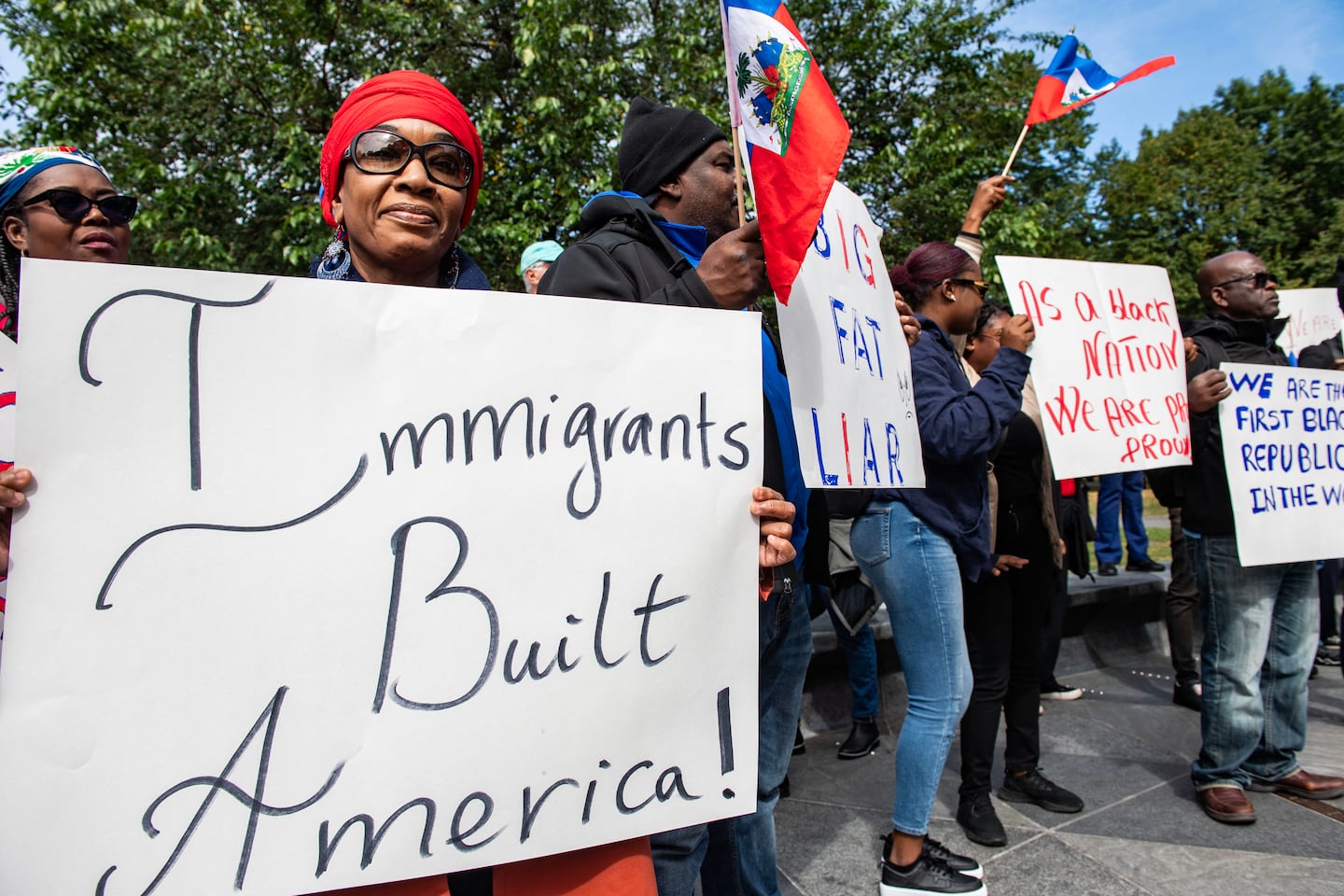
UPDATE: A federal judge has temporarily blocked the Trump administration’s efforts to revoke Temporary Protected Status (TPS) for approximately 45,000 Haitians in Greater Boston, preserving their legal work status amidst ongoing uncertainty. This last-minute ruling comes just before the planned termination on February 3, 2025, when the Department of Homeland Security announced intentions to challenge the decision in the Supreme Court.
The TPS program, established in response to the devastating earthquake in Haiti in 2010, has provided crucial protection from deportation for thousands fleeing violence and instability. Many Haitian immigrants have relied on this status to build their lives in the U.S., particularly in Massachusetts, which boasts the third-largest Haitian community in the nation.
The ruling brings temporary relief, but anxiety persists among the affected families. Employers such as Amego, Inc. in the Boston area initially prepared to terminate Haitian workers as the TPS expiration loomed. CEO John Randall expressed the chaos of the situation, stating, “Everyone is in a holding pattern but they’re still employable and legal today.” After the court’s decision, more than 20 employees were informed they could keep their jobs, a moment met with tears of joy.
However, the looming threat of deportation has left many in fear and confusion. Local immigrant rights advocates warn that the end of TPS could severely impact not just individuals but the local economy as well. “This is just a write-off of an entire section of our workforce,” Randall noted, emphasizing the long-term contributions of Haitian workers.
As tensions rise, the Gilbert Albert Community Center in Dorchester has seen a sharp decline in attendance for its ESOL classes, dropping from 200 to 40 students as fear of deportation grips the community. Director Nicole Albert remarked on the atmosphere of fear where many are reluctant to leave their homes, saying, “People were starting to hide, thinking, ‘I don’t want to get deported and then my kids stay behind.’”
Legal counsel has reassured TPS holders that they remain authorized to work, despite the ongoing turmoil. Leslie Ditrani, an immigration attorney, stated that no re-verification of documents is necessary at this time. Yet, misinformation has led to job losses, with over 100 Haitian TPS holders already terminated from positions at Logan Airport.
The ripple effects of potential job losses extend beyond just individuals. Christopher White, CEO of Road to Responsibility, described the financial strain of hiring temporary staff to fill gaps left by departing Haitian workers. “People were ecstatic that they still had a job, people crying on the phone,” White shared, highlighting the emotional toll on both employees and employers.
The situation is particularly dire for those directly impacted. A Haitian resident from Dorchester, who fled violence after witnessing her partner’s murder, highlighted the desperate circumstances that drive many to seek refuge in the U.S.: “I don’t have anywhere to go.” Many are left contemplating their next steps as uncertainty continues to loom.
As the battle over TPS heads to the Supreme Court, the fate of thousands hangs in the balance. Advocates urge immediate action to protect these individuals who contribute significantly to the fabric of Greater Boston’s workforce. The next few weeks will be critical as the community watches closely for further developments.
This urgent situation underscores the human impact of immigration policy and the ongoing struggles faced by immigrants in the U.S. As advocates and officials work tirelessly to navigate this legal limbo, the resilience of the Haitian community in Greater Boston remains a beacon of hope amid uncertainty.