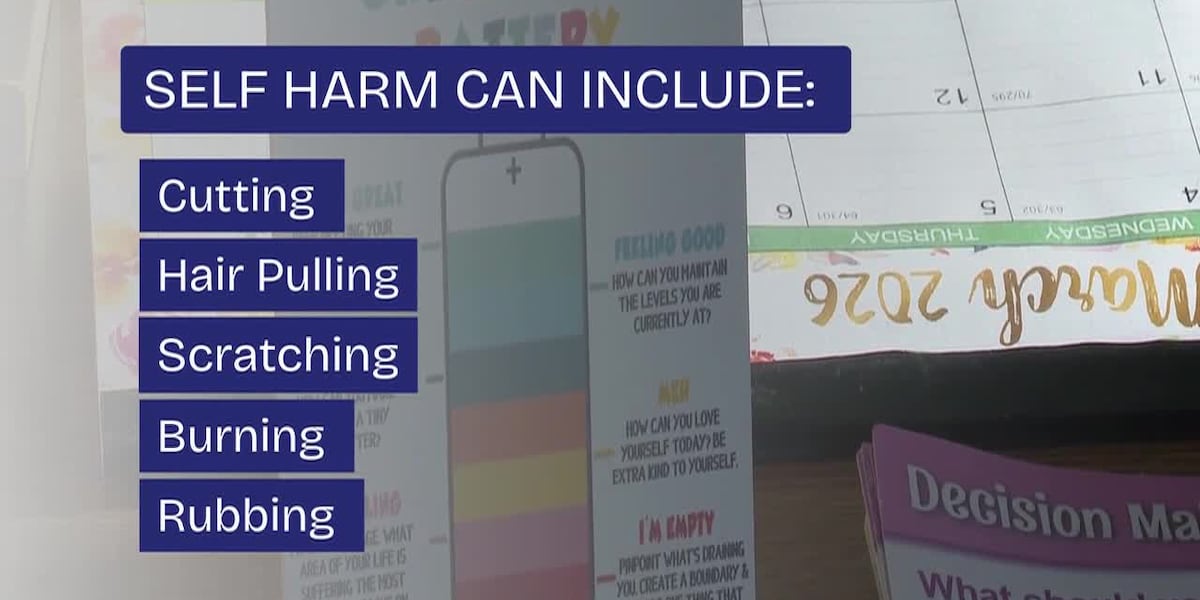
March is designated as Self-Harm Awareness Month, a time to shed light on the complexities surrounding self-injury. Experts emphasize that self-harm, also known as non-suicidal self-injury (NSSI), does not always indicate suicidal intent. In fact, many individuals who engage in self-harm do so as a coping mechanism rather than a sign of wanting to end their lives.
According to school counselor Christina Bixman, self-harm encompasses various behaviors, with cutting being the most recognized form. Other methods include hair pulling, scratching, and any intentional act that inflicts bodily harm. Bixman notes that self-harm often occurs alongside other mental health challenges, such as anxiety, depression, and bipolar disorder.
Understanding the Motivations Behind Self-Harm
Bixman characterizes self-injury as a coping skill, albeit one that is not safe or beneficial. “Well, really, when it comes down to it, self-injury is a coping skill. It’s not a good one, not a safe one, but a coping skill nonetheless,” she explains. Identifying and addressing the root causes of these feelings is crucial for individuals seeking to overcome self-harm.
Dr. Elizabeth Collier, a physician and psychiatrist at Camden Clark Medical Center, emphasizes that treatment for self-harm varies significantly from person to person. She notes the importance of understanding the underlying issues prompting self-injury. “Getting them on board and talking about what’s really the root cause of what’s going on, why they’re engaging with this,” Collier states. She advocates for distraction techniques to redirect harmful impulses.
Collier’s work primarily focuses on inpatient care for individuals aged 18 and older who are at severe risk of self-harm or harming others. Her team provides psychiatric intervention in emergency situations and can refer patients to community-based outpatient services.
The Importance of Seeking Help
Both Bixman and Collier urge those struggling with self-harm to reach out for support. “Really, as soon as you get that out there, things start to get easier because you can share that burden with somebody else,” Bixman advises. This act of sharing can lead to guidance toward appropriate treatment options.
For those in need, resources are available through the 988 suicide hotline and by texting 741741 for immediate support. The road to recovery may be daunting, but seeking help can significantly alleviate the struggles associated with self-harm.