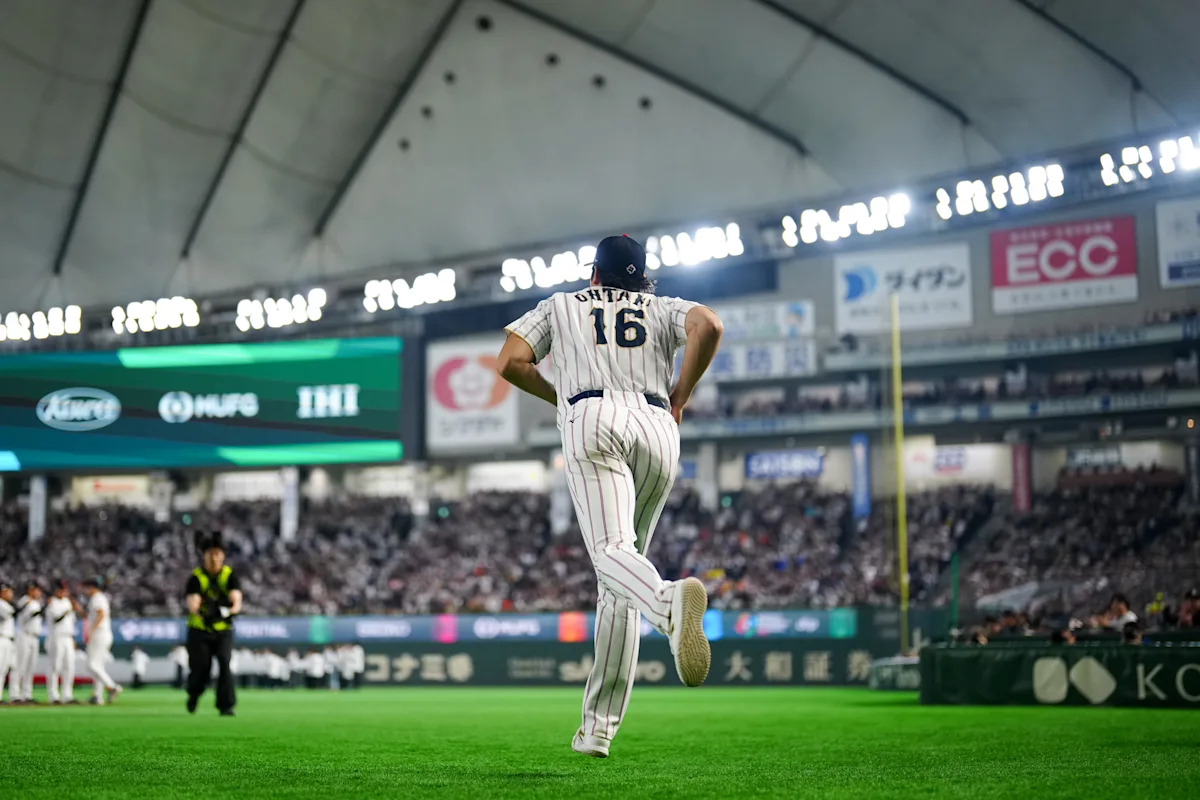
On March 15, 2012, a young Shohei Ohtani took the mound for Team Japan during the opening match of the 2012 18-and-under Baseball World Championship held in Seoul, South Korea. Although his performance did not showcase the talent that would later make him a global superstar, it marked the beginning of an extraordinary career that would eventually captivate baseball fans worldwide.
As the Canadian team prepared for the matchup, head coach Greg Hamilton delivered a sobering message to his players. He informed the group of talented high school athletes that the opposing pitcher was not only the best 18-year-old pitcher in the world but also the best hitter in his age group. “The guy on the mound for Japan is the best 18-year-old pitcher in the world,” Hamilton told the team, as recounted by player Jacob Robson. “He’s a prodigy.”
Ohtani, who at the time was still known by the anglicized spelling “Otani,” was already a promising talent in Japan. However, his initial outing in the tournament did not live up to the lofty expectations. He pitched just 3 1/3 innings, allowing three hits and three earned runs while walking four batters and striking out four. At the plate, he managed one hit in three at-bats, which included an intentional walk and a line-out that nearly struck Canadian pitcher Ryan Kellogg.
Despite the underwhelming statistics, Ohtani’s raw talent was evident. Canadian player Daniel Pinero, who faced Ohtani on that day, recalled the intensity of the encounter. “I step in the box, and he’s just pumping heat, 94, 95,” Pinero said. “At that time, nobody threw that hard, especially high schoolers.” The Canadian hitters struggled against Ohtani’s fastball and movement, leading them to conclude, “OK, this kid is disgusting.”
Ohtani’s initial dominance soon faltered. In the second inning, he struck out three batters, including future MLB All-Star Josh Naylor. However, as the game progressed, his command slipped. A series of walks and passed balls allowed Canada to score its first run. By the fourth inning, Canada had taken the lead, prompting Japan’s manager to replace Ohtani on the mound. After his pitching stint, Ohtani moved to the outfield but continued to contribute offensively, hitting an RBI single later in the game.
The contest reached a dramatic conclusion as Canada tied the game in the ninth inning with a two-run homer from third baseman Jesse Hodges. The Canadians ultimately secured a walk-off victory in the tenth inning on a wild pitch, marking a significant upset against the heavily favored Japanese team. Hodges later reflected on the moment: “Hitting a home run to tie the game in the ninth for your country is the best feeling in the world.”
Despite the disappointment of the loss, the Canadian team went on to win a silver medal in the tournament, finishing as runners-up to Team USA. Ohtani had one more chance to showcase his skills later in the tournament, where he delivered a much more impressive performance, striking out 12 batters in a game against the host nation, South Korea.
Looking back, Robson fondly recalls the experience of facing a player who would go on to achieve legendary status in baseball. “I always say that to random people when they’re talking about Ohtani — like, ‘Oh, I played against him in high school.’ They’re like, ‘What?’”
As Ohtani prepares for the upcoming quarterfinals of the 2026 World Baseball Classic, where Japan faces Venezuela, the contrast between that initial outing and his current status as a national hero and two-way star could not be more pronounced. Ohtani’s journey from a promising young athlete to a global icon serves as a testament to his resilience and extraordinary talent, even if his first international game is one he may wish to forget.