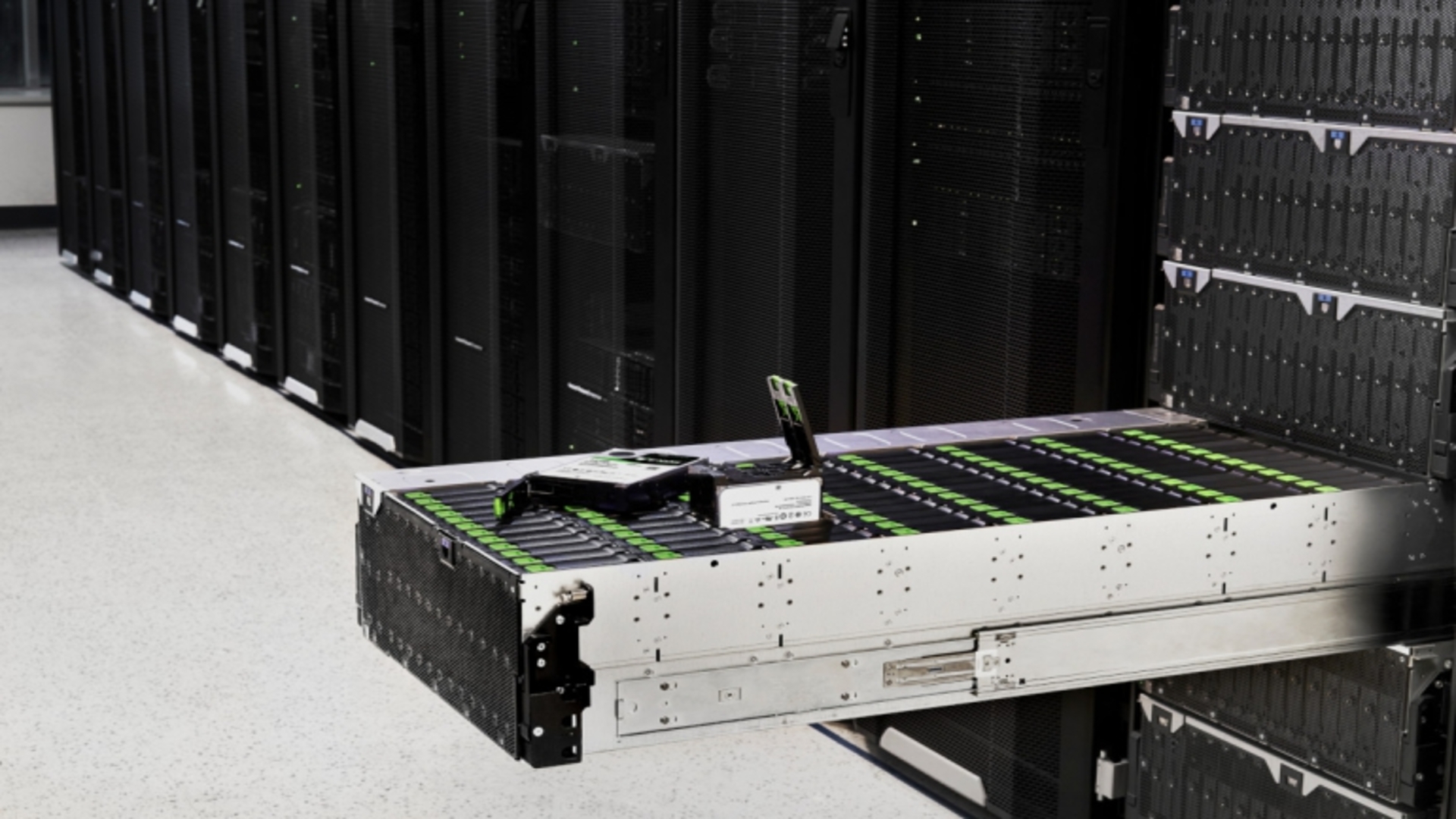
UPDATE: Seagate has just unveiled its groundbreaking Exos 4U100 storage system, boasting a massive capacity of up to 3.2 petabytes in a single enclosure. This urgent development comes as organizations grapple with the escalating data demands of artificial intelligence (AI) and machine learning (ML) workflows.
The Exos 4U100 is designed to meet the needs of modern data centers and edge environments, delivering high-density storage solutions essential for AI-driven applications that require rapid data ingestion and processing. Leveraging Seagate’s innovative Mozaic HAMR technology, the Exos 4U100 promises enhanced data throughput while significantly reducing power consumption.
This cutting-edge system supports continuous data ingestion, model checkpointing, and long-term data retention—capabilities vital for AI workloads. According to Seagate, the Exos 4U100 achieves 70% more efficient cooling and consumes 30% less power compared to its predecessors, offering flexibility for both SAS and SATA configurations.
Melyssa Banda, Senior Vice President of Edge Storage and Services at Seagate, stated,
“The Seagate Exos 4U100 JBOD marks the beginning of a bold new chapter in edge storage innovation—engineered to meet the evolving demands of data creation, storage, replication and analysis at the edge.”
The system’s robust features address not only performance but also security challenges. With a focus on safeguarding sensitive data, the Exos 4U100 includes secure boot, Redfish management, and Seagate Secure certification, essential for compliance with evolving data sovereignty regulations.
As organizations increasingly rely on AI for real-time updates and local data analysis, the Exos 4U100 positions itself as a critical solution for maintaining data integrity and efficiency in fast-paced environments. This launch follows Solidigm’s impressive deployment of $2.7 million worth of SSDs into a massive 23.6PB cluster, showcasing the growing trend of high-capacity storage solutions.
While SSDs dominate high-speed caching, traditional HDD-based systems like the Exos 4U100 continue to offer unmatched capacity for long-term storage at a lower cost. This hybrid approach is becoming increasingly vital for AI workflows, where data is continuously generated, processed, and archived.
The Exos 4U100’s launch signals Seagate’s confidence in the enduring relevance of mechanical storage technology, even amid rapid advancements in flash and SSD technologies. As data creation and analytical demands surge, industries are keenly watching how this latest innovation will impact their operational capabilities.
Looking ahead, the storage community will closely monitor the performance of the Exos 4U100 under real-world workloads, particularly its efficiency and stability in AI environments. The ongoing evolution of storage solutions will undoubtedly shape the future of data management for AI and beyond.
Stay informed on this developing story by following TechRadar for expert insights and updates on the latest in technology and innovation.