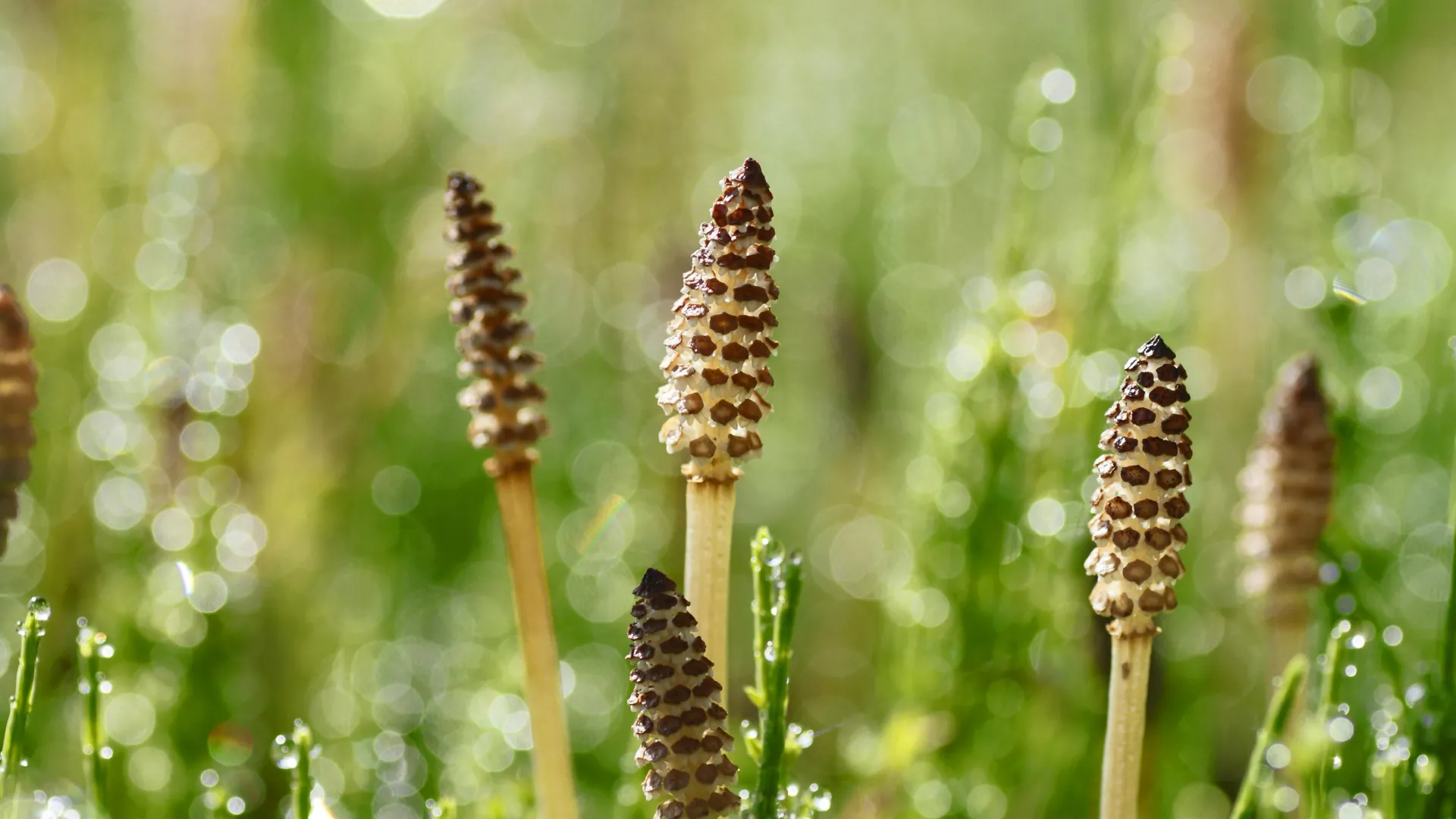
URGENT UPDATE: A groundbreaking discovery reveals that a 400-million-year-old plant, known as horsetail, produces water with oxygen isotope signatures so extreme they resemble those found in meteorites. This astonishing finding, announced by researchers from the University of New Mexico, could revolutionize how scientists understand ancient climates and humidity levels.
The research, led by Professor Zachary Sharp, was published in the Proceedings of the National Academy of Sciences on November 13, 2025. The study highlights how living horsetails, specifically Equisetum, function like natural distillation towers, filtering water through their hollow stems and creating bizarre isotopic signatures previously unseen on Earth.
“This plant is an engineering marvel,” Sharp stated. “You couldn’t create anything like this in a laboratory.” The research team traced the isotopic shifts from the plant’s base to its tip, uncovering a new method to decode historical humidity and climate conditions, with implications for both modern and ancient ecosystems.
The implications of this research are profound. Understanding oxygen isotopes allows scientists to track water sources and atmospheric moisture, particularly in arid regions. Sharp’s team collected samples along the Rio Grande in New Mexico, where they observed extreme oxygen isotope values that challenge existing Earth-based ranges.
During a presentation at the Goldschmidt Geochemistry Conference in Prague in July 2025, Sharp remarked, “If I found this sample, I would say this is from a meteorite,” highlighting the extraordinary nature of their findings.
The study not only sheds light on current climate conditions but also provides tools to reconstruct ancient environments. Fossilized horsetails, some reaching heights of 30 meters, contain silica structures called phytoliths, which preserve isotopic clues for millions of years. Sharp described these phytoliths as “paleo-hygrometers,” enabling scientists to measure historical humidity levels dating back to the age of dinosaurs.
“This research expands our understanding of Earth’s climate history,” Sharp added, emphasizing the significance of horsetails as record keepers of ancient conditions.
As the scientific community digests these remarkable findings, the potential for new climate models and insights into historical weather patterns is immense. Researchers are now poised to utilize this data to enhance models that explain unusual isotopic results found in other desert plant species.
Stay tuned for further updates as this story develops, highlighting how ancient plants could reshape our understanding of climate science and the planet’s history.