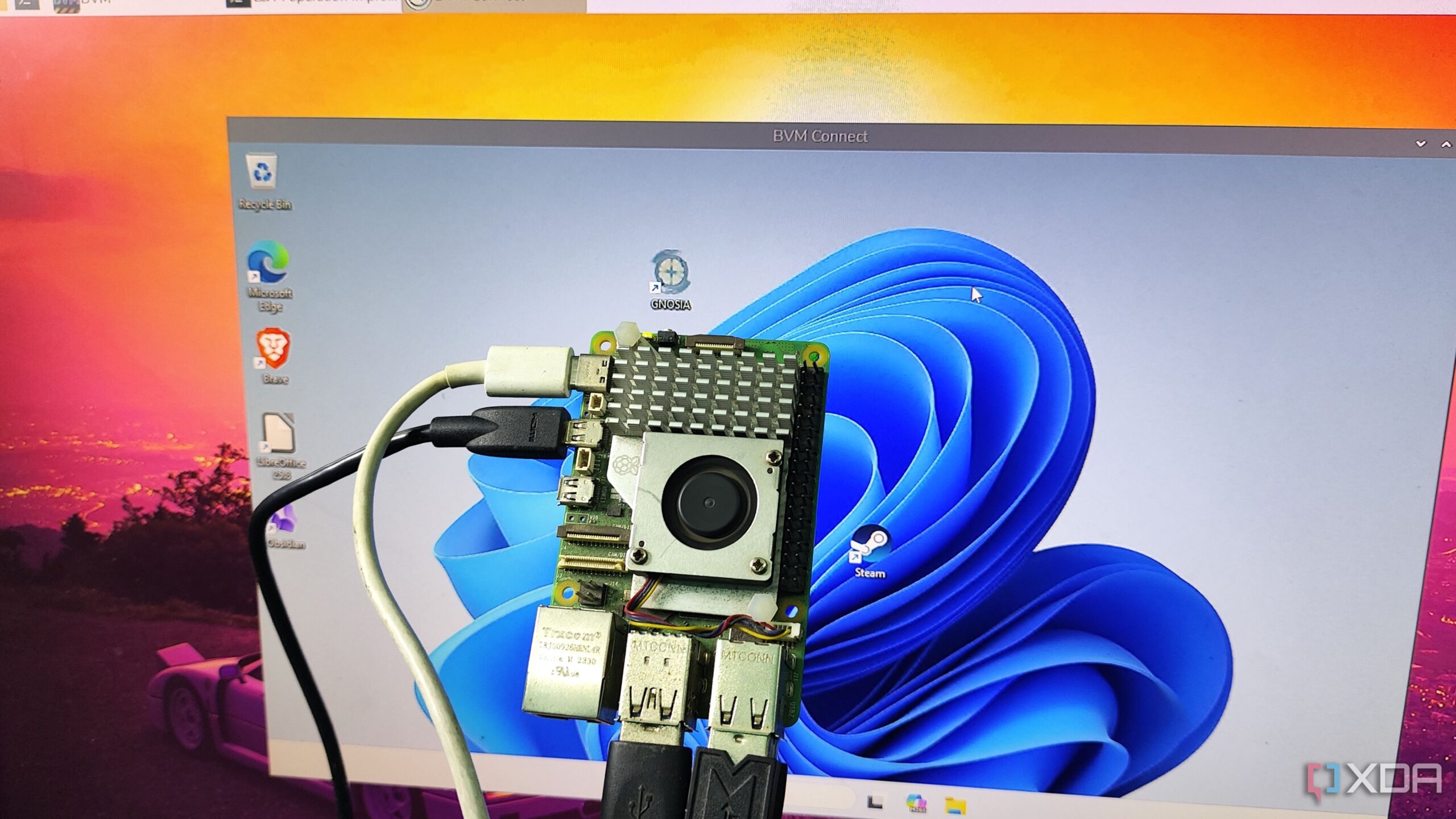
UPDATE: In a remarkable breakthrough, developers have successfully deployed virtual machines (VMs) on the Raspberry Pi, proving that this small yet powerful device can handle more than just basic tasks. This exciting news, which emerged earlier today, showcases the potential for running lightweight VMs, including even Windows 11, on these compact single-board computers.
The Raspberry Pi community has long been known for its innovative projects, but the successful deployment of VMs marks a significant leap forward. Users are now discovering that with the right setup—such as utilizing Canonical MicroCloud and Ubuntu Server—it is possible to run VMs effectively, even with the device’s limited resources. This development is crucial for DIY enthusiasts and developers looking to expand their projects without investing in high-end hardware.
Many had anticipated that the Raspberry Pi would struggle under the demands of virtualization. However, recent tests reveal that a Raspberry Pi 5 model with 8GB of RAM can run multiple VMs simultaneously, thanks to the efficiency of LXD. Users report being able to operate at least two VMs alongside several containers without noticeable performance issues. This represents a significant advantage for those who rely on this technology for educational projects or lightweight server tasks.
One of the most intriguing applications of this new capability is the installation of Windows 11 through a virtual machine. A recently launched tool, Botspot VM, simplifies the process, allowing users to configure and run Windows apps on the Raspberry Pi seamlessly. Initial tests indicate that while performance may dip on a 4K display, switching to a 1080p screen restores responsiveness, making this option viable for lightweight tasks such as script running and minor software projects.
Despite these promising developments, experts caution that users seeking high performance should still consider traditional x86 machines for serious virtualization needs. Nonetheless, the ability to run VMs on a Raspberry Pi opens new doors for experimentation and learning within the tech community.
The potential for using containers rather than VMs also remains a popular choice among developers. Tools like Docker and Kubernetes are proving effective on Raspberry Pi, providing a lightweight alternative for managing applications and services. This could lead to a surge in DIY projects and educational opportunities as more users explore the capabilities of these devices.
As the Raspberry Pi community continues to innovate, this latest advancement in virtualization is expected to inspire a wave of new projects. Enthusiasts are encouraged to share their experiences and discoveries, fostering collaboration and growth in this ever-evolving field.
Stay tuned for more updates as this story develops, and be sure to explore the possibilities that Raspberry Pi has to offer in the world of virtualization and beyond.