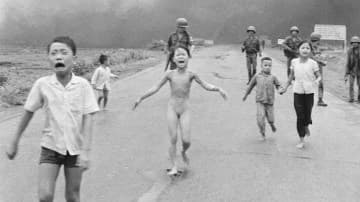
UPDATE: A new documentary titled “The Stringer” is igniting a firestorm of debate over the authorship of one of the most famous photographs in history—an image of Phan Thi Kim Phuc, a young Vietnamese girl fleeing a napalm attack during the Vietnam War. This revelation comes as significant new evidence suggests that the iconic photo may not have been taken by renowned photographer Nick Ut, but rather by freelance journalist Nguyen Thanh Nghe, raising urgent questions about the accuracy of historical narratives.
The photograph, captured on June 8, 1972, depicts Phuc and her siblings running from the horrors of war, a moment that has resonated worldwide. It has become synonymous with the tragic impact of the Vietnam War. The documentary sheds light on the behind-the-scenes conflicts at the Associated Press (AP), where Carl Robinson, who worked in the Saigon bureau, argues that he was pressured to credit Ut despite knowing Nghe may have been the true author.
“This film reveals not just the story of the photograph but the profound impact of that moment,” said Fiona Turner, producer of the documentary. “It’s about more than just who took the picture; it’s about the tragedy that unfolded that day.”
The documentary, which premiered recently, features interviews with various journalists and experts who provide a comprehensive analysis of the events surrounding the photograph’s capture. Evidence presented in the film suggests that while Ut is credited with the shot, Nghe’s work was also submitted to the AP, complicating the narrative of authorship that has persisted for decades.
In a poignant twist, Phan Thi Kim Phuc, who survived the attack and later settled in Canada, now serves as a goodwill ambassador for UNESCO, sharing her story of resilience. Her experience highlights the human cost of war, making the ongoing debate about the photo’s authorship feel even more relevant today.
As discussions about the documentary circulate, many are questioning the ethics of credit in journalism and the implications of historical narratives shaped by single narratives. Robinson, who has carried the weight of this revelation for years, stated, “I felt it was essential to disclose the truth, even if it meant challenging a long-held belief.”
The documentary not only dives into the controversy but also emphasizes the importance of remembering the tragedies of war. It serves as a reminder that images can shape public perception, often overshadowing the real stories of suffering behind them.
As the 50th anniversary of the fall of Saigon approaches on April 30, 2025, the impact of this new documentary could reshape how future generations perceive both the image and the war itself.
For those interested in photography, journalism, and history, “The Stringer” is a must-watch, offering fresh insights into a pivotal moment in time. The question remains: will this new evidence change the way we understand one of the most haunting images of the Vietnam War?
Stay tuned for further updates as this story develops.