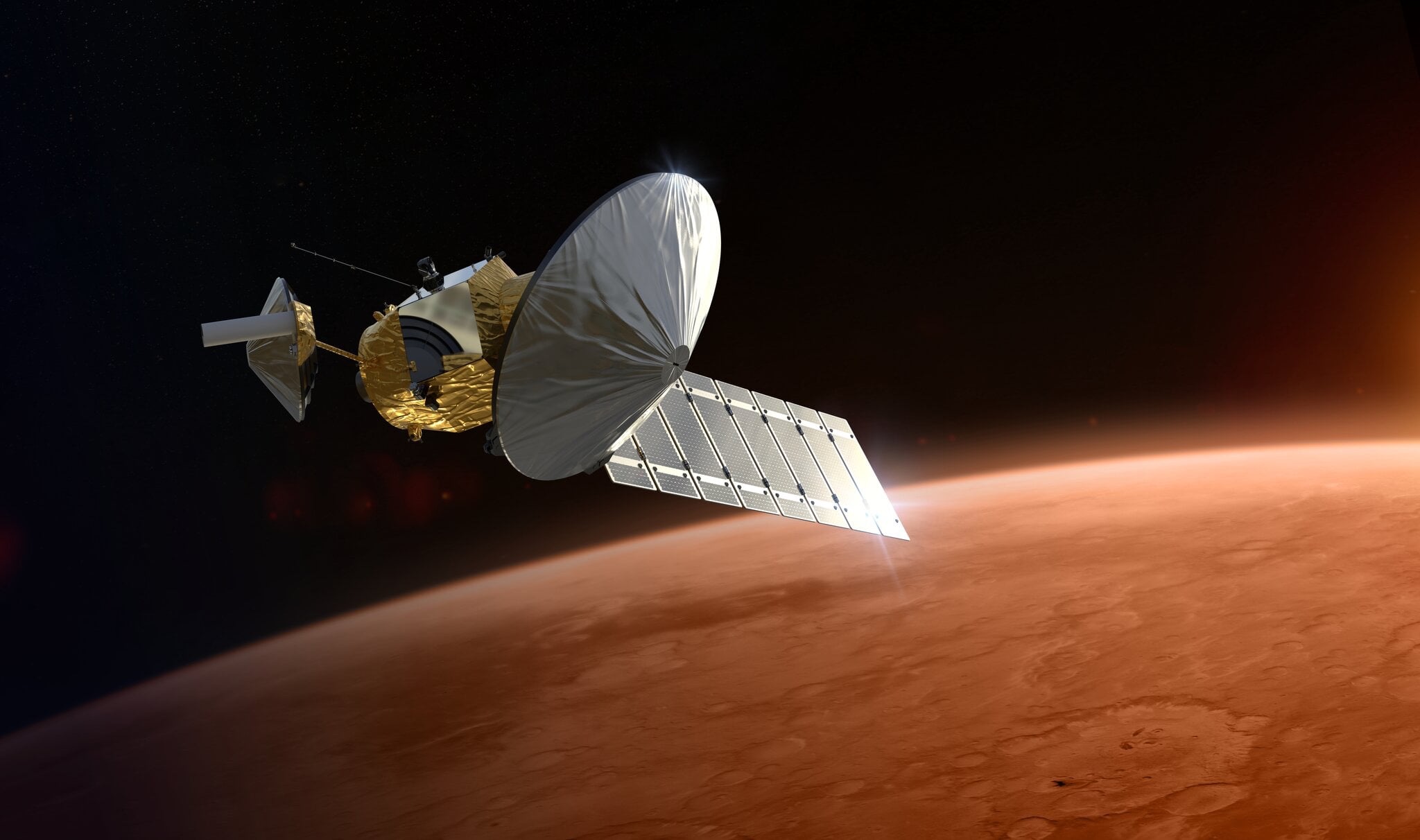
NASA has unveiled its plans for a Mars communications orbiter, as outlined in a draft document released on February 24, 2024. This initiative, known as the Mars Telecommunications Network, is backed by $700 million allocated in the budget reconciliation act passed in July 2025. The agency aims to enhance communication capabilities for various missions operating on and around Mars.
The proposed orbiter will support continuous communications for spacecraft through to 2035, ensuring that critical data can be relayed efficiently. NASA has set a deadline for the spacecraft’s delivery by the end of 2028, although a specific launch date has not been mandated. The objectives outlined include providing positioning, navigation, and timing (PNT) services, along with maintaining communication for existing Mars missions.
Key Objectives and Features
NASA’s draft document highlights four primary objectives for the Mars Telecommunications Network. These include:
1. Delivering communications services for spacecraft active on Mars until 2035.
2. Offering PNT services for these spacecraft.
3. Maintaining communications for current Mars spacecraft.
4. Supporting missions that demonstrate entry, descent, and landing technologies through 2035.
The orbiter will be designed to operate for a minimum of five years, facilitating data rates of up to 100 megabits per second on direct links with Earth. Compatibility with NASA’s Deep Space Network is also a key requirement. Importantly, while the draft does not mandate the use of optical communications links, it does allow for their potential inclusion, which could enhance data transfer rates.
Some experts had anticipated that NASA might include scientific instruments aboard the orbiter. However, logistical constraints related to the schedule and budget likely preclude such additions.
Procurement Process and Industry Interest
NASA has not specified a detailed procurement timeline for the Mars Telecommunications Network, but a draft request for proposals is expected soon. Comments on the draft objectives are due by March 10, 2024. The agency has indicated that the final proposals will adhere to the stipulations of the budget reconciliation bill, specifically limiting eligibility to companies that received NASA funding for commercial design studies in fiscal years 2024 or 2025.
Eligible companies include notable industry players such as Blue Origin, Rocket Lab, Lockheed Martin, and Northrop Grumman. Notably, Blue Origin and Rocket Lab have publicly expressed their intent to compete for the contract, with both companies emphasizing their capabilities and experience in space missions.
In a statement, Blue Origin highlighted their integrated solution, combining the New Glenn launch vehicle with the Blue Ring Mars-capable spacecraft platform, asserting that both have proven track records. Rocket Lab similarly underscored their experience, citing their development of the ESCAPADE spacecraft launched to Mars, which demonstrates their capacity for deep space missions.
During a recent earnings call, Peter Beck, Rocket Lab’s CEO, reaffirmed the company’s ambitions, stating, “We’ve made no secret of the fact that we think Rocket Lab is the strongest contender to deliver NASA’s Mars Telecommunications Orbiter program.” He noted the company’s focus on delivering a reliable orbiter without the distractions of other commitments.
As the space industry gears up for this significant project, the competition among these companies will likely intensify in the coming months. The successful development and deployment of the Mars Telecommunications Network could greatly enhance communication infrastructures essential for future Martian explorations.