House Speaker Mike Johnson has denied a request from the family of civil rights leader Jesse Jackson to allow him to lie in honor in the Capitol Rotunda following his death at the age of 84. Johnson’s office cited established House precedent, stating that the Rotunda is typically reserved for former presidents, members of Congress, military leaders, and Supreme Court justices. Since Jackson never held federal office, officials argued he did not meet the criteria for this ceremonial honor.
Supporters of Jackson, including civil rights advocates and political allies, contend that this decision reflects a narrow interpretation of public service. Jackson’s family released a statement highlighting his profound impact: “Our father was a servant leader—not only to our family, but to the oppressed, the voiceless, and the overlooked around the world… His unwavering belief in justice, equality, and love uplifted millions, and we ask you to honor his memory by continuing the fight for the values he lived by.”
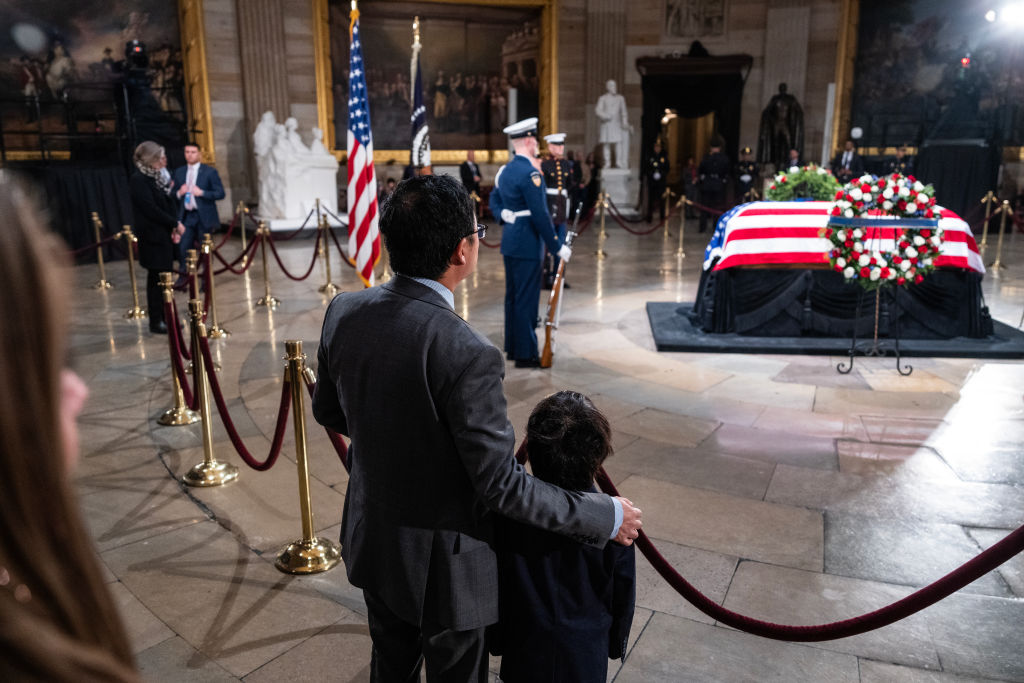
Jackson’s daughter, Santita Jackson, expressed disappointment in the denial, stating, “What we want is for the people to get a chance to be with him.” The honor of lying in honor is a rare distinction, typically reserved for private citizens whose remains are placed in the Capitol Rotunda for public viewing. In contrast, the honor of lying in state is designated for government officials. Historically, only a few private citizens have received this recognition, including civil rights pioneer Rosa Parks in 2005 and evangelist Billy Graham in 2018. In both instances, lawmakers argued that their moral influence warranted exceptional acknowledgment.
Supporters assert that Jackson’s legacy as a two-time presidential candidate and tireless organizer aligns with this tradition. Over the course of more than five decades, he played a pivotal role in registering voters, forging political coalitions, and advocating for racial and economic justice on the national stage.
Critics of the decision include Derrick Johnson, the president of the NAACP, who stated that the denial “tells you everything you need to know about Mike Johnson and his gross disregard for our Constitution and our democracy.”
Memorial services for Jackson are set to occur in Chicago, Washington, and South Carolina, attracting leaders, activists, and admirers from across the nation. The absence of a tribute in the Capitol highlights a persistent contradiction: while America often celebrates its reformers in rhetoric, its institutions have struggled to fully recognize their contributions.
It is also noteworthy that recent requests for this honor have been denied for former Vice President Dick Cheney and conservative activist Charlie Kirk. In both cases, the decisions reflect ongoing tensions regarding the criteria for honoring individuals in the Capitol.
As Jackson’s legacy continues to resonate, the debate over his recognition underscores the complexities of how America honors its reformers, raising questions about the values and criteria upheld by its institutions.