UPDATE: As homeowners in Los Angeles recover from the devastating Palisades Fire that destroyed thousands of homes in January 2025, many are opting for a revolutionary approach to rebuilding: concrete. This shift comes as experts highlight the growing popularity of insulating composite concrete forms (ICCF) as a safer, fire-resistant alternative to traditional wood framing.
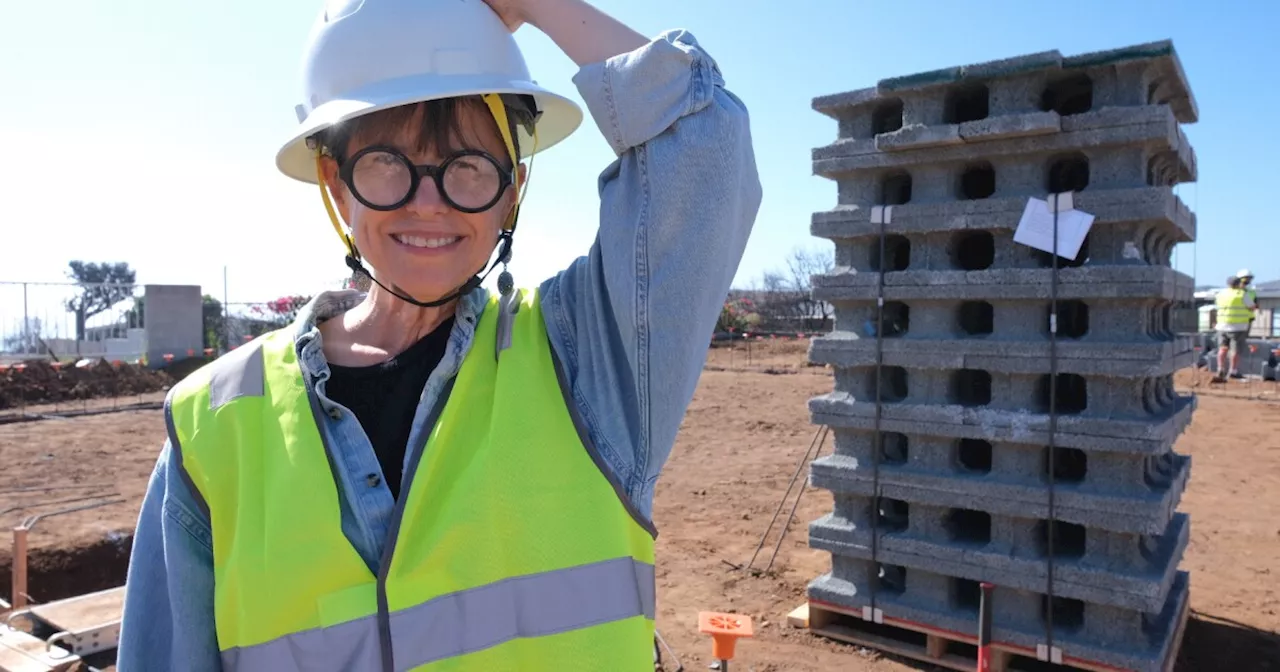
Developing news: In the Sunset Mesa neighborhood, homeowners like Karen Martinez are embracing this durable material, typically associated with highways and skyscrapers, to protect against future wildfires. “After losing my home, it took just a day or two to decide I needed to build with something non-combustible,” Martinez stated, emphasizing the urgency of safety in rebuilding efforts.
Concrete’s appeal is not just about fire safety. Mercury Insurance reports that homeowners using fire-resistant materials can receive substantial discounts on premiums, further incentivizing this shift. “In high wildfire areas, that results in a pretty substantial discount,” said Victor Joseph, president of Mercury Insurance.
The choice for concrete comes as experts believe this non-combustible material will become increasingly vital in fire-prone areas like Los Angeles County. While concrete homes are not entirely fireproof, they significantly reduce risks associated with wildfire embers entering through vents and windows, according to Steve Hawks, senior director for wildfire safety.
Martinez, who is actively overseeing the construction of her new home, describes the ICCF blocks as “87% polystyrene and 13% cement,” making them lighter than they appear while providing robust protection. “In a fire, you’re pretty much safe from the walls burning,” she noted.
Despite the advantages, Martinez faced challenges in convincing contractors and architects to adopt this innovative material. “Most architects and contractors don’t know how to use it. It’s hard to convince people to change their ways,” she explained, highlighting a crucial barrier to broader adoption.
Historically, concrete has been a staple in architectural designs, with figures like R.M. Schindler utilizing it in the early 20th century. However, its use in single-family homes remains rare in Southern California, with many still adhering to traditional wood framing methods.
“The structure is only as good as the weakest link,” Hawks cautioned, stressing that comprehensive fire safety requires addressing all aspects of home design, from siding to windows.
As the rebuilding process continues, Martinez is hopeful. “I’m hoping this will actually become the future of building,” she said. “It’s not more expensive, and I think everybody should be doing it.” If all goes according to plan, her new home will be completed before the second anniversary of the Palisades Fire, ready to withstand whatever challenges lie ahead.
Residents are eager to ensure that tragedies like the Palisades Fire do not repeat. With a growing awareness of fire-resistant building options, the landscape of home construction in Los Angeles may be on the brink of a significant transformation.
In the meantime, homeowners are encouraged to explore the benefits of concrete as they rebuild, fostering a community that prioritizes safety and resilience against future disasters.