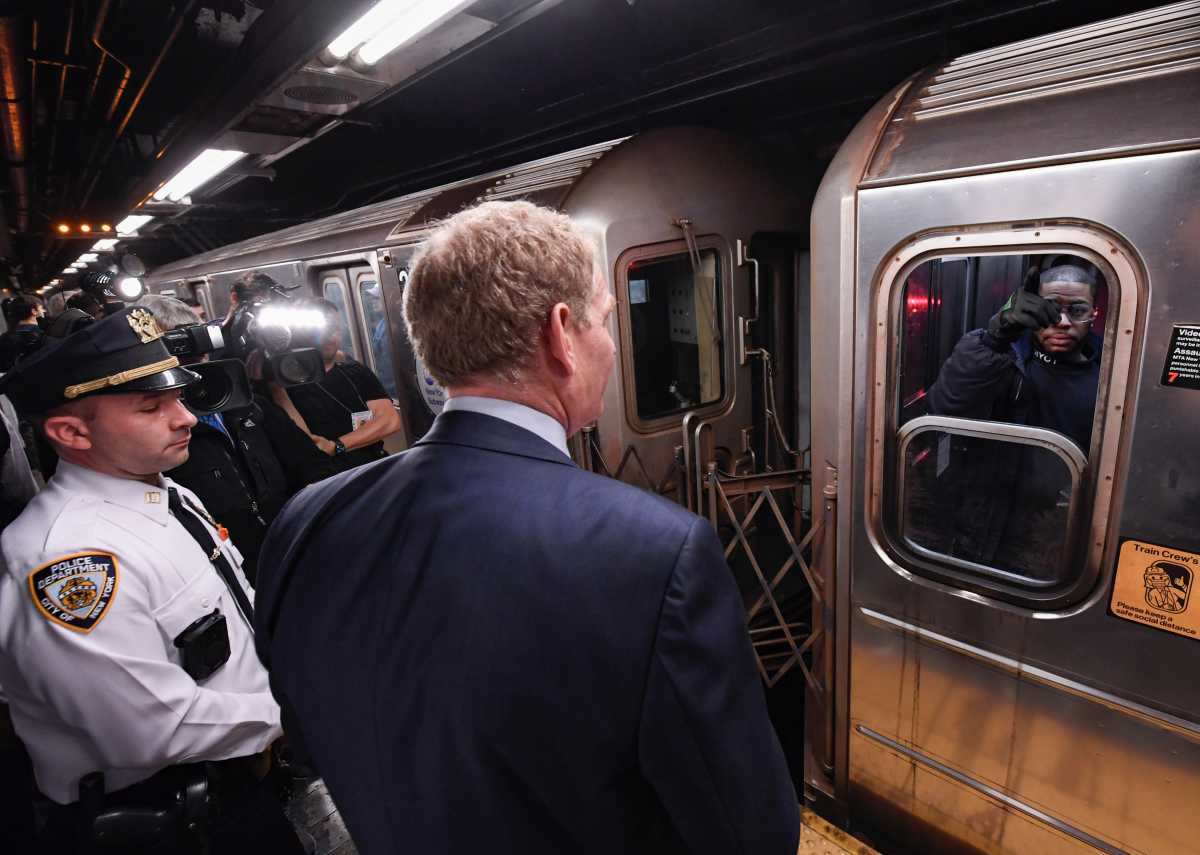
UPDATE: Governor Kathy Hochul is facing an urgent decision regarding a controversial bill that could determine the future of subway conductors on New York City’s trains. The clock is ticking, as Hochul must make her choice by December 31, 2023. This legislation, known as S4091 and A4873, mandates that nearly all subway trains maintain a two-person crew for safety and operational reliability.
Commuters may be unaware that some trains, including the Times Square Shuttle and the G Train at night, already operate without conductors. This has raised concerns about safety, especially as crime rates fluctuate in the city. John Samuelsen, President of the Transit Workers Union, argues that conductors serve as vital safety officials, ensuring passengers board and exit safely. “Trains will never lose conductors,” Samuelsen stated emphatically, threatening a potential transit strike if conductors were removed.
Supporters of the bill claim that a two-person crew is essential, particularly given the current climate surrounding public safety in NYC. However, critics, including a study from NYU’s Marron Institute, suggest that the necessity of conductors is overstated. The study found that fewer than 6.25% of global subway systems have two staffers on board. Researchers argue that the bill could undermine significant investments aimed at improving the subway’s operations.
IMPORTANT: Samuelsen dismissed the NYU study as “garbage,” insisting that the unique challenges faced by the NYC subway system make it unlike any other in the world. He pointed out that NYC trains navigate numerous high-speed curves and complex station designs that require the vigilance of conductors.
Riders are weighing in as well. Many express their support for the presence of conductors, especially during late-night travel. One commuter shared, “I like knowing that person is there,” highlighting the emotional comfort that conductors provide. Another echoed, “It’s common sense to have two people on the train,” emphasizing safety concerns amid various transit issues.
As the deadline approaches, the impact of Hochul’s decision looms large. If she signs the bill, it will solidify the presence of conductors on NYC subway trains, reassuring many riders. Conversely, not signing it could leave the future of subway safety in question, as current operations may not change significantly without legislative backing.
Observers are now left to ponder what this decision will mean for the future of public transit in one of the world’s largest cities. The MTA has not yet provided a comment, but the urgency of the matter cannot be overstated. Commuters and workers alike will be watching closely as the end of the year draws near.
Stay tuned for more updates as this developing story unfolds, and share your thoughts on the importance of subway conductors below.