BREAKING: Former South Korean President Yoon Suk Yeol has been sentenced to life in prison for his illegal declaration of martial law in December 2024. The Seoul Central Court ruled Yoon guilty of rebellion after he mobilized military and police forces in an attempt to seize control of the liberal-led National Assembly. This shocking verdict comes amid widespread public outcry and political turmoil in the nation.
Judge Jee Kui-youn delivered the verdict, emphasizing the gravity of Yoon’s actions, which were deemed a significant threat to South Korea’s democracy. Yoon’s martial law decree lasted only six hours before it was lifted when lawmakers managed to break through military blockades to vote against it.
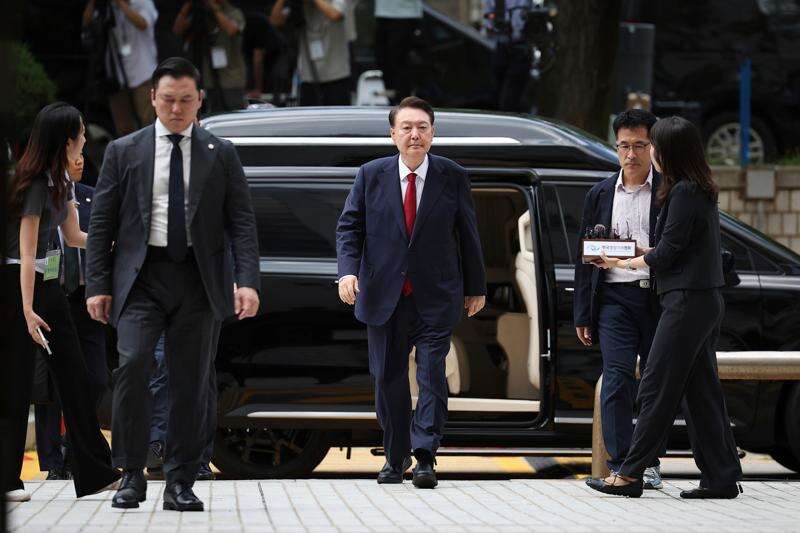
The court’s decision is a pivotal moment in South Korean politics, reflecting the ongoing tension between conservative and liberal factions. As Yoon arrived in court, a significant police presence ensured order while his supporters rallied outside, demanding justice. In contrast, Yoon’s critics gathered nearby, calling for the death penalty, underscoring the division within the country.
The rebellion charge carried the potential for the death penalty, but analysts anticipated a life sentence given that no casualties resulted from Yoon’s poorly planned power grab. South Korea has not executed anyone since 1997, creating a de facto moratorium on capital punishment amidst growing calls for its abolition.
Yoon has indicated plans to appeal the verdict, maintaining that his martial law was essential to protect the nation from “anti-state” forces obstructing his agenda. This ruling marks another chapter in a troubled political saga; Yoon was impeached on December 14, 2024, and formally removed from office by the Constitutional Court in April 2025.
The repercussions of this ruling extend beyond Yoon. Several former military and police officials have also been convicted for their roles in enforcing the martial law decree. Notably, ex-Defense Minister Kim Yong Hyun received a 30-year prison sentence for orchestrating the measure, while Prime Minister Han Duck-soo faces a 23-year sentence for attempting to legitimize the decree through falsified records and misleading testimony.
This unfolding story is capturing global attention as it raises questions about democracy and governance in South Korea. With Yoon facing multiple criminal trials, including a five-year sentence for resisting arrest, the political landscape remains volatile.
As the situation develops, many are watching closely to see how this impacts South Korea’s political future and the broader implications for democracy in the region. Stay tuned for further updates as this urgent story continues to evolve.