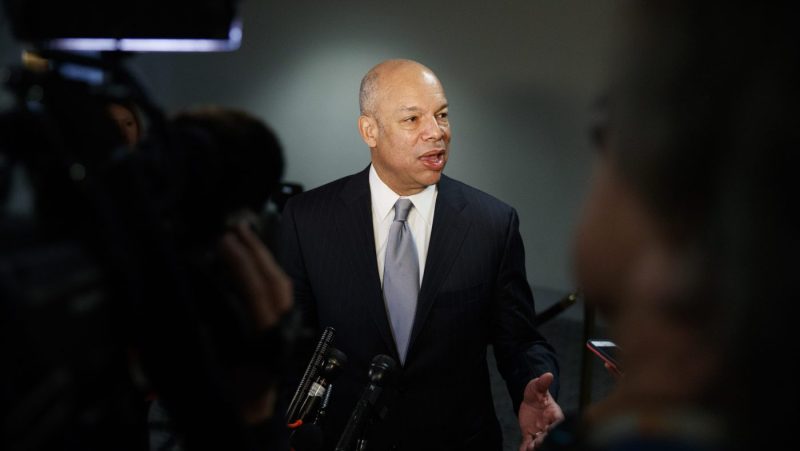
URGENT UPDATE: Former U.S. Department of Homeland Security Secretary expresses serious concerns over the current recruitment strategies employed by U.S. Immigration and Customs Enforcement (ICE). In a shocking revelation, the ex-official highlighted that the phrase “Defend your culture” used in recruitment efforts raises red flags about the motivations behind these campaigns.
Speaking out earlier today, the former DHS Secretary stated, “What does that mean? I think that’s a dog whistle, basically, for ‘Let’s go after the great replacement.’” This statement underscores a growing apprehension about the ideological underpinnings of those being recruited into ICE, an agency tasked with enforcing immigration laws and maintaining national security.
The implications of such rhetoric are profound, potentially influencing the composition of ICE personnel and their approach to immigration enforcement. Critics argue that framing recruitment in terms of cultural defense may attract candidates whose views align with divisive ideologies, potentially exacerbating tensions in communities across the nation.
Authorities report that the recruitment campaign aims to bolster ICE’s workforce amidst ongoing debates about immigration policy and enforcement. However, the inclusion of loaded terms like “Defend your culture” has sparked fears that it may appeal to individuals with extremist views, further complicating the agency’s mission.
The former Secretary’s comments come at a time when immigration remains a hot-button issue in the United States, with public sentiment deeply divided. As ICE faces scrutiny over its practices and priorities, the recruitment strategy could have lasting impacts on its reputation and operational effectiveness.
The urgency of this development cannot be overstated. As recruitment continues, community leaders and civil rights advocates are calling for transparency and accountability from ICE. They emphasize the need for a workforce that reflects the diverse fabric of American society rather than one that is driven by exclusionary ideologies.
WHAT’S NEXT: As discussions surrounding this issue unfold, it is crucial for stakeholders to monitor the recruitment process closely. The potential consequences of these tactics could influence not only the future of immigration enforcement but also the socio-political climate in the United States.
This story is developing, and further statements from ICE or government officials are anticipated in the coming days. Stay tuned for updates as this critical situation evolves.
This alarming situation has significant implications for both policy and community relations, making it imperative for citizens to engage in dialogue about the future of immigration enforcement in America. Share your thoughts on this pressing issue and stay informed.