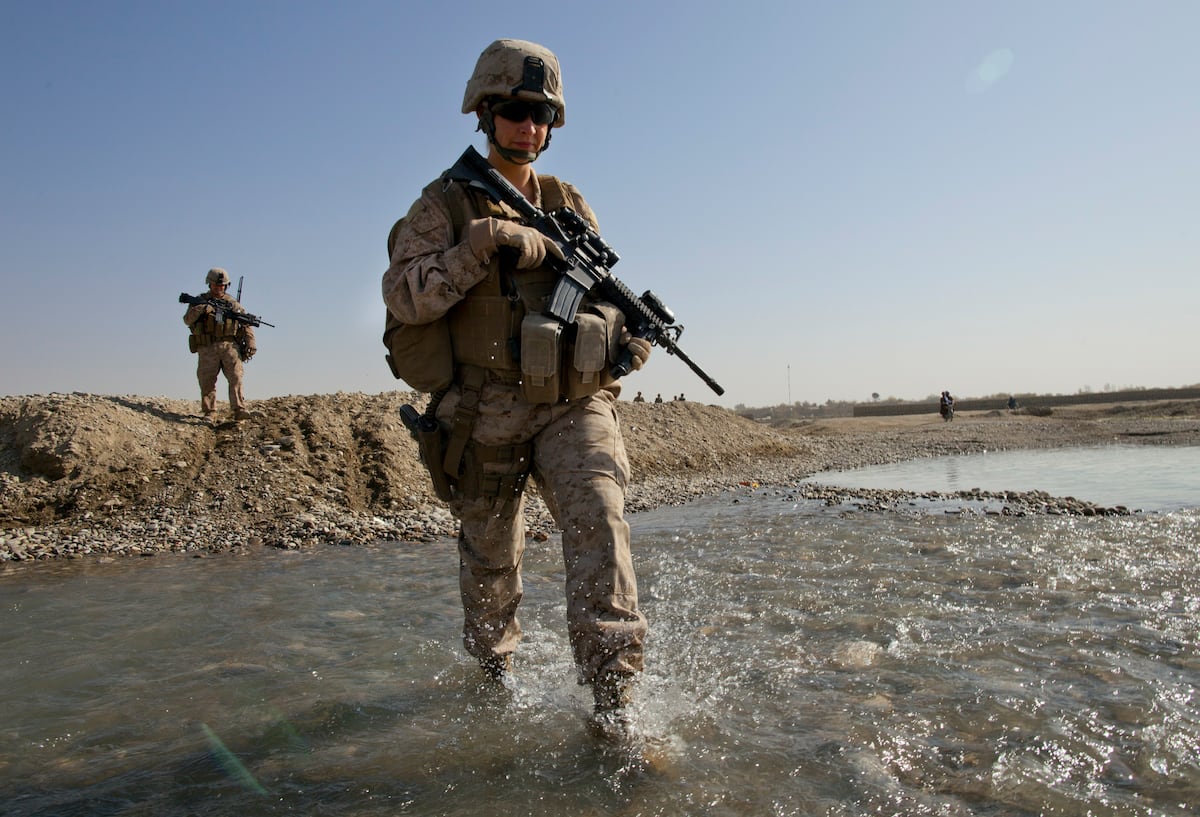
At least 154 women have achieved the prestigious Ranger tab, a testament to their capabilities within the U.S. Army. As of early 2025, this figure underscores the significant role women have taken on in combat positions since the Department of Defense opened all combat jobs to them in 2015. Now, with the Pentagon launching a formal review of the effectiveness of this shift, many female service members are voicing their concerns regarding the implications of this evaluation.
The Pentagon stated the review aims to ensure that the military meets its rigorous standards. Defense Secretary Pete Hegseth emphasized that the military would not compromise its standards to meet quotas or adhere to ideological agendas. Critics, however, argue that women have already demonstrated their ability to perform in elite combat roles, highlighting that 4,594 female soldiers are currently deployed in conventional combat units, according to data from the Women in the Service Coalition.
Concerns Over Intent and Standards
Some female troops suspect that this review may have a predetermined outcome, suggesting a return to the belief that women do not belong in infantry roles. Sue Fulton, executive director of the Women in the Service Coalition, expressed her concerns in an interview, stating, “The only reason to conduct a new study is if you want a different outcome and you’re prepared to skew whatever answers you get to achieve that outcome.” Her apprehensions stem from Hegseth’s past comments questioning the role of women in combat.
Before taking office, Hegseth had been an outspoken critic of women in frontline combat roles. In a podcast interview in November 2024, he asserted, “I’m straight up just saying we should not have women in combat roles,” referencing a Marine Corps report that suggested all-male units were more effective than mixed-gender units. Despite a subsequent study in 2029 that indicated the Marine Corps was an outlier compared to other branches, Hegseth softened his stance during his confirmation hearing, stating that if women meet the required standards, they should be allowed to serve.
Voices from the Field
Last September, Hegseth reignited concerns among female service members when he declared that “every requirement” for combat troops would revert to “the highest male standard only.” This statement prompted two women, both graduates of Ranger School and combat veterans, to speak out about the implications of the review. They requested anonymity due to fears of repercussions for their candidness.
One of the women, known as Emily, described the review as a “slap in the face” to the achievements of women in the infantry. “The message feels very clear: According to leadership, the women in combat arms achieved their success because the standards were lowered for them. But the standards were never lowered for us. I took the same physical fitness test as the men at Ranger School. We earned our spots,” she asserted.
Another combat veteran, Olivia, who has served multiple deployments as a field artillery officer, reflected on the realities of combat. “Combat is an equalizer,” she stated. “When people are shooting at you or you’re taking incoming rocket attacks, all those kinds of divisions disappear.” She emphasized that the focus should be on the collective effort of all soldiers, regardless of gender.
As the Pentagon proceeds with its review, female service members remain vigilant, advocating for recognition of their contributions and capabilities. The outcome of this evaluation may not only impact military policy but also the future of gender integration within the U.S. armed forces.