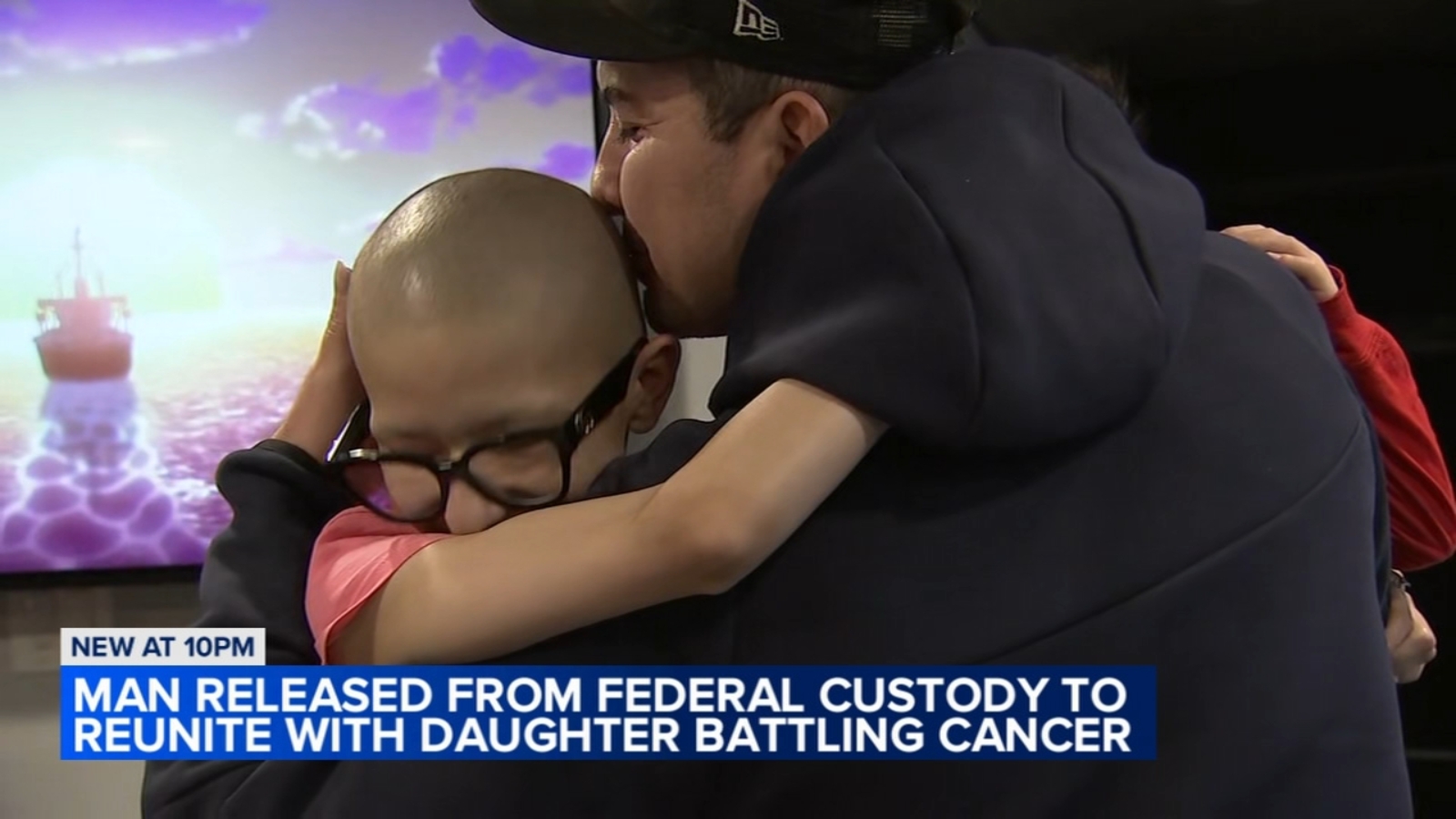
URGENT UPDATE: Ruben Torres Maldonado, father of a teen battling cancer, has shared harrowing details of his experience at the Broadview ICE facility, describing it as a place of “inhumane conditions.” Speaking with ABC7 Chicago, Torres revealed the emotional toll of his detention, which began on October 18, 2023, just after his 16-year-old daughter Ofelia returned home from the hospital.
Torres, who was released just one week ago, expressed a profound sense of relief and gratitude for being reunited with his family. “I’m so happy… thanks to the people who support my family in this situation,” he stated, emphasizing the weight of his family’s struggles amidst his daughter’s ongoing fight against stage 4 cancer.
Details surrounding his detention are alarming. Torres was apprehended by federal agents outside a Home Depot in Niles and subsequently held in custody by the Department of Homeland Security (DHS). Despite a judge ruling last month that his detention was unlawful and demanding a prompt bond hearing, DHS maintains their justification for detaining him, citing a history of reckless driving.
In an emotional recounting, Torres described the conditions inside the Broadview facility, stating, “It’s inhumane because the conditions are bad. There’s a lot of people in a room and there were only two bathrooms.” He further detailed the lack of basic hygiene, noting that “only one shower was working and they had no curtains,” forcing detainees to endure unsatisfactory living conditions.
“I heard him testify and I just saw his face, his facial expressions,” Ofelia said, reflecting on her father’s testimony at a federal hearing. “He was reliving everything. It’s horrible. No one deserves to be there.”
Torres expressed gratitude for a federal judge’s recent ruling that mandates improvements in the facility, including better hygiene and sleeping arrangements. “I’m glad over the judge’s ruling to improve the conditions for the detainees because well we are not criminals to receive this type of treatment,” he stated.
Despite the ruling, Torres now must wear an ankle monitor, limiting his ability to work in the paint and construction industry, where he has labored since arriving in the U.S. in 2003. “All I could think of was my daughter, my wife, and my family because I knew that if I were deported, it would be very difficult for my wife to carry the family’s burden,” he recounted, highlighting the emotional distress of his detention.
Ofelia continues her battle with cancer, and her father’s return has provided much-needed support. “We spend time together just being lazy honestly just watching movies, eating together just simple things,” she said, expressing her joy at having her father back. “I am so happy to have him back. Those two weeks without him were really hard.”
Looking ahead, a judge has ruled that Torres can now apply for cancellation of removal, stating his family’s burden would be too great if he were deported. His lawyers are actively working on this process, hoping to secure his status and allow him to continue supporting his family during this challenging time.
As this story unfolds, many are calling for a closer examination of the conditions within immigration detention facilities nationwide. The urgency of this situation underscores the ongoing debate about immigration policies and their human impact.