UPDATE: The enduring mystery of the “Beachy Head Woman” has been solved with groundbreaking DNA analysis, revealing she was not a migrant as previously thought, but a local from southern England. This significant development was confirmed by researchers at London’s Natural History Museum and reported by CNN.
For over a decade, the remains of the Beachy Head Woman, discovered in a box and dated to Roman-occupied Britain, sparked heated debates about her origins. Initially believed to be sub-Saharan African and labeled the “first Black Briton,” new evidence shows she closely resembles people of rural Roman-era Britain, with no indication of recent African ancestry.
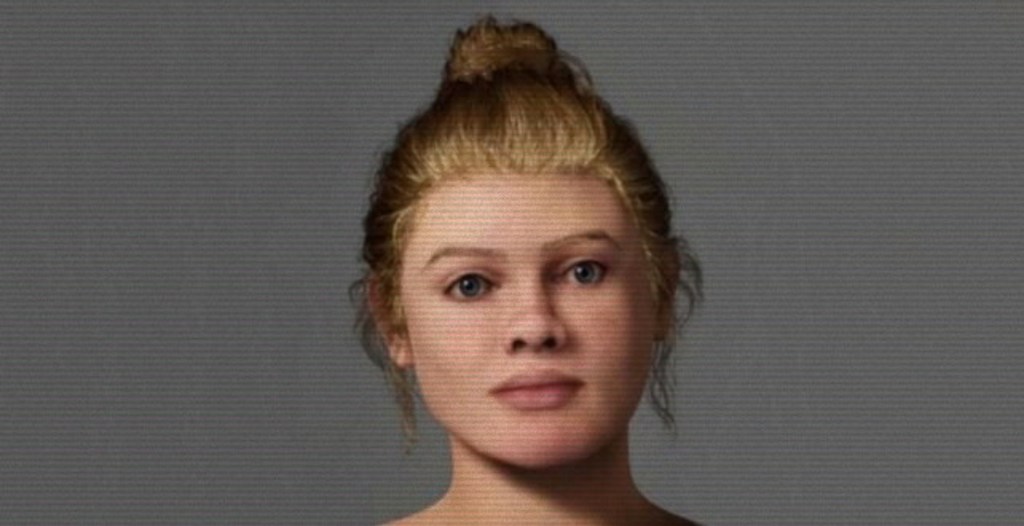
Using advanced DNA sequencing, researchers published their findings in the Journal of Archaeological Science, highlighting that the Beachy Head Woman likely had light hair, blue eyes, and a skin tone that ranged from pale to dark. These revelations challenge long-held assumptions shaped by outdated scientific methods, such as craniometric analysis, which often perpetuated racial biases.
The woman lived between 129 and 311 CE, possibly aged between 18 and 25. Standing just under five feet tall, she thrived on a seafood-heavy diet and survived at least one serious leg injury. Her story underscores the dangers of projecting contemporary biases onto ancient histories.
This major breakthrough emphasizes the importance of evolving scientific methods and the need to reassess historical narratives. As the research community continues to develop better tools for understanding our past, the Beachy Head Woman serves as a poignant reminder of how easily history can be misinterpreted.
As the scientific community and the public digest these new findings, discussions are sure to emerge regarding the implications for understanding ancestry and identity in ancient Britain. Stay tuned for further updates on this developing story that reshapes our understanding of history.