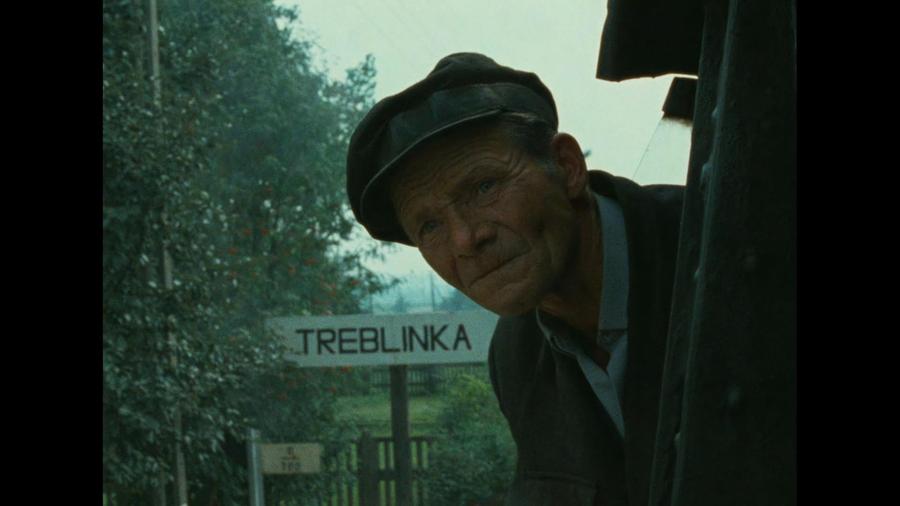
URGENT UPDATE: This year marks the 40th anniversary of Claude Lanzmann’s groundbreaking documentary, Shoah, a nine-and-a-half-hour exploration of the Holocaust that continues to evoke strong reactions and deep emotional responses. Released in 1985, the film remains a monumental piece of Holocaust culture, yet many viewers find it nearly impossible to watch.
In a revealing account from his memoir, The Patagonian Hare, Lanzmann recounts a dinner with Jean-Marie Lustiger, the former Cardinal Archbishop of Paris. Despite the archbishop’s living room being filled with copies of Shoah, Lustiger confessed to Lanzmann, “I can’t do it, I just can’t.” His struggle to engage with the film highlights the paradox at the heart of Holocaust remembrance: when art captures trauma authentically, it becomes unbearable to witness.
Lanzmann, a Frenchman, was deeply affected by his experiences during the Holocaust. As a child in occupied France, his father taught him to flee in darkness, instilling a profound awareness of absence and loss. His quest to document the narratives of survivors emerged from a personal commitment to confront the horrors of the past. “My homeland is my film,” he stated, underscoring the emotional weight of his work.
Amidst the urgency of remembering, Lanzmann captured the stories of those directly affected by the atrocities, such as Abraham Bomba, who cut the hair of women in gas chambers, and Rudolf Vrba, who escaped Auschwitz. Each narrative serves as a testament to the resilience of memory and the necessity of remembrance.
Lanzmann’s approach was unconventional; he engaged with former perpetrators, including Josef Oberhauser, a former SS officer, in a chilling yet revealing exchange at a Munich restaurant. This scene embodies the film’s essence—an exploration of silence that speaks volumes about complicity and memory.
Despite its challenging content, Shoah remains an essential documentary. Its length allows for an immersive experience that forces viewers to confront the haunting silence left by the victims, as Lanzmann himself remarked, “the dead could not speak for the dead.” The film’s relentless imagery serves as a powerful reminder of the Holocaust’s impact on humanity.
As the world reflects on this significant milestone, discussions around Shoah are more important than ever, particularly in light of rising antisemitism and a growing disconnect from historical memory. Lanzmann’s work compels us to engage with the past, ensuring that the stories of those who suffered are never forgotten.
Looking ahead, viewers are encouraged to revisit Shoah and engage in conversations surrounding its themes—conversations that are critical for understanding our collective history today. As we honor this landmark film, the question remains: can we bear witness to the past, or will we choose silence?
Share your thoughts on the enduring impact of Lanzmann’s work and the importance of Holocaust remembrance.