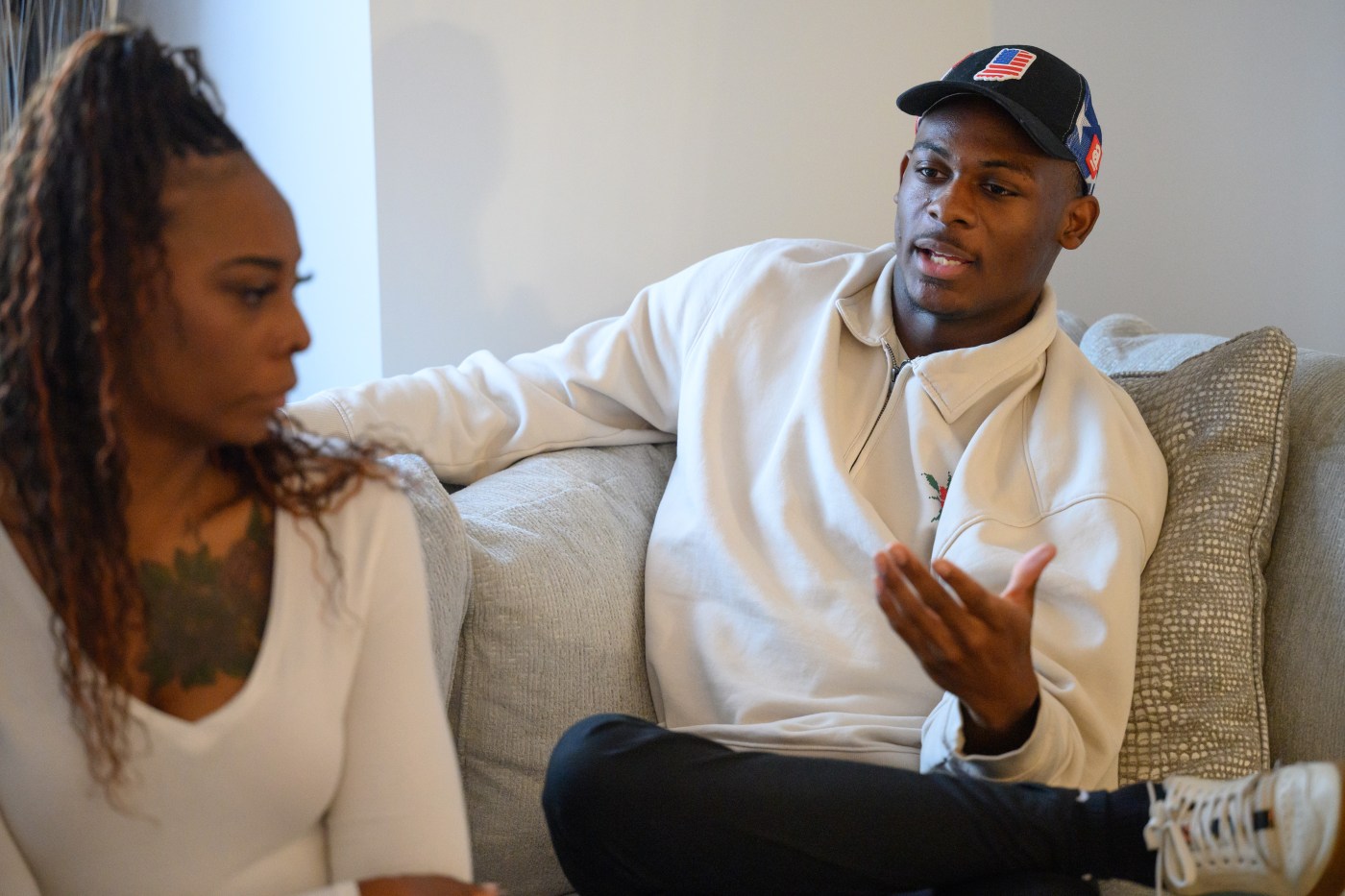
UPDATE: A powerful social media post by Julian Blevins, a sophomore at Chesterton High School, has ignited urgent discussions about racism in schools. Blevins, 16, shared his painful experiences of being called the N-word multiple times since he began attending the school in seventh grade. “It’s 2026, the 21st century. This shouldn’t still be happening,” he stated, triggering a wave of responses from community leaders and concerned parents.
The backlash reached the Chesterton Town Council when President Erin Collins addressed the issue during a recent meeting. “There’s no place for racism, hate speech, or threats in our community,” Collins asserted, emphasizing the need for accountability in spaces meant to be safe for children. Her comments reflect a growing concern among constituents about the persistence of such behavior.
In response to the controversy, Brent Martinson, Principal of Chesterton High School, issued an email to parents and students on January 9, 2026, reinforcing the school’s zero-tolerance policy for harassment based on race. He mentioned that the administration had conducted a thorough investigation of the complaints but did not specify details about Blevins. The investigation involved interviews and video analysis to address the claims.
However, the situation escalated when Natalie Cole, Blevins’ mother, filed a formal complaint with the federal Office for Civil Rights, citing ongoing racial hostility despite multiple reports to the school district. “These incidents are not isolated but represent a pattern of racial harassment,” Cole’s complaint states, highlighting her frustration with the district’s inadequate response.
The trigger for this escalating situation occurred on December 11, 2026, when Blevins received a two-day suspension for “disrespecting” a teacher. He had written a letter to Santa, which was later returned to him with racially charged comments. Blevins posted a picture of the letter online, which included derogatory statements linking him to theft and violence based on his race.
Julian expressed his disbelief that such incidents persist. “The same word I’ve heard in the halls, the same word that gets brushed off like it’s nothing,” he wrote in his post, underscoring the normalization of racist language in his school environment. His experience resonates deeply, particularly as he aims to protect his younger brother from similar experiences in the future.
The demographics of Chesterton reflect a significant racial imbalance, with only 1.5% of its population identifying as Black, according to the 2024 U.S. Census data. This disparity adds urgency to the discussions around racism and the need for systemic change within the school district.
As community leaders like Collins call for acknowledgment of the town’s troubling history, including its past as a “sundown” town, the conversation around racism has become more critical than ever. “Those effects do not simply disappear on their own,” Collins noted, advocating for proactive measures to foster a more inclusive environment.
Julian Blevins’s courageous stand for change has sparked a vital dialogue in Chesterton, urging parents, students, and officials to confront uncomfortable truths. As the community grapples with these issues, the hope for a safer, more equitable school environment remains at the forefront.
Next steps for the Duneland School Corporation include addressing Cole’s formal complaint and ensuring that comprehensive measures are implemented to combat racism in educational settings. The eyes of the community are now on school officials as they navigate this pivotal moment towards change.
Julian’s story is not just a call for action; it embodies the struggle for dignity and respect in spaces meant for learning. “I hope for change. With this, I hope to start a little bit of something,” he asserts, illustrating the profound impact of his advocacy for a better future.