UPDATE: In a significant move, the U.S. Conference of Catholic Bishops has just condemned the Trump administration’s immigration policies, calling for an urgent end to “dehumanizing rhetoric and violence.” This rare statement, the first in 12 years, reflects growing concerns over mass deportations affecting vulnerable communities across the country.
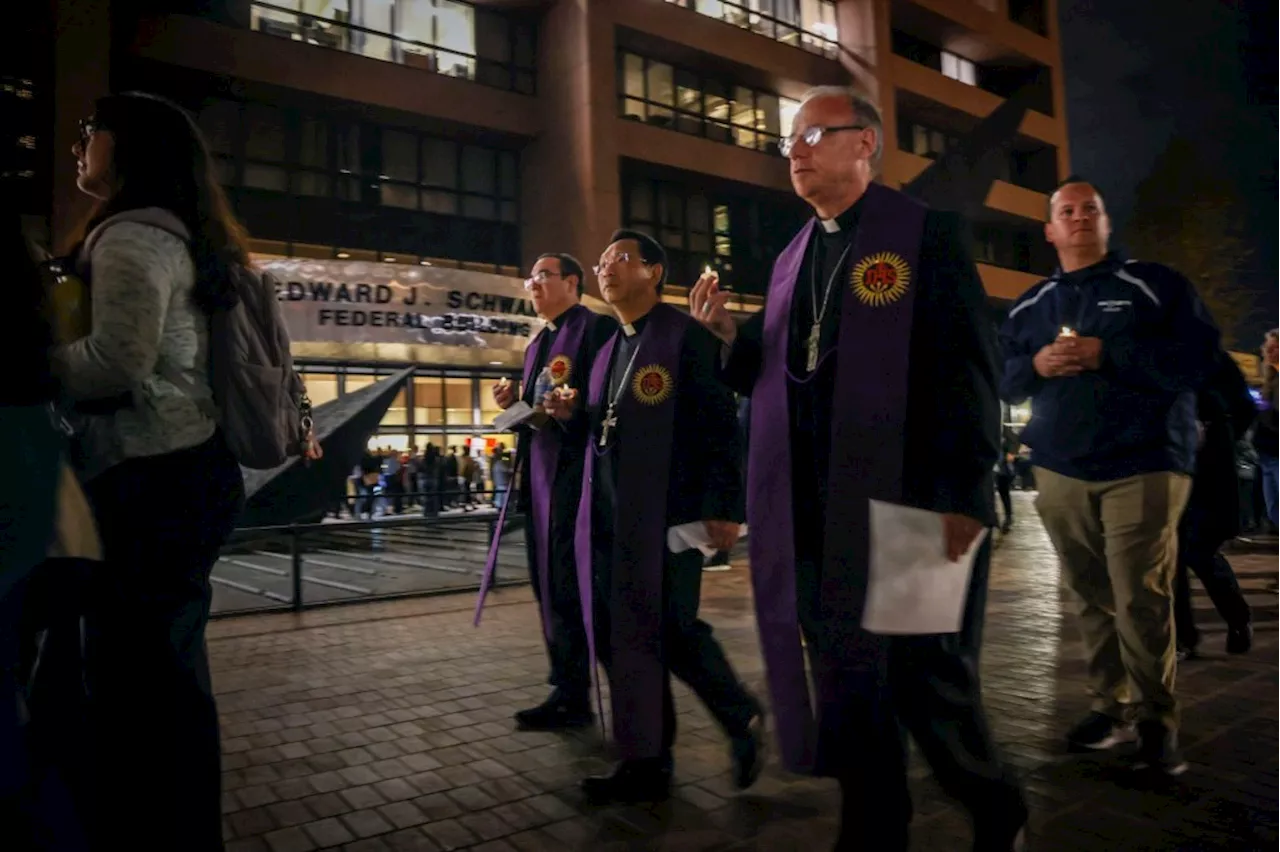
On the evening of October 12, 2023, San Diego Bishop Michael Pham, alongside Auxiliary Bishops Felipe Pulido and Ramón Bejarano, led a candlelight vigil in front of the Edward J. Schwartz federal building, a key site for immigration court proceedings, drawing hundreds of attendees. The vigil aimed to express solidarity with families impacted by recent immigration enforcement actions.
The bishops voted overwhelmingly to issue this special message during their fall plenary assembly, emphasizing that the time for decisive action is NOW. “We oppose the indiscriminate mass deportation of people,” the bishops stated, urging a compassionate approach to immigration reform.
Bishop Pham highlighted the necessity of treating every individual with “dignity and respect.” He emphasized, “We are opposing what is happening. We need to care for each other as a human family.” His sentiments were echoed by multi-faith leaders, including representatives from Jewish, Unitarian Universalist, and Methodist communities, who united in prayer to protect the rights of immigrants.
The rarity of such a statement from the bishops underscores the gravity of the current climate surrounding immigration policies. “We cannot keep our mouths shut because this is a human issue, an issue of human dignity,” said Bishop Bejarano. The last time the bishops issued a similar statement was in 2013, reflecting a heightened urgency in today’s socio-political landscape.
The vigil also served as a poignant reminder of the human stories behind the policies. Attendees heard from a woman who tearfully recounted her husband’s detention following over 30 years of living in the U.S., illustrating the personal toll of current immigration enforcement. “On October 9, my family was separated,” she expressed, voicing the distress many families face.
Amid these developments, Rep. Juan Vargas of San Diego announced intentions to push for congressional access to inspect conditions within ICE facilities, after previous requests were denied. He stressed the need for transparency and accountability in the face of allegations surrounding inhumane conditions.
As the situation unfolds, attention turns to how the bishops’ message will influence public dialogue and policy regarding immigration in the United States. “This is a crucial moment,” Bishop Pulido remarked, reinforcing the bishops’ commitment to advocating for meaningful reform.
In this urgent climate, the message from the U.S. Conference of Catholic Bishops resonates beyond religious circles, calling on all communities to unite against the injustices faced by immigrants. The bishops plan to continue their advocacy, seeking dialogue with public officials to address these pressing issues.
With the backdrop of increasing deportation rates and heightened enforcement actions, the bishops’ call to action is more relevant than ever. As this story develops, the impact on affected families and communities remains a critical focus for both local and national leaders.