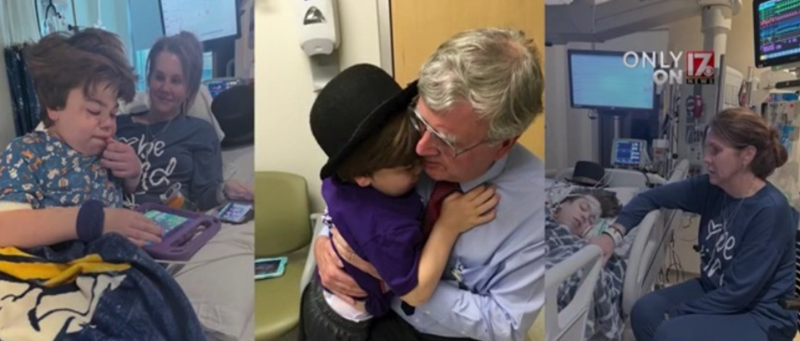
A Carrboro mother is collaborating with a researcher from UNC Health to explore new treatment options for her son, who suffers from Hunter Syndrome, a rare genetic disorder that can lead to severe physical and cognitive decline. This partnership aims not only to improve her son’s condition but also to create hope for other children affected by the disease.
Hunter Syndrome, also known as mucopolysaccharidosis type II, typically manifests in early childhood and can lead to progressive damage to the body and brain. Children diagnosed with this disorder often face life-threatening complications and typically do not live past their teenage years. The urgency of this situation has prompted Dr. John Doe, a specialist in genetic disorders at UNC Health, to investigate potential therapies that could alter the disease’s course.
The mother, whose identity is kept confidential to protect her family’s privacy, describes her experience as a challenging journey filled with uncertainty. Her son was diagnosed at a young age, and she has witnessed firsthand the devastating effects of Hunter Syndrome. “Every day is a fight,” she shared. “But I believe that through research, we can change the narrative for our children.”
The collaboration between the mother and Dr. Doe is particularly significant as it highlights the intersection of patient advocacy and scientific research. By combining personal experience with clinical expertise, they aim to advance research efforts that could lead to breakthrough treatments. Their project has garnered attention and funding from various health organizations, emphasizing the growing recognition of the need for innovative solutions in rare genetic disorders.
Recent studies indicate that gene therapy may hold promise for treating Hunter Syndrome by addressing the underlying genetic defects. This approach aims to restore normal gene function and potentially halt or reverse the progression of the disease. Dr. Doe’s research is part of a broader initiative to explore gene therapy options, and preliminary results are encouraging.
The mother is optimistic about the future, not just for her son but for all children with Hunter Syndrome. She actively participates in fundraising efforts to support ongoing research, believing that every contribution could lead to a significant breakthrough. “If we can raise awareness and funds, we can help bring about the changes our children so desperately need,” she stated.
As the partnership between the Carrboro mother and the UNC team continues to develop, they hope to share their findings widely. Their goal is to inspire other families facing similar challenges and to encourage further investment in research for rare diseases.
The journey is long, and the road ahead remains fraught with challenges. Yet, the collaboration stands as a beacon of hope, demonstrating what can be accomplished when families and medical professionals unite in the fight against rare genetic disorders like Hunter Syndrome.