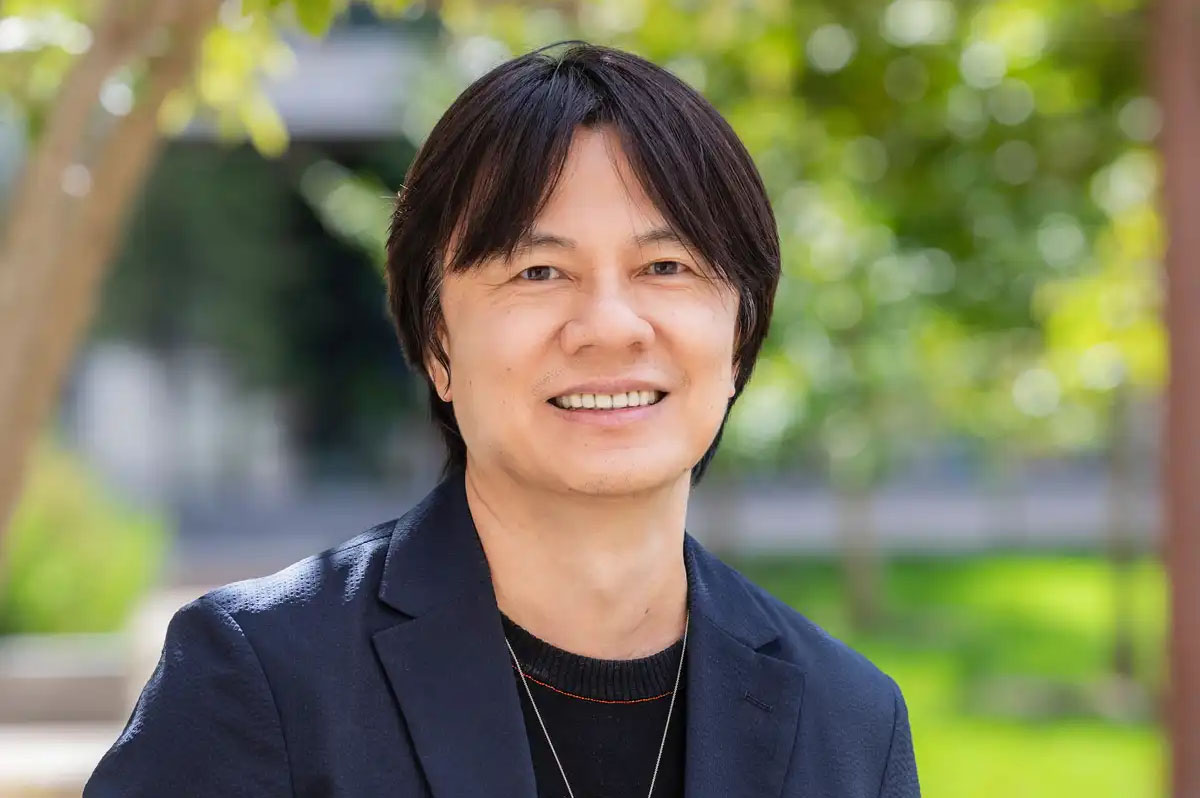
Researchers at the McKelvey School of Engineering at Washington University in St. Louis have made significant strides in the field of reinforcement learning, particularly concerning arbitrarily large systems. Co-authored by LiJr-Shin Li, the Newton R. and Sarah Louisa Glasgow Wilson Professor of electrical and systems engineering, and postdoctoral research associate Wei Zhang, their paper was published in the Journal of Machine Learning Research.
The research focuses on reinforcement learning, a branch of machine learning that enables systems to learn optimal behaviors through interaction with their environments. This method has far-reaching implications, ranging from autonomous vehicles to complex gaming scenarios. For instance, in an autonomous car, the application of reinforcement learning can lead to more efficient route planning, allowing passengers to arrive at their destinations faster.
As systems increase in complexity, the challenge of managing numerous variables becomes daunting. “If a system is extremely large, then you must account for the movements of hundreds of thousands of factors, which can seemingly take forever,” Li explained. The study introduces a novel formulation alongside effective algorithms designed to identify optimal outcomes for systems of any size.
Potential Applications Across Various Fields
The implications of this research extend beyond just technology. Li emphasized that their work could significantly impact various sectors, including medicine. As technology continues to evolve and become more intricate, the need for advanced solutions becomes increasingly critical. “We hope to be a part of the solution,” he added.
By developing reinforcement learning methods tailored for infinite-dimensional systems, the team aims to address the complexities that arise in real-world applications. These advancements could provide essential tools for industries requiring sophisticated data analysis and decision-making processes.
Future Directions
The research not only represents a technical achievement but also opens avenues for future exploration in machine learning. As various sectors face challenges related to data complexity and system behavior, the ability to deploy efficient reinforcement learning algorithms will be crucial.
As the field progresses, the integration of these methods into everyday technology could reshape industries, making systems smarter and more responsive. The work of Li and Zhang stands as a testament to the ongoing efforts to harness the power of machine learning for practical solutions.
For further details, visit the McKelvey Engineering website.