UPDATE: New inflation data from Australia reveals a slight easing in annual inflation rates, with the latest figures showing a drop from 3.8% in October to 3.4% in November. This development places the prospect of a rate hike by the Reserve Bank of Australia (RBA) firmly on the table as officials prepare for their upcoming policy meeting on February 3, 2024.
The Australian Bureau of Statistics (ABS) reported the latest Consumer Price Index (CPI) data, indicating that while headline inflation has decreased, the trimmed mean reading—a critical measure of core inflation—has only marginally dropped from 3.3% to 3.2%. This reading is particularly significant for the RBA as it focuses on core inflation trends rather than headline figures.
Despite the easing, the RBA remains cautious. The trimmed mean inflation reading continues to exceed the central bank’s target threshold of 2% to 3%, raising questions about persistent inflationary pressures. Market analysts are currently pricing in about 35% odds for a rate hike at the February meeting, underscoring the urgency of the situation.
Housing costs are a major concern, with new dwelling prices surging by 2.8% and rents climbing 4.0%—factors contributing to the ongoing inflation struggle. Even food prices remain stubbornly high, with inflation holding steady at 3.3% since June.
As the RBA monitors these developments, officials must decide when to intervene if inflation continues to prove sticky. The data released today does not significantly alter the RBA’s current trajectory but raises the stakes for their next meeting. Analysts from Commonwealth Bank of Australia (CBA) and National Australia Bank (NAB) predict a rate hike, while Westpac and ANZ anticipate that rates will remain steady for a longer period. However, Westpac acknowledges risks on both sides of the equation.
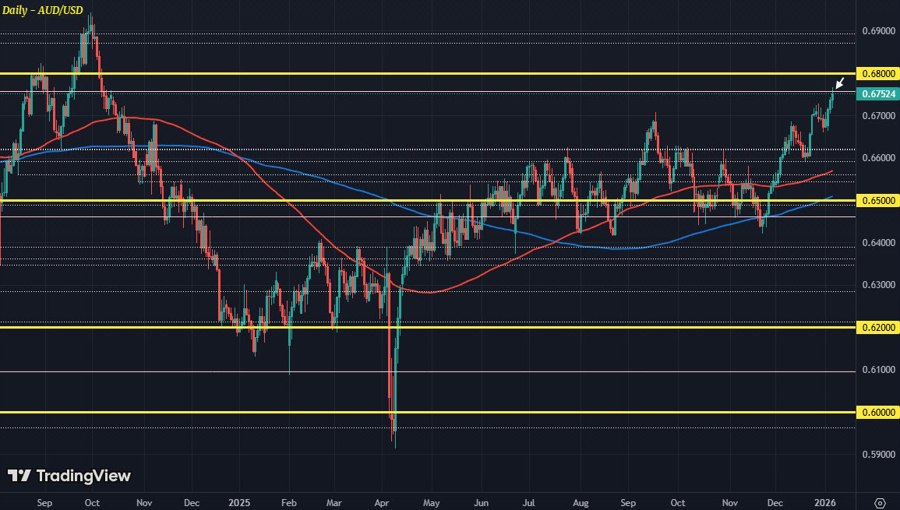
The outlook for the Australian dollar (AUD) remains bullish, with the AUD/USD pair trading at its highest since October 2024. Following the latest inflation data release, there was a minor setback, yet the near-term outlook remains positive. The pair is currently poised above key hourly moving averages, suggesting a robust upward bias.
Investors should keep a close watch on the upcoming December quarter report, scheduled for January 28, 2024. This report will be crucial in determining whether inflation pressures are indeed persistent enough to warrant immediate action from the RBA. As market sentiment continues to evolve, the potential for a more hawkish stance from the RBA could drive further fluctuations in the Australian dollar.
As this situation develops, monitoring the broader economic landscape, including the US labor market report due later this week, will be essential. The outcome of these events may significantly influence the RBA’s decision-making and the trajectory of the Australian economy. Stay tuned for more updates as we track this unfolding story.