URGENT UPDATE: On February 19, 2024, Argentina was brought to a standstill as workers, students, and retirees united in a national strike against President Javier Milei’s controversial labor law reform. This unprecedented mobilization marks the fourth national strike since Milei’s far-right government took power in 2023 and follows massive protests against his anti-worker legislation.
The newly passed bill, which severely restricts workers’ rights to organize, extends the workday to 12 hours, eliminates overtime pay, and reduces sick leave entitlements. It also cuts employer contributions to the national pension fund, all under the pretext of “modernizing” the economy. This initiative is part of Milei’s broader “chainsaw” austerity program, which has already led to significant cuts in public services and increased subordination to the IMF.
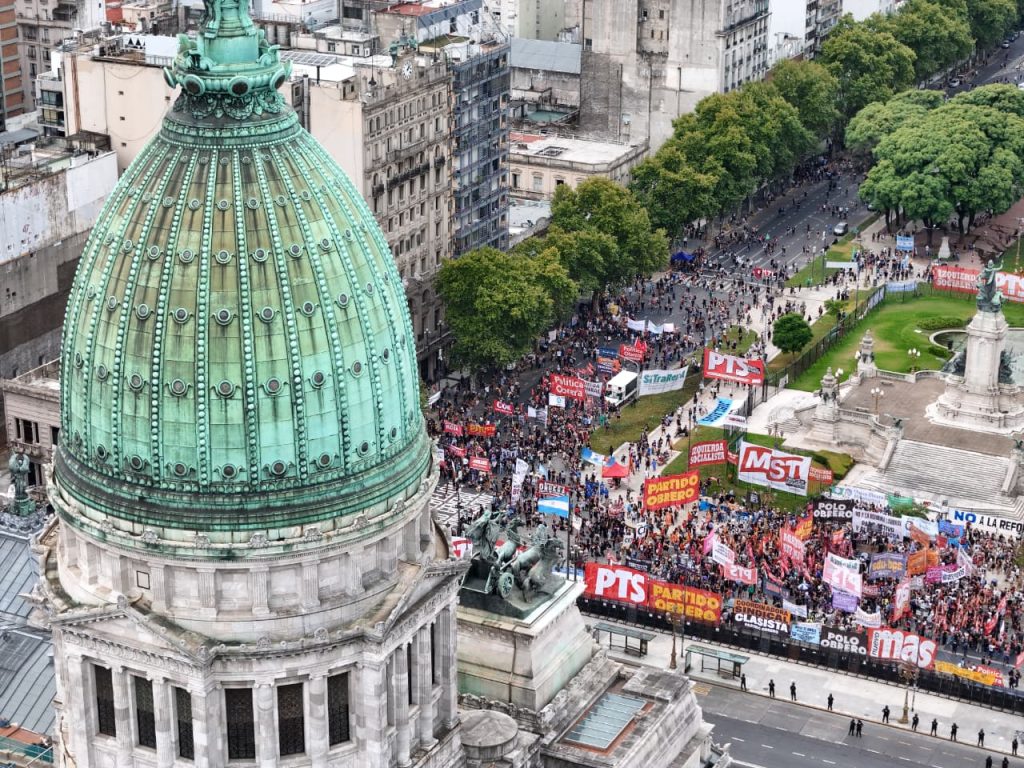
Following the bill’s passage in the Senate earlier this month, widespread protests erupted outside the Capitol in Buenos Aires. Demonstrators faced fierce government repression, yet the growing dissent compelled the CGT, Argentina’s largest union federation, to call for the strike after months of inaction. Despite its history of negotiating rather than mobilizing, the CGT’s participation was crucial in rallying support.
The effects of Thursday’s strike were immediate and widespread. Public transportation, including subways and bus lines, ground to a halt, leading to numerous flight cancellations. Factories, banks, and businesses closed their doors, while sanitation workers left trash piling on the streets. Schools, hospitals, and ports were disrupted, and protesters erected roadblocks on major highways.
The socialist Left played a significant role in both legislative discussions and street protests. Leaders from the Party of Socialist Workers (PTS) and the Left Front, including Myriam Bregman and Nicolás Del Caño, vocally opposed the legislation, rallying crowds with impassioned speeches. Their actions highlighted the growing discontent and mobilization among the working class.
While the bill’s approval in the Chamber of Deputies on February 16 has raised alarm, critics argue that the traditional center-left Peronist parties, which helped provide the necessary quorum for the legislative session, are equally culpable. Many view these politicians not as genuine opponents but as collaborators in Milei’s neoliberal agenda.
Despite the passage of the bill, the fight against Milei’s austerity measures is far from over. Thursday’s national strike showcased the potential power of organized labor and the revolutionary socialist Left. The PTS is calling for intensified efforts, urging workers and youth to join forces against government austerity. They advocate for meetings and assemblies across workplaces and schools, striving for a sustained national strike to counteract the labor bureaucracy’s passivity.
As the situation develops, all eyes will be on the response from the Milei government and the ongoing mobilizations from the working class. The stakes are high, and the collective anger is palpable. This moment could define the future of labor rights in Argentina, and the world is watching closely. Stay tuned for further updates on this unfolding crisis.