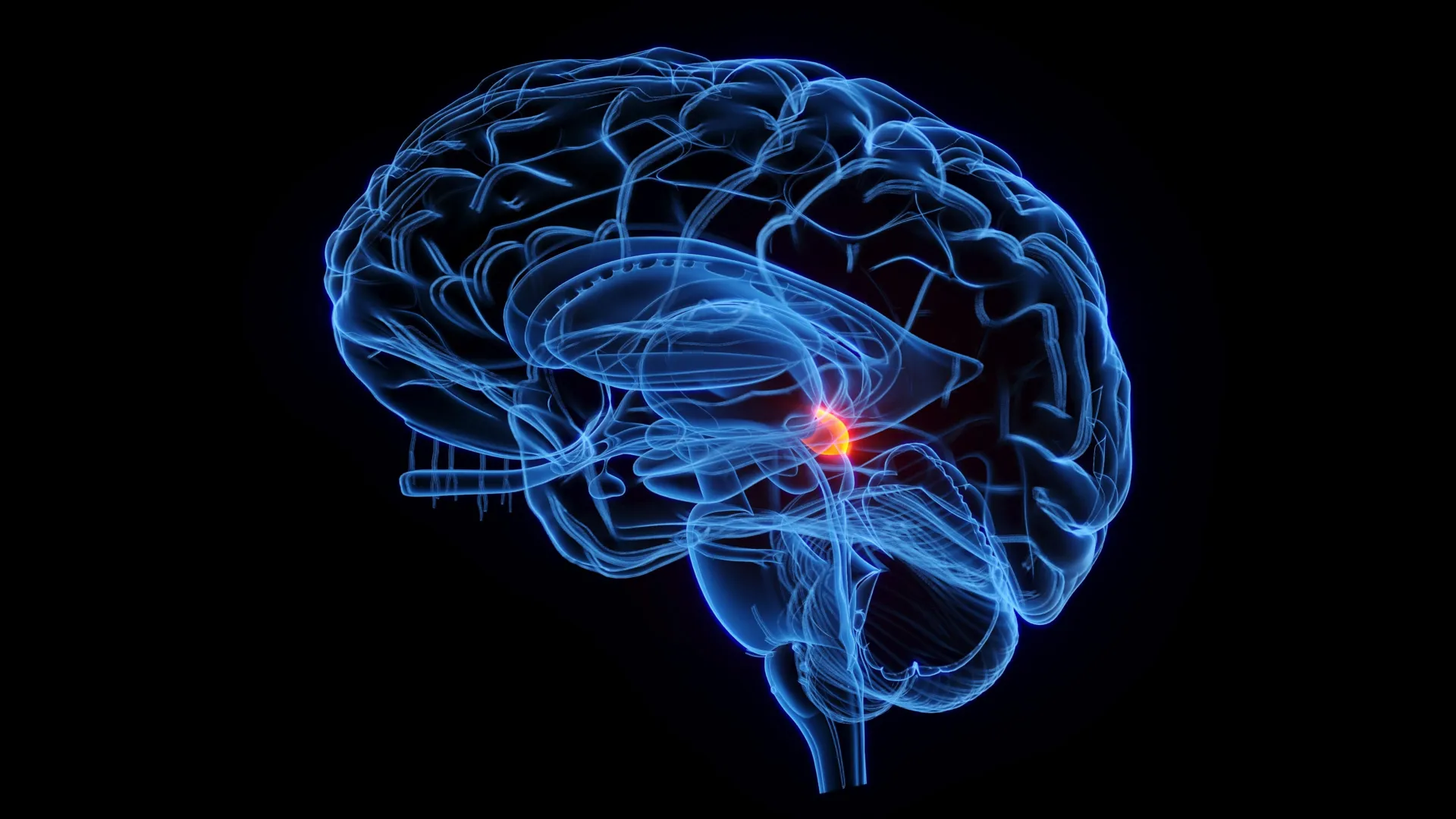
BREAKING: New research just announced from Universidad Miguel Hernandez de Elche reveals that the superior colliculus, an ancient brain region over 500 million years old, plays a crucial role in interpreting visual information independently of the cortex. This groundbreaking discovery challenges long-standing beliefs about visual processing, highlighting that our ability to perceive and respond to the world is rooted in ancient neural circuitry.
The study, published in PLOS Biology, demonstrates that the superior colliculus can autonomously perform complex visual computations. Researchers found that this primitive structure can separate objects from their backgrounds and prioritize visual cues, acting as an internal radar that responds to movement and sudden changes in the environment.
Andreas Kardamakis, head of the Neural Circuits in Vision for Action Laboratory, stated, “For decades it was thought that these computations were exclusive to the visual cortex, but we have shown that the superior colliculus can also perform them autonomously.” This discovery suggests that mechanisms for visual analysis and attention are not recent developments but rather ancient features evolved over half a billion years.
The implications of this research are profound. The superior colliculus processes visual signals before they reach the cortex, determining which aspects of our visual scene are most critical. When stimuli become apparent, such as a flash or sudden movement, this brain region reacts first, guiding our attention almost instantaneously.
Utilizing advanced techniques like patterned optogenetics and electrophysiology, the research team discovered that the superior colliculus actively filters visual information, enhancing contrasts and reducing responses to uniform stimuli. Co-first author Kuisong Song emphasized, “This demonstrates that the ability to select or prioritize visual information is embedded in the oldest subcortical circuits of the brain.”
This study unveils a new understanding of visual attention, suggesting that ancient brain structures manage essential survival computations such as threat detection and movement tracking. Kardamakis noted, “Understanding how these ancestral structures contribute to visual attention helps us grasp what happens when these mechanisms fail.”
As the research team moves forward, they plan to extend their findings to live animal models, aiming to investigate how the superior colliculus affects attention and manages distractions in goal-directed behavior. This work could unveil insights into the neurological bases of attention and the challenges posed by modern-day visual overload.
The collaboration involved prominent institutions such as the Karolinska Institutet and the Massachusetts Institute of Technology (MIT), showcasing a global effort to explore the evolutionary significance of these ancient brain circuits. The findings will also contribute to the 2025 publication of a new chapter in the Evolution of Nervous Systems series by Elsevier, edited by JH Kass.
This urgent update not only reshapes our understanding of visual processing but also opens new avenues for research into cognitive disorders linked to attention dysregulation. As we continue to uncover the depths of our brain’s evolutionary past, the role of structures like the superior colliculus proves to be more critical than ever in understanding human perception and reaction to the world around us.
Stay tuned for further developments as this research unfolds, providing deeper insights into the cognitive functions that define our experience.