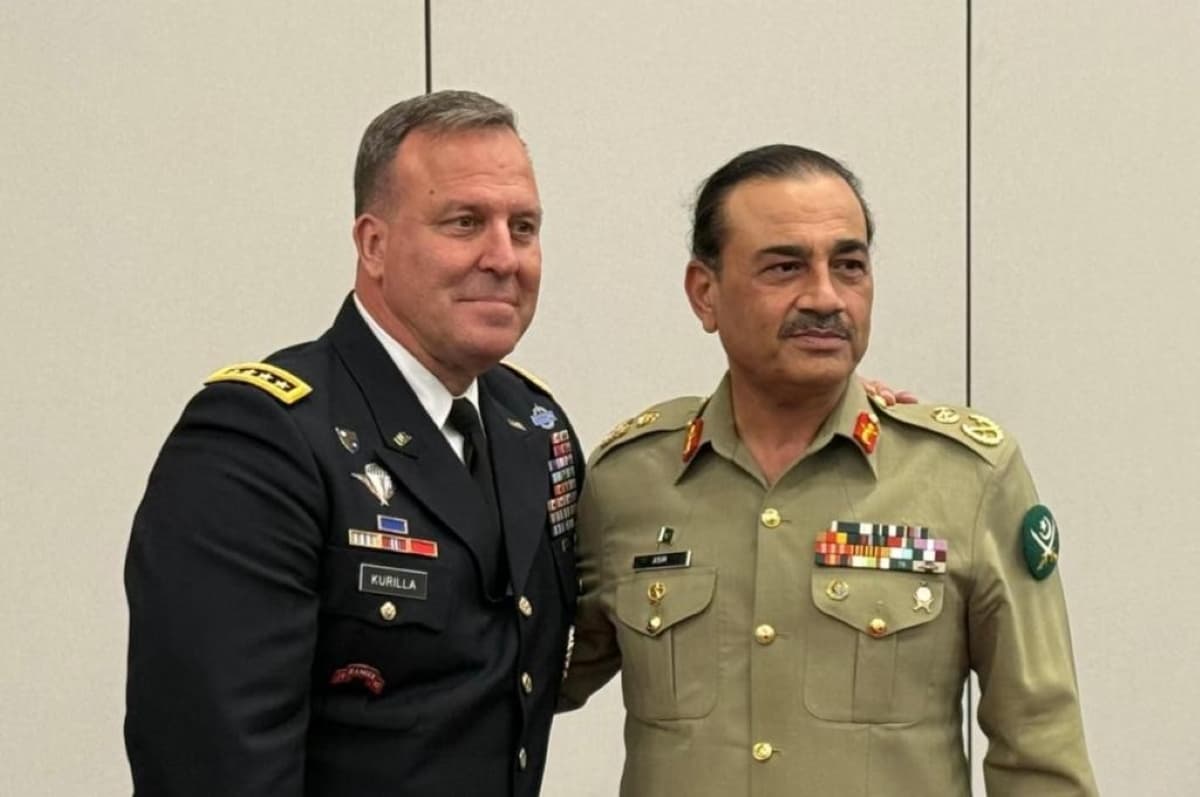
URGENT UPDATE: As the United States forges closer ties with Pakistan, Islamabad’s military chief, Field Marshal Asim Munir, is consolidating power, raising alarms about the implications for regional security and counterterrorism efforts. This significant shift comes as U.S. officials engage more deeply with Munir, despite concerns over Pakistan’s role in fostering terrorism.
In a dramatic move, Pakistan’s parliament has passed a sweeping constitutional amendment that expands Munir’s authority and grants him lifetime immunity from arrest and prosecution. This law, signed last Thursday, further entrenching the military’s influence over the political and judicial landscape of Pakistan.
The urgency of this situation is underscored by recent developments in the region. While the U.S. is keen on strengthening military and economic relationships with Pakistan, reports indicate that Islamabad is allegedly assisting terror groups like Jaish-e-Mohammed to regroup following India’s Operation Sindoor, launched in May. This operation targeted terror bases in Pakistan and Pakistan-Occupied Kashmir, following attacks on Hindu tourists.
Sources indicate that post-Operation Sindoor, Pakistan has provided support to these groups, relocating them to Khyber Pakhtunkhwa for enhanced security. On September 14, Jaish-e-Mohammed held a recruitment rally in the region, reportedly under police protection, further showcasing the military’s influence.
“Field Marshal Munir has ordered the Pakistan Army and Air Force to pay tribute at funerals of terrorists killed by India during Operation Sindoor,” an intelligence source revealed.
As the U.S. appears to overlook Pakistan’s deteriorating strategic position, the implications are serious. The country’s traditional reliance on the Taliban for influence is waning, with Islamabad conducting airstrikes against the Tehreek-e-Taliban Pakistan on October 9, 2023, coinciding with a visit by the Afghan foreign minister to India.
The Taliban, once viewed as a proxy, are now pursuing a nationalist agenda, diminishing Pakistan’s ability to control the narrative in Afghanistan. This shift threatens to fragment Pakistan’s internal cohesion as Pashtun resistance against Punjabi dominance grows, raising fears of potential separatist movements in regions like Balochistan.
The ramifications of Pakistan’s power consolidation and its fragile geopolitical standing are profound. Experts warn that the U.S. may be misjudging Pakistan as a reliable partner against terrorism, particularly as India emerges as a dominant force in the region. With its robust democracy and expanding technological capabilities, India is increasingly poised to shape South Asian politics.
As the U.S. recalibrates its strategy, it must consider the long-term implications of supporting a regime in Pakistan that increasingly resembles authoritarianism, while India’s influence continues to grow. The current trajectory suggests a need for Washington to pivot toward safeguarding its interests, rather than fostering a relationship with a nation increasingly seen as a regional liability.
The developments in Pakistan demand immediate global attention, emphasizing the need for a revised approach to U.S. engagement in South Asia. As this story unfolds, the world watches closely, aware of the potential consequences for regional stability and security.