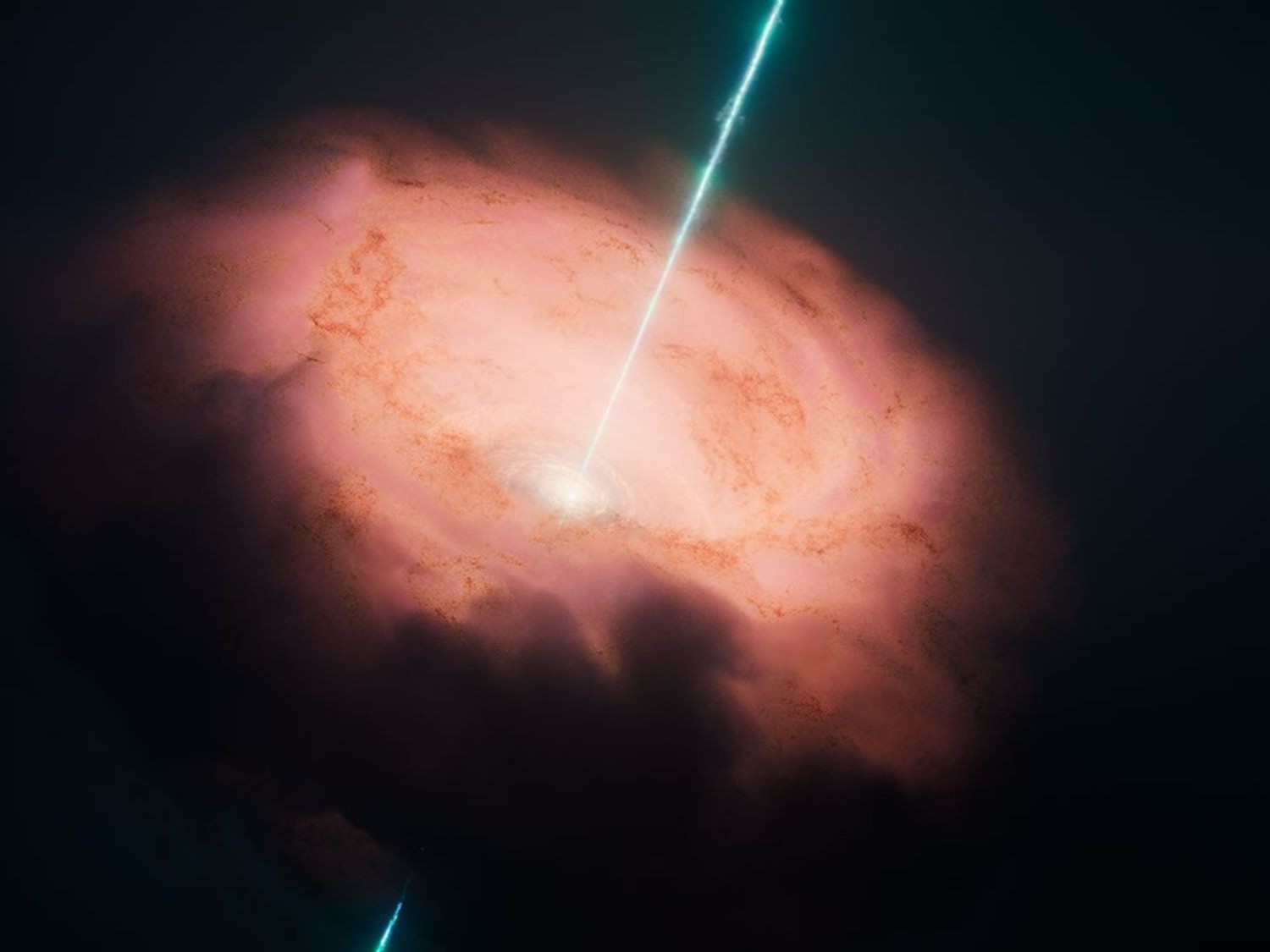
The **James Webb Space Telescope** has achieved a remarkable milestone by capturing its sharpest image of the environment surrounding a black hole. The image focuses on the supermassive black hole located in the center of the galaxy **M87**, providing unprecedented detail and clarity, revealing the complex dynamics at play in such extreme cosmic conditions.
This breakthrough was announced on **October 5, 2023**, as part of ongoing efforts to explore and understand black holes better. The image showcases the glowing gas and dust swirling around the black hole, an area known as the **accretion disk**. Scientists hope that this detailed observation will enhance our understanding of how black holes interact with their surrounding environments.
Significance of the Discovery
The **James Webb Space Telescope**, launched in December 2021, has quickly established itself as a powerful tool in astronomical research. The latest findings contribute significantly to the field, as they provide a visual context for theoretical models of black hole behavior. The image was taken in collaboration with data from the **Event Horizon Telescope** and demonstrates Webb’s ability to deliver high-resolution imagery of distant celestial objects.
According to **NASA**, this image not only highlights Webb’s capabilities but also marks a significant step forward in the study of black holes. The telescope’s infrared capabilities allow it to penetrate cosmic dust clouds that often obscure traditional optical telescopes. This advancement enables scientists to examine the intricate processes occurring in the vicinity of black holes more effectively.
The detailed observations of M87’s black hole could lead to fresh insights into the formation and growth of galaxies. As researchers analyze the intricate structures and behaviors captured in the image, they expect to glean more about the fundamental physics that govern these enigmatic phenomena.
Future Implications
The implications of this discovery extend beyond academic interest. Understanding black holes is crucial for addressing broader questions in astrophysics, including the nature of dark matter and the evolution of the universe.
Researchers from various institutions are eager to dive deeper into the data collected. As they continue to study the image, they anticipate revealing new aspects of black hole physics that could reshape current theories. The collaboration between the **James Webb Space Telescope** and the **Event Horizon Telescope** exemplifies how combining observational methods can enhance our understanding of the cosmos.
In summary, the stunning image of M87’s black hole environment, captured by the **James Webb Space Telescope**, represents a significant advancement in astronomical research. As scientists continue to analyze this data, the potential for groundbreaking discoveries in our understanding of black holes and their role in the universe remains vast.