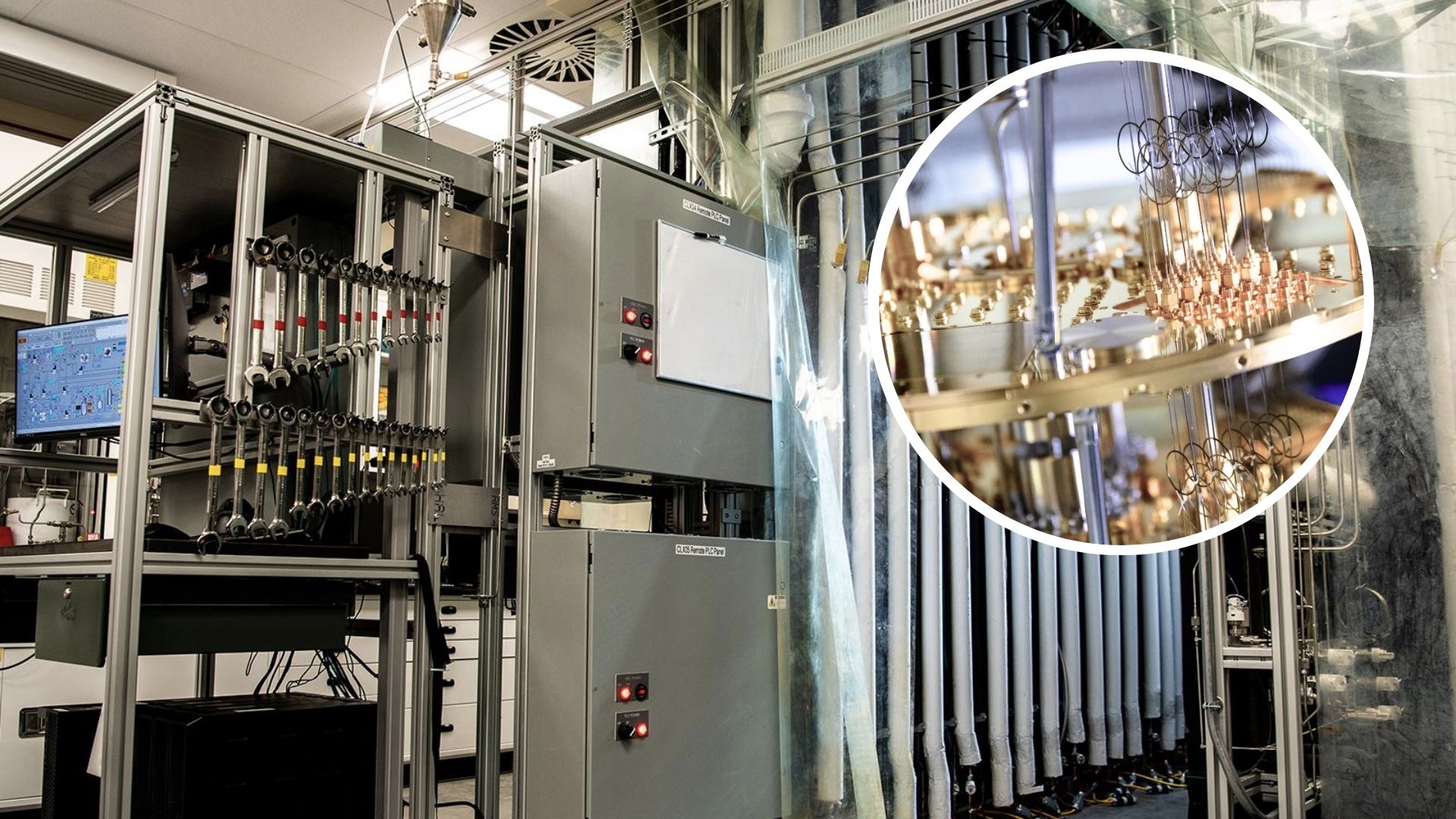
A significant advancement in the production of quantum materials has emerged from the Pacific Northwest National Laboratory (PNNL) in Washington, USA. The laboratory has successfully designed and constructed high-purity gas conversion and purification systems for silane and germane, two gases critical for research in quantum information science and advanced technology. These gases play a vital role in the semiconductor industry, particularly in the deposition of thin films of silicon and germanium used in computing chips.
Christopher Landers, Director of the Office of Isotope R&D and Production, emphasized the importance of this initiative. “Our investment to strengthen the supply chain for these specialized materials is more than just a scientific achievement; it’s a strategic imperative for the Genesis Mission,” he stated. Landers highlighted that the lab’s efforts are essential in addressing the demand for high-purity materials necessary for breakthroughs in quantum computing and artificial intelligence. This initiative aims to enhance America’s technological edge as outlined in the Genesis Mission objectives.
Innovative Research in Isotopic Enrichment
PNNL continues its research to further isotopically enrich silane and germane through enhanced thermal diffusion isotope separation (TDIS) technologies. The laboratory has previously developed systems for enriching argon and chlorine but requires additional research to effectively design and operate TDIS systems for silane and germane, as detailed in a recent press release.
Mike Powell, the principal investigator for the project, acknowledged the complexity of isotopic dilution of enriched silicon. “Isotopic dilution of enriched silicon is a challenging problem,” he noted. Powell assured that the systems and handling procedures are meticulously designed to maintain the purity of isotopic feedstock throughout the production process.
PNNL’s research is not limited to the design and operation of specialized systems. It is also developing a pathway to transform commercially available enriched starting compounds into device-compatible precursor gases. This integration is crucial for maintaining the integrity of the materials throughout the production chain.
Enhancing Supply Chain Stability
To strengthen the supply chain further, the Isotope R&D and Production program (IRP) is investing in research into thermal diffusion isotopic separation techniques. This method aims to directly enrich silane and germane, streamlining production while minimizing contamination risks. By ensuring a stable supply of these gases, PNNL aims to support researchers and manufacturers in their endeavors effectively.
The advancements in enriched silicon and germanium are anticipated to have far-reaching impacts across various sectors. These developments will not only facilitate next-generation semiconductor devices but also enhance other precision materials vital for technological innovation.
The initiative underscores the IRP’s commitment to building a robust infrastructure for specialized materials. In addition, the program is dedicated to pursuing further research and development or partnering with industry stakeholders to enhance the quality and specifications of these materials, which are currently unavailable in the commercial market.
This ongoing research at PNNL signifies a crucial step toward bolstering the United States’ position in the global technological landscape, making strides that are expected to influence multiple fields reliant on advanced materials.