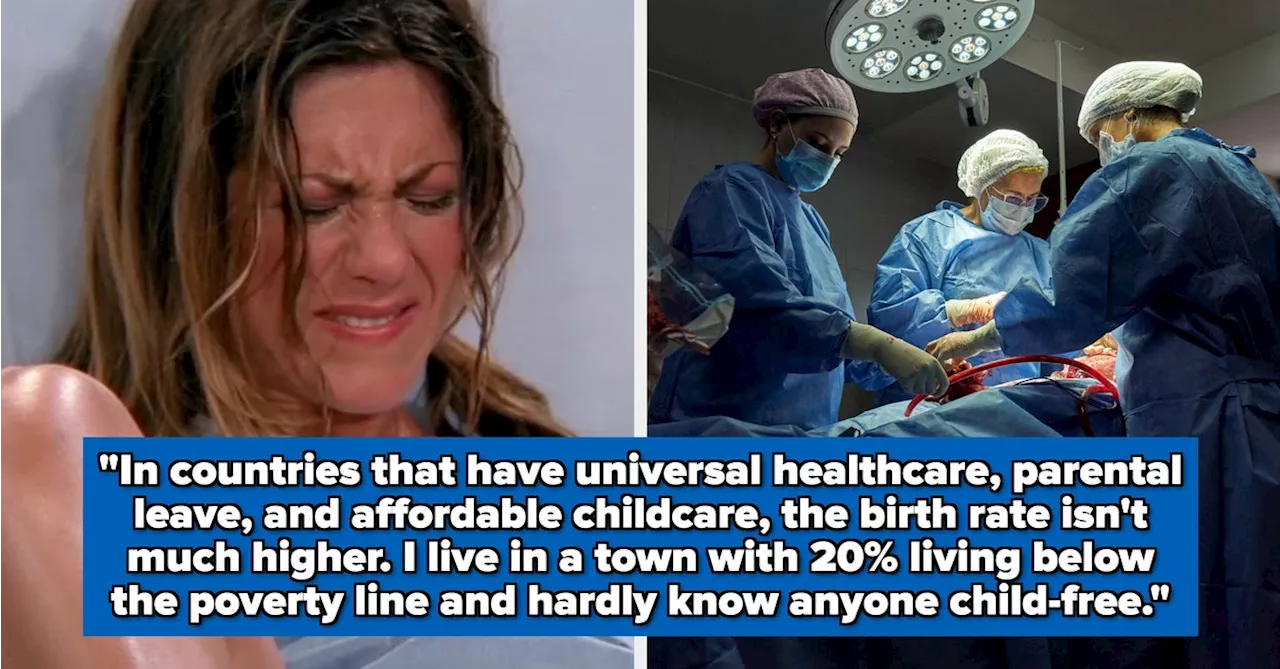
Declining birth rates in developed nations have sparked a comprehensive discussion that examines multiple factors beyond economic constraints. While financial burdens certainly influence the decision to have children, a deeper investigation reveals personal choices, societal attitudes, and the significant impact of birth control as pivotal elements in this trend.
Financial Considerations and Personal Choices
The conversation surrounding declining birth rates is often framed as a moral debate or a clash of values. Many individuals cite the economic realities of raising children, which include costs related to childcare, housing, and healthcare. These expenses can act as a barrier, leading people to reconsider or postpone parenthood. Some experts argue that improving financial circumstances could lead to increased birth rates, asserting that economic pressures are a primary driver of this trend.
Yet, it is essential to recognize that the decision to have children is deeply personal. Financial considerations play a role, but they do not fully encapsulate the motivations behind such choices. Insights from individuals who opt to remain childfree indicate a growing trend in personal agency over reproductive decisions, where financial resources are not the sole influence.
Shifts in Societal Attitudes and Personal Aspirations
A significant aspect of the declining birth rate is the evolving societal attitudes towards parenthood. Many individuals express a clear lack of desire to become parents, regardless of their financial situation. This sentiment signals a shift from traditional expectations toward a more conscious choice regarding family planning. People are increasingly vocal about their preferences, feeling empowered to prioritize their aspirations and life goals over societal norms.
The availability of reliable birth control has transformed reproductive choices, particularly for women. This empowerment allows individuals to align their family planning with personal ambitions rather than conforming to cultural pressures. As a result, the motivations behind these decisions become more diverse. Some choose to focus on personal goals, while others express concerns about genetic issues or the lack of adequate support systems for child-rearing.
This shift in understanding presents a challenge for policymakers, who often perceive declining birth rates primarily as an economic issue. Rather than viewing it as a problem requiring stimulus measures, it is crucial to acknowledge that this trend reflects a natural evolution of priorities and options available to individuals today.
Normalizing the decision to remain childfree is essential to comprehending these changing dynamics. Acknowledging that the choice regarding parenthood is uniquely personal underscores the need for societal acceptance of various life paths. As individuals continue to make decisions based on their values, aspirations, and resources, it becomes clear that the landscape of family planning is evolving significantly in developed nations.