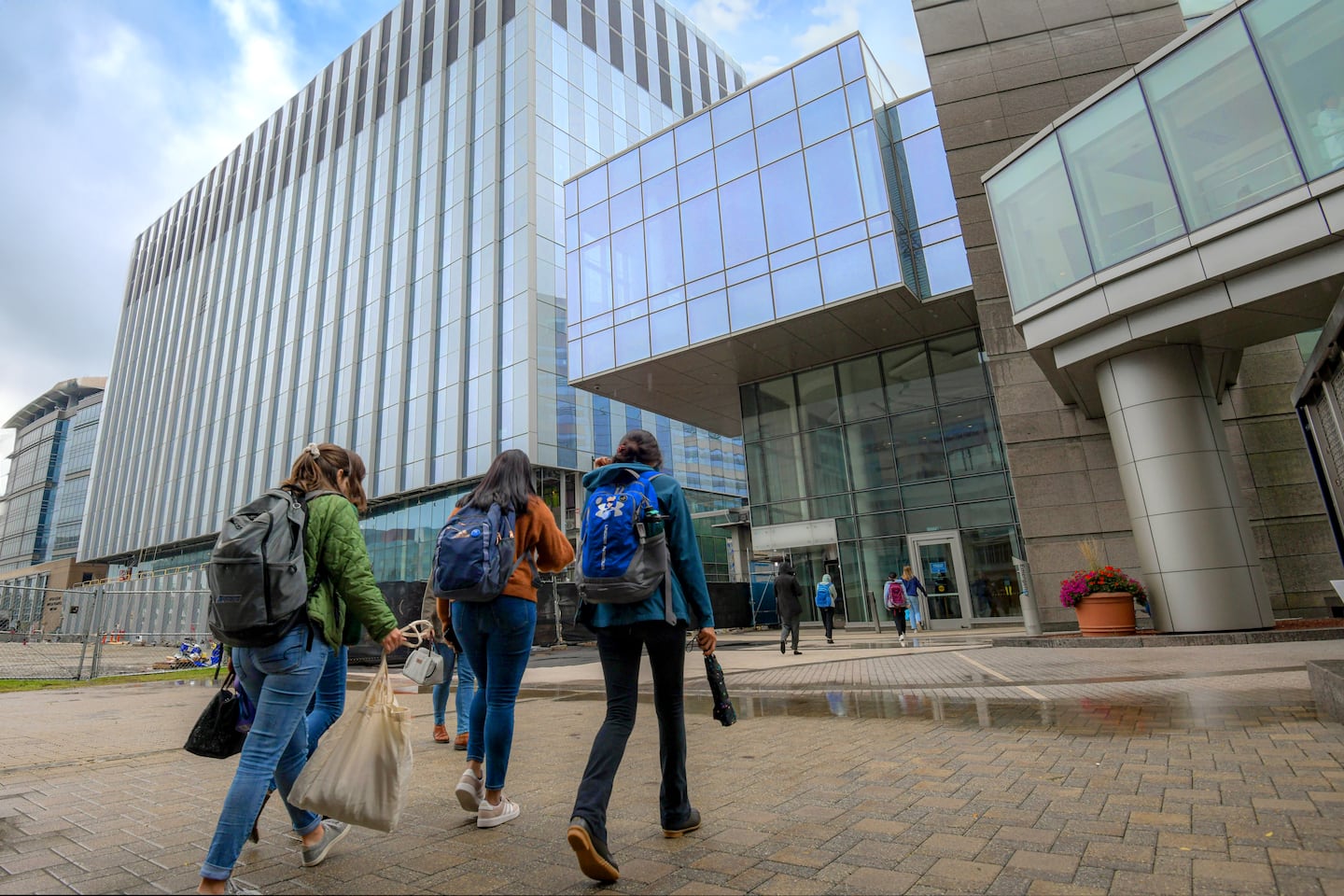
The admissions landscape for doctoral programs at UMass Chan Medical School has dramatically changed, with the institution admitting only 13 PhD students this year compared to 73 last year. This decline highlights a concerning trend in the academic environment, particularly in fields such as cancer biology, immunology, and neuroscience, which are crucial for future scientific advancements.
The drop in admissions comes on the heels of significant federal funding cuts. UMass Chan initially extended offers to between 60 and 80 potential biomedical PhD students for the 2025 academic year but subsequently withdrew almost all of those offers due to fears of reduced federal funding. Michael Nietzel, president emeritus of Missouri State University, emphasized the implications of these cuts, stating, “It’s your future talent in science, engineering, and for the academic workforce.”
The recent passage of a spending bill by Congress, which rejected proposed cuts to the National Institutes of Health (NIH), offers some hope for funding stability. However, the impact of this legislation on individual institutions remains uncertain. Michael Collins, Chancellor of UMass Chan Medical School, expressed cautious optimism regarding next year’s PhD class, anticipating it will include more students than this year but still fall short of typical enrollment numbers.
In fiscal 2025, UMass Chan received 345 NIH awards, totaling $190.4 million, marking the lowest amount in five years. While this figure is only $3 million less than in fiscal 2024, complications arose from a shift in how grants are distributed, with $13.2 million unavailable for immediate use. Collins noted that if federal funding continues to decline, fewer labs will receive support, thereby limiting opportunities for graduate students.
Nationally, data from the National Student Clearinghouse Research Center indicates a decrease of 2,122 doctoral students enrolled in fall 2025, representing a 0.3 percent decline. This marks the first notable drop in enrollment since 2020. The overall decrease in graduate students has been attributed to a loss of nearly 10,000 international students, although specifics regarding doctoral programs remain unclear.
In the Boston area, institutions present a mixed picture of doctoral student enrollment. Harvard University reported 4,061 doctoral students this year, down from 4,166 in the previous year. The university announced plans to admit PhD students for the 2026-2027 academic year “at significantly reduced levels” due to funding pressures. Conversely, the Massachusetts Institute of Technology (MIT) saw an increase, with 4,107 doctoral students enrolled, up from 4,083 last year. Nevertheless, MIT admitted 96 fewer graduate students overall, with declines noted particularly in the schools of engineering and science.
Regionally, Brown University has announced plans to reduce PhD student enrollment by 20 percent next year to cut costs, pausing admissions for several departments. While some view this as a necessary recalibration, others worry about the long-term consequences of reduced opportunities in fields with high demand for skilled researchers.
The challenges faced by doctoral programs extend beyond funding. Richard Larson, an MIT professor, highlighted the mismatch between the number of PhD graduates and available academic positions, exacerbated by legislation that removed mandatory retirement ages for professors. He stated, “We’re producing more PhD students than there are [academic] openings for them.”
With institutions facing pressure to make difficult decisions regarding admissions, the sustainability of doctoral programs is at stake. Phillip Levine, an economics professor at Wellesley College, noted the political complexity in targeting specific programs for cuts rather than implementing blanket reductions.
In contrast, the Canadian government has taken steps to attract international researchers, announcing a $1.7 billion investment over 12 years to recruit doctoral students and post-doctoral researchers. As U.S. universities grapple with funding challenges, the potential loss of talented individuals to other countries could have lasting implications for the American research landscape.
As the U.S. education system confronts these challenges, the pressing need for stable funding and strategic program management becomes increasingly clear. Without intervention, the repercussions of reducing doctoral programs could hinder America’s ability to foster the next generation of innovative scientists and researchers. The path forward remains uncertain, but the implications for the academic workforce and future discoveries are significant.