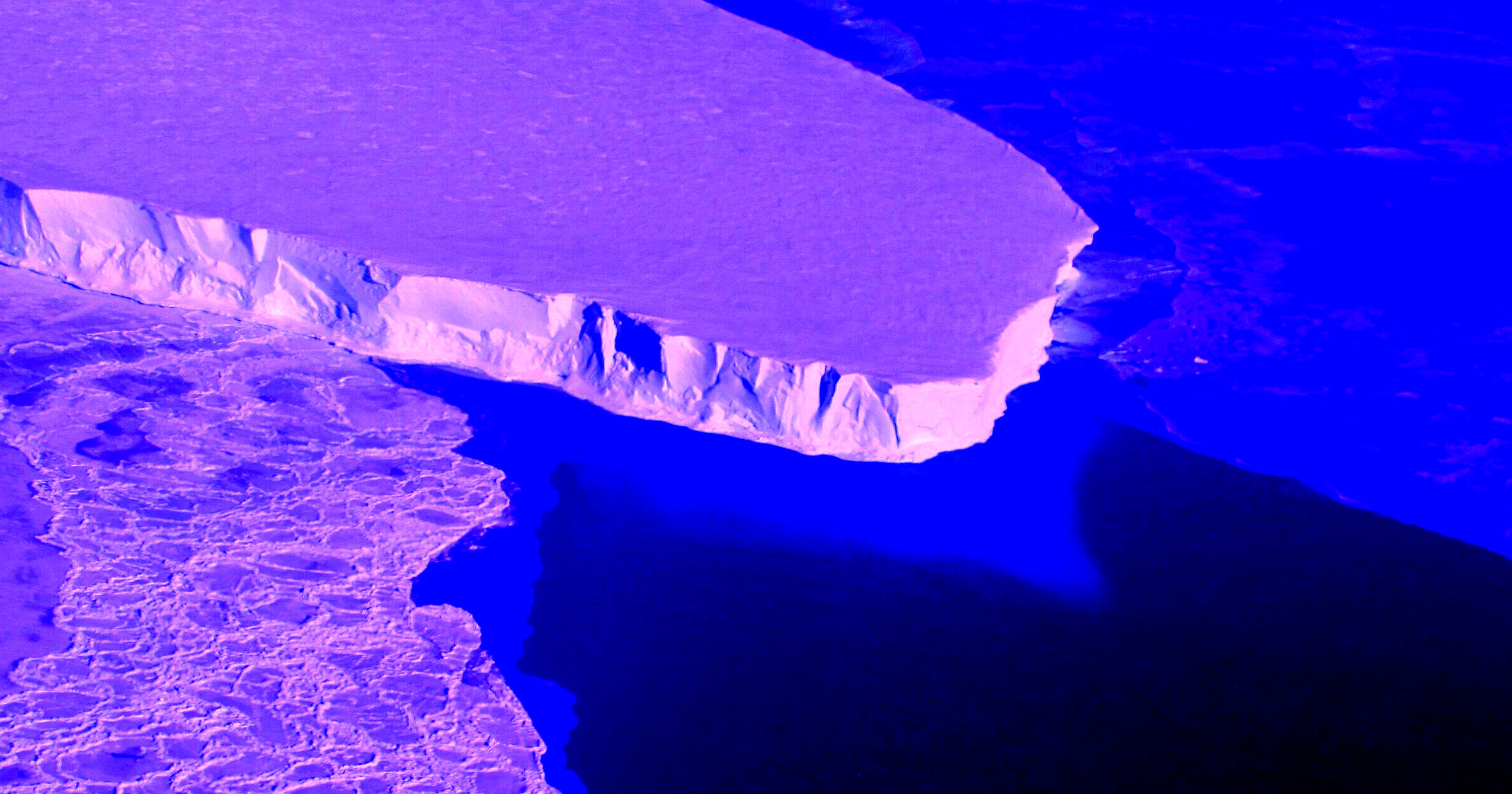
The Thwaites Glacier, often referred to as the “Doomsday Glacier,” is nearing a catastrophic collapse that could lead to a significant rise in global sea levels. Researchers have observed alarming changes in the glacier’s structural integrity, which could have dire consequences for coastal communities worldwide. According to a recent study published by the International Thwaites Glacier Collaboration (ITGC), large cracks in the glacier are growing, raising concerns about its stability.
Over the past two decades, scientists have documented a notable acceleration in the glacier’s retreat. A team from the University of Manitoba analyzed satellite data spanning from 2002 to 2022, revealing that the total length of fractures in the Thwaites Glacier has expanded from approximately 100 miles to over 200 miles. Despite this increase, the average length of the fractures has decreased, indicating that new stresses are affecting the glacier.
Warming Waters and Structural Weaknesses
The situation is compounded by changes occurring underwater. Recent studies have shown that warming ocean waters are contributing to the melting of ice shelves, including Thwaites. Researchers noted that swirling ocean currents, measuring up to six miles across, are eroding the glacier from beneath, further weakening its structure.
There is also a concerning feedback loop identified by researchers. Cold water released from the melting ice shelf mixes with warmer, saltier ocean waters, creating turbulence that accelerates further ice melting. “This positive feedback loop could gain intensity in a warming climate,” stated Lia Siegelman, an assistant professor at UC San Diego.
The ITGC’s report, expected in March 2025, highlights that while a complete collapse of the glacier is not anticipated in the immediate future, its retreat is projected to continue at an increasing rate throughout the 21st and 22nd centuries. The report emphasizes the urgent need for climate change mitigation to delay ice loss and prevent similar instability in other marine-based sectors of East Antarctica.
Implications for Global Sea Levels
The potential consequences of the Thwaites Glacier collapsing are staggering. Scientists estimate that if the glacier were to fail, it could lead to a global sea level rise of up to 11 feet, threatening the livelihoods of tens of millions of people living in coastal areas.
The ongoing research underscores the critical state of the Thwaites Glacier and the broader implications of climate change. As scientists continue to monitor its behavior, the need for immediate action on climate change remains a pressing concern for global leaders and communities alike. The findings serve as a stark reminder of the challenges posed by warming temperatures and the urgent need for effective climate policies.