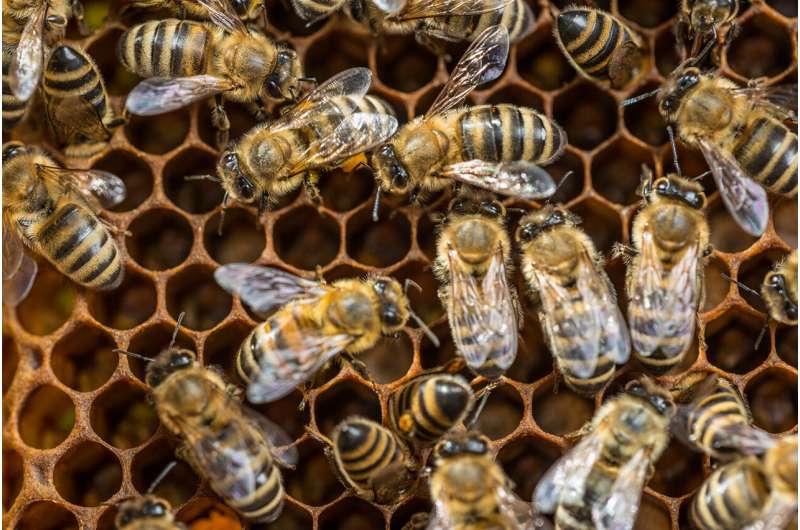
Research from the Helmholtz Centre for Environmental Research (UFZ) highlights significant behavioral changes in bees and fish exposed to crop protection chemicals. Published on November 6, 2025, in the journal Environment International, the study underscores the potential risks these substances pose to non-target organisms, including vital pollinators and aquatic life.
Plant protection products, which include fungicides, herbicides, and insecticides, are designed to safeguard crops from pests and diseases. Yet, they also affect organisms that are not their primary targets. Prof. Martin von Bergen, a biologist at UFZ and one of the study’s principal investigators, emphasizes that these chemicals can reach high concentrations in the environment shortly after application, posing risks not only to terrestrial insects but also to aquatic species as rainfall disperses these substances into waterways.
The research involved analyzing the effects of these chemicals on honeybees (Apis mellifera) and zebrafish (Danio rerio), chosen as representative model organisms. The focus was on behavioral changes resulting from exposure to relevant concentrations of plant protection products. Cassandra Uthoff, a doctoral student at UFZ and the lead author of the study, noted that even low concentrations of these chemicals could impair the health and behavior of non-target organisms, thereby affecting populations and ultimately biodiversity.
Uthoff explained that although some behavioral tests are currently included in risk assessments of chemicals, they often lack complexity and are not mandatory. The research team aimed to investigate whether specific behavioral patterns would change following exposure to these products. They exposed honeybees to insecticides, which resulted in diminished foraging activity and alterations in nectar processing. Additionally, exposure to fungicides and herbicides led to reduced brood care behaviors.
For zebrafish, the researchers employed a behavior-based screening method using embryos to assess neuroactivity effects. The study revealed that fish embryos exposed to a mixture of insecticide, herbicide, and fungicide displayed distinct behavioral changes. At lower concentrations, their behavior mirrored that expected from herbicide exposure, while at higher concentrations, the response shifted to that typically associated with fungicide exposure.
Prof. Tamara Tal, another co-head of the study, pointed out that mixtures of co-occurring chemicals can significantly alter behavior, indicating the need for regulations that consider cumulative risks. “To better protect animals in the environment, chemical regulations should set acceptable exposure levels based on cumulative risk,” she stated.
The findings suggest that the ecological effects of plant protection products are more extensive than previously recognized. The UFZ researchers are advocating for enhanced risk assessment frameworks that incorporate more relevant behavioral tests for low-concentration chemicals. This approach aims to identify critical substances and protect non-target organisms, essential for preserving biodiversity in agricultural landscapes.
The study’s implications extend beyond the laboratory, calling attention to the need for regulatory changes that take into account the complexities of ecological interactions. With agriculture increasingly reliant on chemical interventions, understanding their broader impact on ecosystems is paramount for sustainable practices.
For further details, refer to the original article by Cassandra Uthoff et al in Environment International.