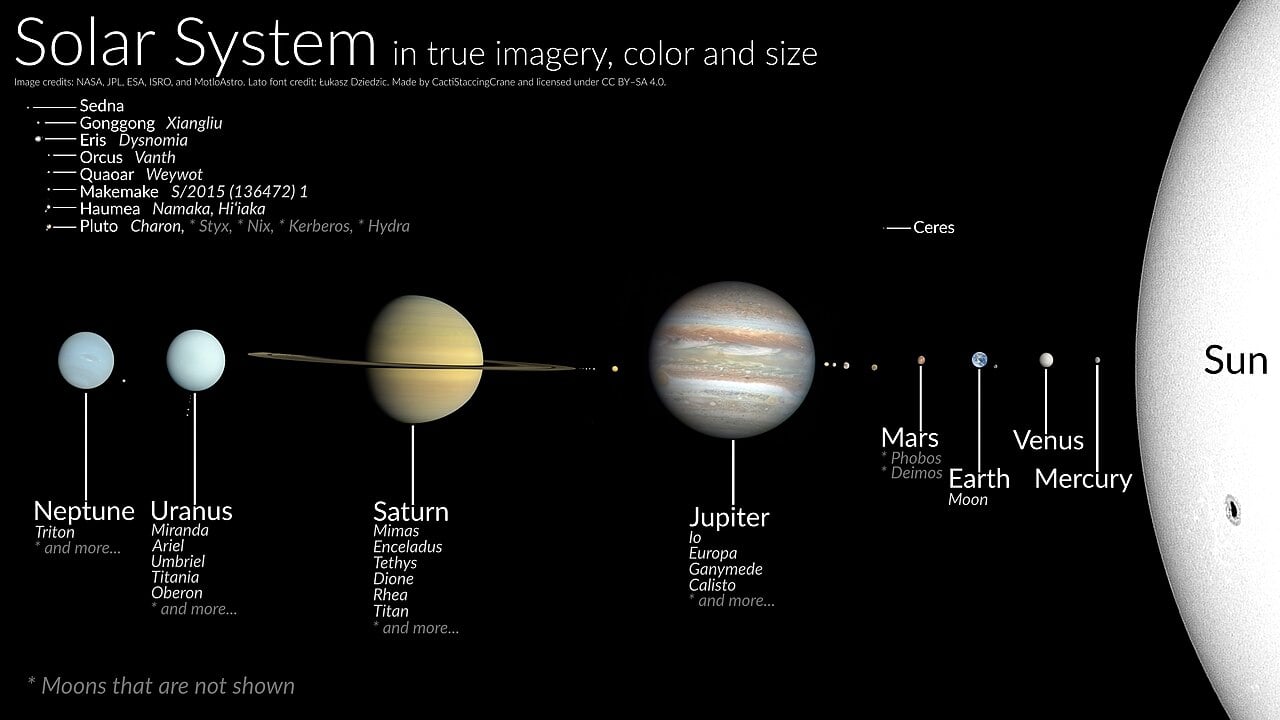
The Solar System is moving through space at an unprecedented speed, according to a new study led by Lukas Böhme, an astrophysicist at Bielefeld University. This research challenges existing cosmological models, revealing that the Solar System’s velocity far exceeds previous expectations. The findings suggest significant implications for our understanding of the universe’s structure and the distribution of matter within it.
Measuring the Solar System’s velocity is a complex task, as it involves understanding subtle asymmetries in the distribution of distant galaxies. As the Solar System travels through space, it creates a phenomenon akin to a “headwind,” where slightly more galaxies are observed in the direction of its motion compared to those behind it. Detecting this effect requires highly sensitive measurements.
Böhme and his team focused on radio galaxies—distant celestial objects that emit strong radio waves. Unlike optical telescopes, which can be hindered by dust and gas, radio telescopes can observe these long wavelengths regardless of obstructions. This capability allows astronomers to study galaxies that remain invisible to conventional instruments.
To conduct their research, the team combined data from three radio telescope networks, including the LOFAR (Low Frequency Array) located in Exloo, Netherlands, along with two additional observatories. This extensive dataset enabled them to count radio galaxies across the sky with exceptional precision. They also introduced a new statistical methodology that accounted for the multiple components of many radio galaxies, enhancing the accuracy of their measurements.
The results were unexpected. The analysis uncovered an anisotropy, or uneven distribution, of radio galaxies that achieved a statistical significance exceeding five sigma. This level of significance indicates that the findings are unlikely to be the result of measurement noise, providing robust evidence of a genuine effect.
The measured asymmetry was found to be 3.7 times stronger than predictions made by the standard cosmological model, which describes the universe’s evolution since the Big Bang and assumes a relatively uniform distribution of matter. This stark discrepancy raises two critical possibilities: either the Solar System is moving significantly faster through space than previously thought, necessitating a reevaluation of foundational cosmological principles, or the distribution of radio galaxies is much less uniform than astronomers have assumed.
These findings resonate with earlier studies of quasars, the highly luminous cores of distant galaxies powered by supermassive black holes. Previous infrared observations revealed similar anomalies, supporting the notion that this phenomenon is not merely an artefact of measurement but a real characteristic of the universe.
The research underscores the potential for advanced observational techniques to reshape our understanding of cosmic mechanics. It serves as a reminder of how much remains to be discovered about our place in the vast cosmos and the fundamental laws governing it. As scientists continue to unravel these complexities, the implications for cosmology are profound, inviting further investigation into the nature of our universe.