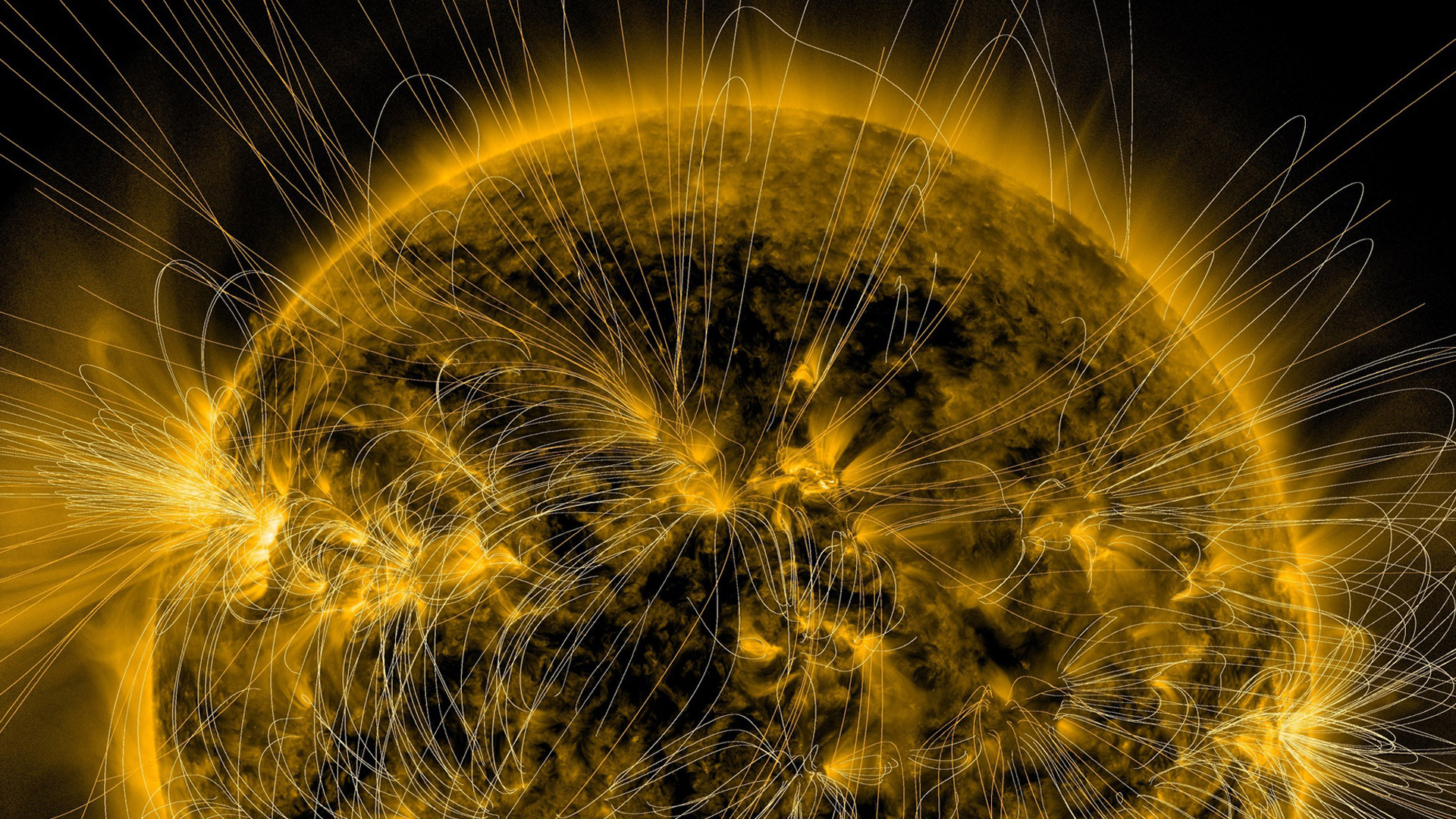
For the first time, scientists have successfully mapped the sun’s internal magnetic field, shedding light on the complex processes that drive solar activity. This breakthrough comes from a comprehensive study utilizing nearly 30 years of satellite data, revealing how magnetism evolves beneath the sun’s surface. The research offers new insights into the hidden dynamics of the sun, which influences both space weather and technology on Earth.
Understanding Solar Magnetism
The sun exhibits various phenomena, including dark spots and massive energy bursts, which can disrupt satellites and power systems on Earth. These changes are largely attributed to magnetic activity within the sun, specifically a process known as the solar dynamo. Until now, the mechanisms at play deep within the sun remained largely speculative, as direct measurement of these internal magnetic fields was impossible.
In their recent study, researchers took a novel approach by leveraging real observational data instead of relying on theoretical models. They analyzed daily magnetic field maps collected by solar satellites from 1996 to 2025. These maps allowed the team to track the emergence and evolution of magnetic fields on the sun’s surface over time.
Innovative Methodology for Mapping
The researchers developed a detailed three-dimensional computer model to simulate the sun’s internal magnetic structures. By inputting the daily surface data into this model, they could continuously adjust its parameters, ensuring physical consistency. This methodology enabled the scientists to backtrack and identify the probable magnetic structures and flows hidden beneath the sun’s surface that could explain the observed solar patterns.
To validate their approach, the team tested the model by reconstructing past solar cycles, which typically last around 11 years. The model accurately reproduced key features of these cycles, including the movement of sunspots from higher latitudes toward the solar equator, a crucial indicator of solar cycle progression. The authors noted, “Our data-driven model successfully reproduces key observational features, such as the surface butterfly diagram, accurate polar field evolution, and axial dipole moment.”
Furthermore, the researchers conducted a forward prediction test by ceasing to input new data at specific intervals. Remarkably, the model continued to predict significant solar activity features up to three to four years into the future. The researchers stated, “A strong correlation between the simulated toroidal field and sunspot number establishes our 3D magnetogram-driven model as a robust predictive model of the solar cycle.”
This advancement represents a paradigm shift in solar research. By enabling indirect monitoring of the sun’s interior, scientists can now achieve more reliable forecasts of solar activity. These forecasts are crucial for protecting satellites, minimizing risks to navigation systems, and providing power grid operators with advance warnings of geomagnetic disturbances.
Despite this progress, the model’s effectiveness relies on the continuation of long-term satellite missions. Future efforts will focus on refining the technique further, with the aim of not only predicting when solar activity will peak but also identifying where active regions are likely to form on the sun’s surface.
The study has been published in The Astrophysical Journal Letters, marking a significant step forward in our understanding of solar dynamics and their implications for life on Earth.