A recent breakthrough by researchers at Lund University has unveiled how cells can effectively block harmful free radicals, small oxygen molecules that can damage cells. This significant discovery, published in Nature Communications on December 22, 2025, highlights the delicate balance cells maintain between beneficial and harmful molecules.
Cells produce free radicals, including hydrogen peroxide, when they metabolize oxygen. While hydrogen peroxide serves essential signaling functions in small amounts, excessive levels can lead to cellular damage or death. Lead researcher, Karin Lindkvist, a professor at Lund University, explained that prior understanding suggested hydrogen peroxide could pass freely through cell membrane channels, similar to water. However, this study reveals a protective mechanism that effectively closes the cell membrane’s “door” when hydrogen peroxide concentrations become too high.
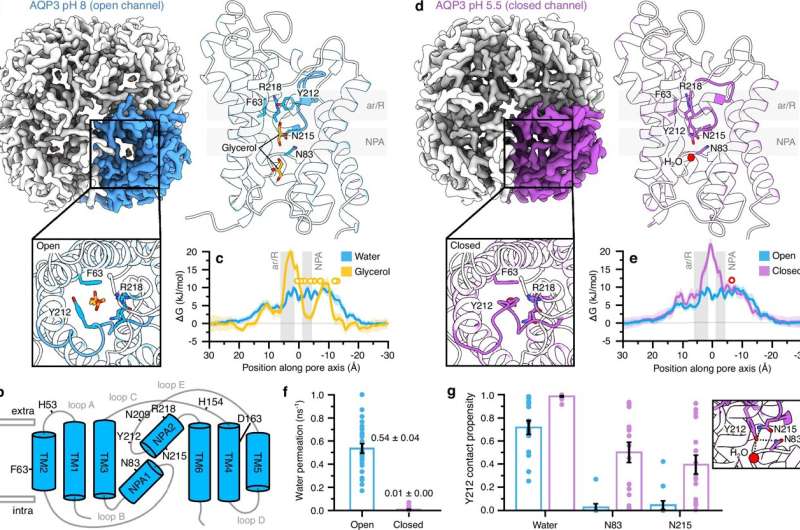
Utilizing advanced cryo-electron microscopy, researchers observed that the membrane channel is typically open, allowing molecules like hydrogen peroxide, water, and glycerol to enter. When external hydrogen peroxide levels rise, these molecules bind to the channel’s exterior, effectively sealing it shut and safeguarding the cell from potential harm.
“We were surprised by what we saw,” Lindkvist remarked. “It was like witnessing, in the moment, the cell closing the channel on something that could otherwise cause it harm. This acts as an automatic protection against dangerous levels entering the cell.”
The findings offer profound insights into cellular defense mechanisms against oxidative stress. Understanding how cells regulate free radicals may pave the way for advances in treating conditions such as diabetes and cancer, where cellular stress responses are often disrupted.
In the context of cancer, it is noted that rapidly growing cancer cells produce excessive free radicals. Interestingly, these cells manage to survive this overload, suggesting they may utilize similar channels to eliminate excess radicals and avoid damage.
“Our next study will explore whether blocking these channels could effectively kill cancer cells,” Lindkvist stated, emphasizing the potential implications of this research for future cancer therapies.
With this new understanding, researchers hope to develop strategies that enhance cellular protection against oxidative stress, leading to innovative treatments for diseases linked to free radical damage.
The full study detailing these findings can be accessed through the publication in Nature Communications, authored by Peng Huang et al. The DOI for the article is 10.1038/s41467-025-67144-2.