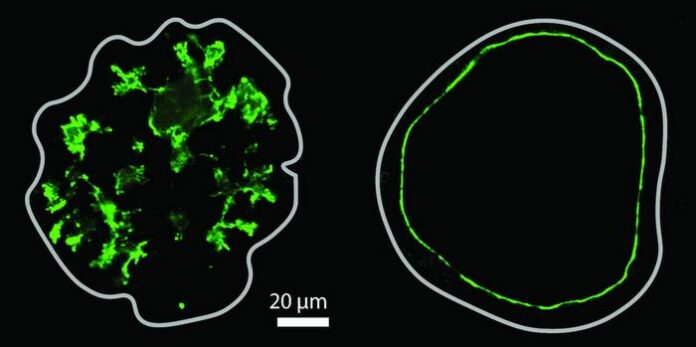
Scientists have made significant strides in understanding how pancreatic lumens, the fluid-filled cavities essential for organ function, form during development. Using organoids derived from mouse cells, researchers identified key factors influencing the shape and structure of these lumens, as reported in the latest issue of Nature Cell Biology.
The study highlights three primary factors that govern lumen formation: the rate of cell proliferation, the pressure within the lumen, and the permeability of the surrounding cells. Researchers found that a delicate balance between cell growth and internal pressure determines the resulting lumen shape. Specifically, lower pressure combined with higher cell proliferation leads to more intricate, star-shaped lumens. This phenomenon occurs because the surrounding pancreatic tissue is permeable, allowing for reduced pressure within the lumens.
Implications for Organ Development and Disease Treatment
Understanding how pancreatic lumens develop is crucial for diagnosing and treating pancreatic disorders. These lumens are integral to the organ’s functionality, facilitating the transport of digestive enzymes to the small intestine. Despite their importance, the precise mechanisms behind lumen formation remained unclear, particularly since prior studies largely focused on simpler, spherical shapes.
Byung Ho Lee, PhD, a postdoctoral researcher in the lab of Anne Grapin-Botton at the Max Planck Institute of Molecular Cell Biology and Genetics in Dresden, Germany, explains, “Pancreatic organoids can form either large spherical lumens or narrow, complex interconnected structures, depending on the medium used.” The researchers manipulated these organoids by introducing specific chemical agents that altered both cell proliferation rates and internal pressures, successfully changing the shape of the lumens.
The findings suggest that manipulating epithelial cell permeability can also reduce lumen pressure, transforming shapes from spherical to more complex forms. The authors note, “Manipulating proliferation and lumen pressure can alter or reverse lumen development both in silico and in vitro.” This adaptability opens avenues for further exploration in organ development and tissue engineering.
Potential for Advancements in Cystic Disease Research
The implications of this research extend beyond the pancreas. According to Grapin-Botton, “This discovery could help us understand how other organs with narrow interconnected ducts develop and how common cystic diseases affect them.” The developed model system not only enhances research into organ development but could also be pivotal in testing the effects of various drugs on diseases.
This innovative approach could lead to new therapeutic strategies for conditions affecting the pancreas and similar organs. As the research community continues to unravel the complexities of organ development, these insights may pave the way for improved treatment options for patients suffering from pancreatic disorders and other related diseases.
The full findings are detailed in the paper titled, “Permeability-driven pressure and cell proliferation control lumen morphogenesis in pancreatic organoids,” published on March 15, 2024. This work marks a significant advance in our understanding of organogenesis and highlights the potential for future applications in medical science.