A recent study published in *npj Biofilms and Microbiomes* investigates the potential of biofilms, communities of microorganisms, for enhancing space exploration. Conducted by an international team of researchers, the study aims to understand how biofilms, which may have played a role in the origin of life on Earth, can be utilized in the unique conditions of spaceflight. This research could also provide insights into mitigating health risks for astronauts.
The researchers began by examining the extensive history of biofilms, highlighting their contributions to early life on Earth and their ongoing significance in human health and agriculture. They explored how the conditions of spaceflight impact the structure and function of biofilms, including their interactions with the gut and plant roots in microgravity environments.
To support their findings, the team utilized data from the NASA Open Science Data Repository (OSDR), which promotes accessible scientific research. Among the potential applications identified are the development of precision and regenerative medicines and improvements in agricultural practices, such as enhancing crop yield and quality while reducing reliance on chemical pesticides.
According to the study, biofilm communities could be engineered for in situ pharmaceutical production, reducing the need for resupplying medical supplies from Earth. The authors state, “Biofilms have supported life since primordial Earth. Embedded in multicellular life, biofilms should be understood not only as risk agents to be eliminated but also as complex and adaptive biological tools to be harnessed.”
The researchers argue that exploring biofilms in space, guided by Open Science principles, could lead to innovative technologies that would support deep-space exploration and yield sustainable benefits for life on Earth.
This study builds upon over two decades of research into biofilms in space environments. Recent investigations include a 2025 paper published in *Science of Biofilms*, which simulated a microgravity biofilm reactor to monitor biofilm growth under space-like conditions. Another 2025 study in the *Journal of Microbiology* examined biofilm development in space and discussed associated risks and mitigation strategies. A 2023 paper in *npj Microgravity* also analyzed biofilm formation in microgravity.
NASA has long been focused on understanding biofilms, particularly their characteristics in space compared to Earth. These studies reveal that biofilm communities can more easily adhere to surfaces in microgravity, which poses potential risks for equipment and astronaut health. Research has shown that biofilms may exhibit resistance to antimicrobials and antibiotics, complicating efforts to manage their growth in confined environments.
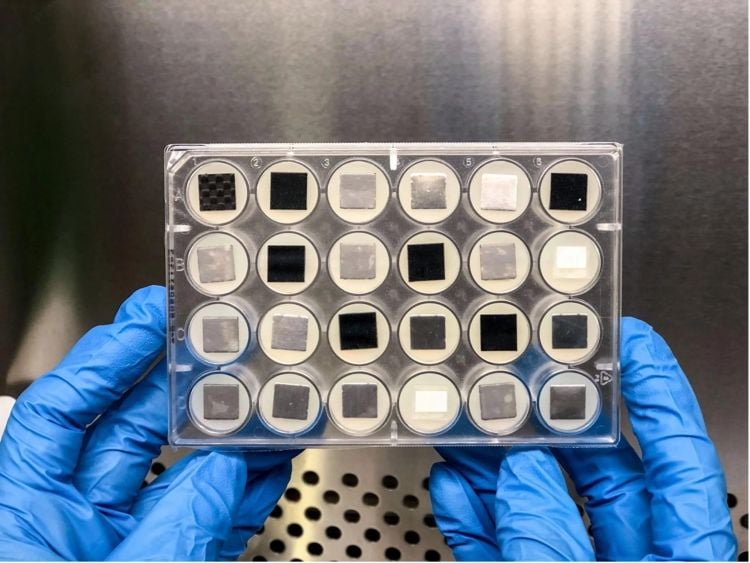
In closed systems aboard spacecraft, biofilms can clog water systems, corrode metal components, and damage essential air filtration systems, critical for providing oxygen and removing carbon dioxide. One of the most comprehensive studies investigating biofilm behavior in microgravity is the Characterization of Biofilm Formation, Growth, and Gene Expression on Different Materials and Environmental Conditions in Microgravity (Space Biofilms) conducted on the International Space Station (ISS).
Astronauts involved in this research are exploring the complex processes that drive biofilm growth and development in microgravity. As with many studies conducted on the ISS, findings may have implications for addressing biofilm-related health hazards on Earth.
Biofilm research represents just one aspect of the broader scientific efforts that will facilitate human exploration beyond our planet, whether on the ISS, the Moon, or Mars. While biofilms pose certain health risks to astronauts, they also hold significant potential for advancing human capabilities in space. The ongoing inquiry into biofilms will likely shape future space missions and technology.
Researchers remain focused on uncovering how biofilms can be leveraged to support human life in space, emphasizing the need for continued exploration of this microscopic frontier.