Researchers at the State University of Campinas (UNICAMP) in São Paulo, Brazil, have developed an innovative product: a chocolate-flavored honey made from native bee honey and cocoa bean shells. This unique blend can be directly consumed or utilized as an ingredient in various food and cosmetic applications. The findings were published in the journal ACS Sustainable Chemistry & Engineering, which showcased the study on its cover.
The research team utilized native bee honey as an edible solvent to extract beneficial compounds such as theobromine and caffeine from cocoa bean shells, which are typically discarded during chocolate production. This extraction process, enhanced by ultrasound technology, enriched the honey with phenolic compounds known for their antioxidant and anti-inflammatory properties. The researchers noted that the final product’s flavor varies depending on the ratio of honey to cocoa shells, with an appealing chocolate taste emerging in the right proportions.
Felipe Sanchez Bragagnolo, the study’s lead author, emphasized the product’s dual appeal: “Of course, the biggest appeal to the public is the flavor, but our analyses have shown that it has a number of bioactive compounds that make it quite interesting from a nutritional and cosmetic point of view.” Bragagnolo conducted this study during his postdoctoral research at the Faculty of Applied Sciences (FCA) at UNICAMP.
Innovative Extraction Technique
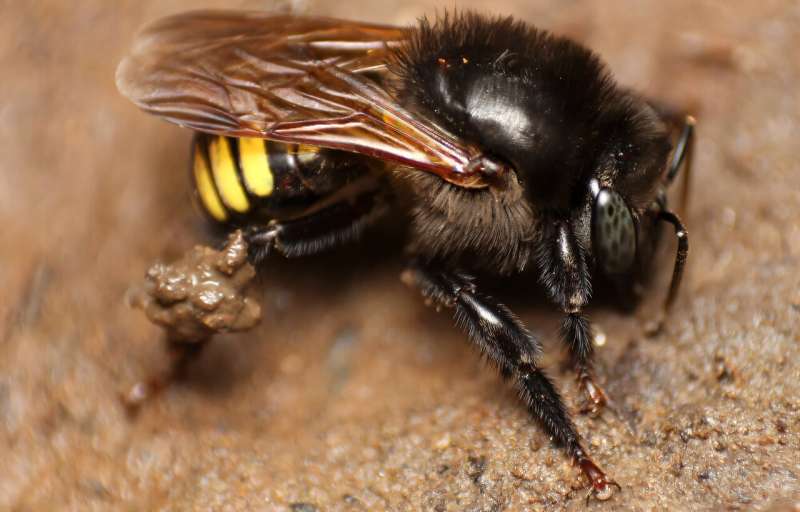
The honey used in this research comes from several native bee species, including borá (Tetragona clavipes), jataí (Tetragonisca angustula), mandaçaia (Melipona quadrifasciata), mandaguari (Scaptotrigona postica), and moça-branca (Frieseomelitta varia). Native bee honey was selected for its higher water content and lower viscosity compared to honey from European bees, making it a more effective solvent for this process. The cocoa shells used were sourced from the São Paulo State Department of Agriculture and Supply’s Comprehensive Technical Assistance Coordination Office (CATI) in São José do Rio Preto.
Initially, mandaguari honey was chosen for process optimization due to its intermediate characteristics. However, the optimized method was applicable to all the honey types analyzed. Bragagnolo explained that honey is highly sensitive to environmental factors like climate and storage conditions, suggesting that the extraction process can be adapted to various local honeys.
One of the key innovations in this research is the ultrasound-assisted extraction technique, which employs a probe that generates sound waves within a mixture of honey and cocoa shells. This process creates microbubbles that enhance the extraction of beneficial compounds by temporarily raising the temperature and breaking down the plant material. This environmentally friendly method is noted for its efficiency, as it is faster than traditional extraction techniques.
Path to Market and Sustainability
The researchers are collaborating with INOVA UNICAMP, the university’s innovation agency, to find partners interested in licensing the patented extraction process and bringing this chocolate-flavored honey to market. The study also highlights the sustainability of the product, with assessments conducted using Path2Green software, which analyzes compliance with green chemistry principles. The product scored +0.118 on a scale from -1 to +1, indicating a positive sustainability profile.
Bragagnolo envisions that small businesses or cooperatives involved in cocoa and native bee honey could expand their offerings with this value-added product, appealing to gourmet markets.
In addition to its culinary potential, the researchers are preparing further studies to explore how ultrasound affects the microbiology of honey. The method may help eliminate microorganisms that can degrade honey, potentially increasing the product’s stability and shelf life. Bragagnolo noted, “Honey from native bees usually needs to be refrigerated, matured, dehumidified, or pasteurized, unlike honey from European bees, which can be stored at room temperature.”
Future experiments will investigate other applications of this extraction method using native bee honey as a solvent, aiming to process various plant residues. The study marks a significant step toward sustainable food production and the innovative use of natural resources.
For more information, refer to the study titled “Stingless Bee Honeys As Natural and Edible Extraction Solvents: An Intensified Approach to Cocoa Bean Shell Valorization,” published in ACS Sustainable Chemistry & Engineering.