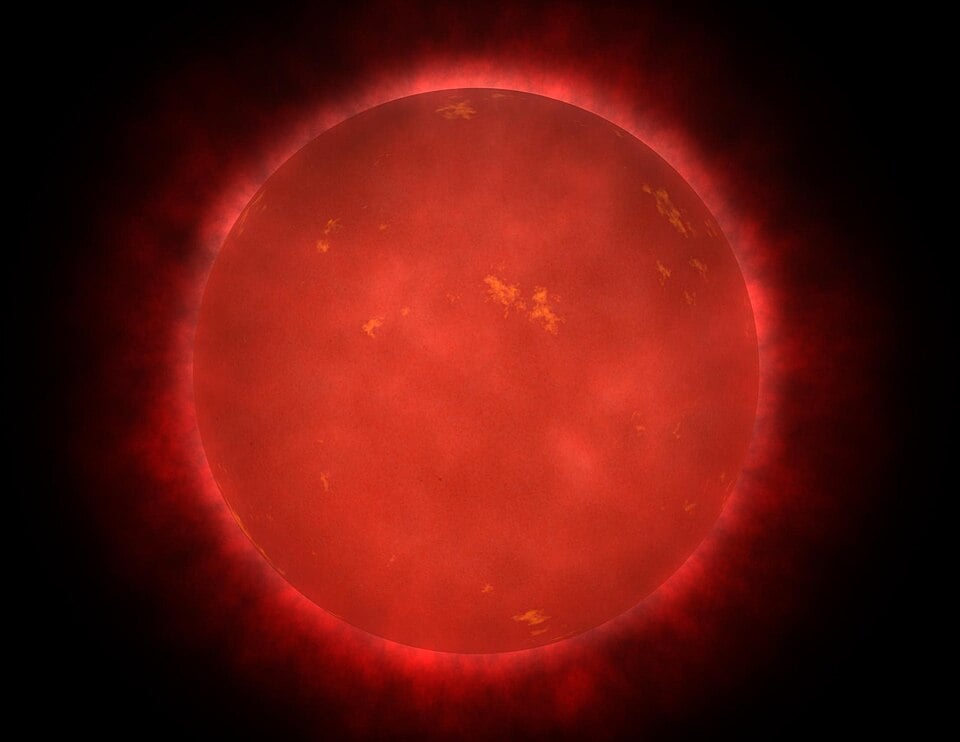
Astronomers have made significant strides in understanding the origins of carbon and oxygen with new research focused on red dwarf stars. A team led by Darío González Picos from Leiden University in the Netherlands examined high-resolution spectra of nearby M dwarf-type stars. These findings reveal the presence of rare isotopes of carbon and oxygen, enhancing our comprehension of stellar evolution and the chemical processes that shape our universe.
The research team analyzed data from 32 M dwarf stars, which are among the most prevalent star types in the Milky Way. These stars have long lifespans during their main sequence phase, where they fuse hydrogen into helium and heavier elements. The atmospheres of these stars preserve chemical signatures that reflect their evolutionary history.
Using advanced techniques, the team discovered that the identified isotopes indicated a more complex evolutionary process than previously understood. According to González Picos, “Nuclear fusion in stars is a complex process and is just the starting point of chemical evolution.” This process, known as stellar nucleosynthesis, occurs in all stars, including our own Sun, which continues to transform hydrogen into helium.
The researchers utilized data from the Canada France Hawai’i Telescope located on Mauna Kea. This data, originally gathered to search for exoplanets, was repurposed to study the isotopic composition of carbon and oxygen in the stars’ atmospheres. The team achieved unprecedented precision in measuring the ratios of these isotopes, marking a significant advancement in stellar chemistry research.
Understanding Stellar Chemistry and Its Implications
The presence of rare isotopes suggests that stars with lower chemical enrichment than the Sun possess fewer minor isotopes. Sam de Regt commented, “This finding confirms what some models of galactic chemical evolution have predicted and now provides a new tool to rewind the chemical clock of the cosmos.” Such insights contribute to a broader understanding of how elements like carbon and oxygen are formed and distributed across the universe.
The light emitted by these stars serves as a historical record of their chemical evolution. As González Picos explains, “This cosmic detective story is ultimately about our own origins, helping us to understand our place in the long chain of astrophysical events.” The study not only sheds light on the processes involved in elemental creation but also emphasizes the interconnectedness of cosmic events that have led to the formation of life on Earth.
The research represents a collaborative effort among González Picos, Ignas Snellen, and Sam de Regt, demonstrating the innovative use of existing astronomical data to explore new scientific questions. Their work highlights the potential for utilizing archived data in novel ways, expanding our knowledge of cosmic phenomena.
As scientists continue to unravel the mysteries of stellar chemistry, this research provides a deeper understanding of the origins of the elements that constitute our world. The findings underscore the significance of M dwarf stars as key players in the cosmic cycle of element formation and distribution, enhancing our comprehension of the universe’s history and our place within it.