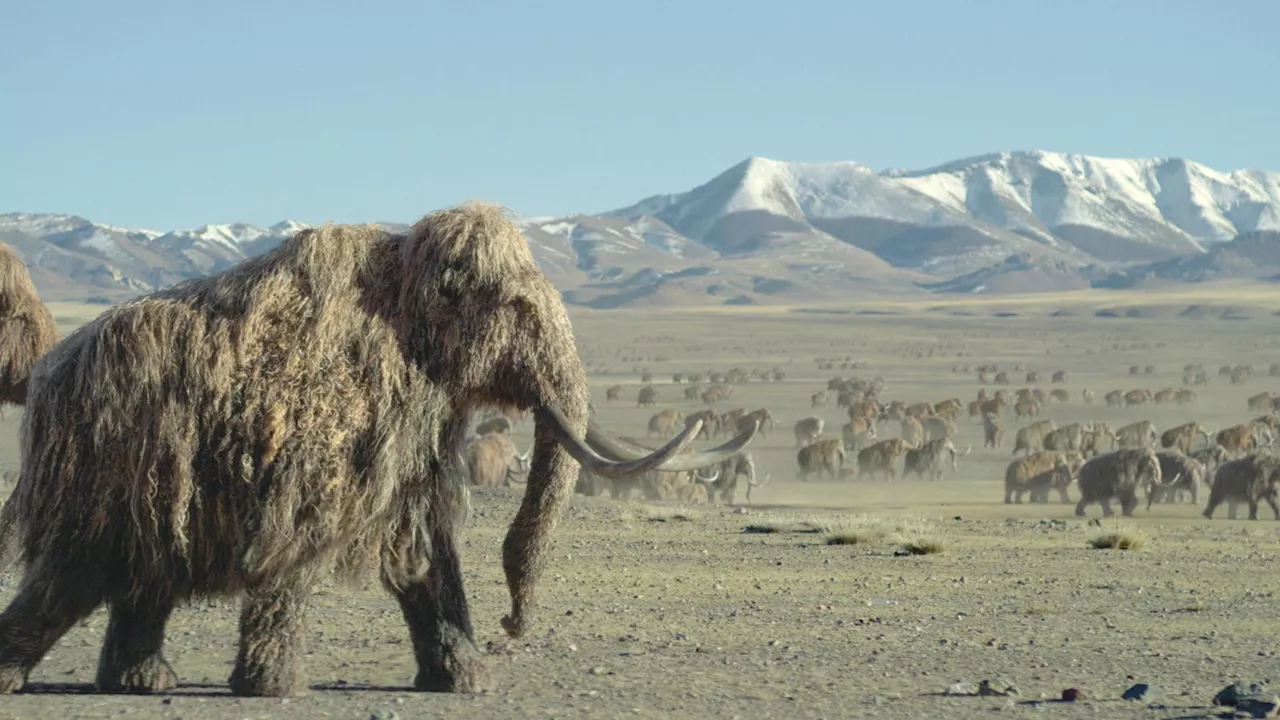
The latest installment of the acclaimed series, Prehistoric Planet: Ice Age, premiered on Apple TV+ on November 26, 2023, showcasing the Pleistocene epoch through groundbreaking technology. This five-part series intricately recreates the Ice Age, bringing to life remarkable creatures such as woolly mammoths and dire wolves while exploring the complex ecosystems of that era.
Rather than presenting a static image of the Ice Age, which is often reduced to a simplistic postcard of snow and a few animals, the series provides a dynamic landscape characterized by climate fluctuations and mass migrations. Producers opted to focus on this tumultuous period in Earth’s history due to the significant changes occurring within the natural world. According to Mike Gunton, the series’ executive producer, the Pleistocene was a time of “great turmoil… nature was having to respond in remarkable ways.”
The series emphasizes animal behavior over biological classification, aiming to immerse viewers in a world where these prehistoric animals exhibit social structures, instincts, and survival strategies. Gunton explained that he wanted audiences to feel as though they were stepping out of a time machine, witnessing real animals navigating their challenges, rather than observing a digital exhibit.
Innovative Techniques Bring Prehistoric Life to Screen
To achieve this goal, the production team relied on advanced technologies that blend natural history with industrial-grade simulation. While visual effects (VFX) serve as the backbone of the series, it is the combination of science, computation, and fieldwork that enhances its authenticity. High-resolution photogrammetry was employed to scan real landscapes across 15 countries. Additionally, drone mapping facilitated choreographed interactions, and full-scale puppets provided animators with tangible references for their work.
The techniques employed go beyond mere animation; they involve cutting-edge approaches to ensure realism. For instance, biome simulations were created to model how ecosystems adapted to rising and falling sea levels. As Gunton pointed out, sometimes the production’s needs prompted new scientific inquiries. When the team sought to understand how a giant kangaroo might pivot mid-stride or how a thylacoleo could climb, these questions were directed back to researchers, creating a valuable dialogue between artists and scientists.
A Reflection on Change and Adaptability
This season’s narrative revolves around adaptability, showcasing how certain species thrived while others perished amid shifting environments. The series draws subtle parallels to contemporary climate challenges without overtly preaching. By creating a world shaped by climatic upheavals and changing habitats, it encourages viewers to reflect on current environmental issues.
One notable technique used in this series is the seamless integration of real footage and CGI. Some scenes transition from authentic wildlife, such as the thorny devil, to their digital counterparts, maintaining viewer engagement through familiar imagery. This clever blend not only enhances the visual experience but also grounds the audience in reality.
Ultimately, Prehistoric Planet: Ice Age is more than just a visual spectacle. It serves as a reminder that the past holds critical lessons for the present. As ecosystems and landscapes transformed in response to larger forces, the series emphasizes the importance of understanding how life adapts to changing conditions. Through its innovative use of technology and storytelling, the show makes the Ice Age feel immediate and relevant, inviting audiences to consider the implications of our own time.