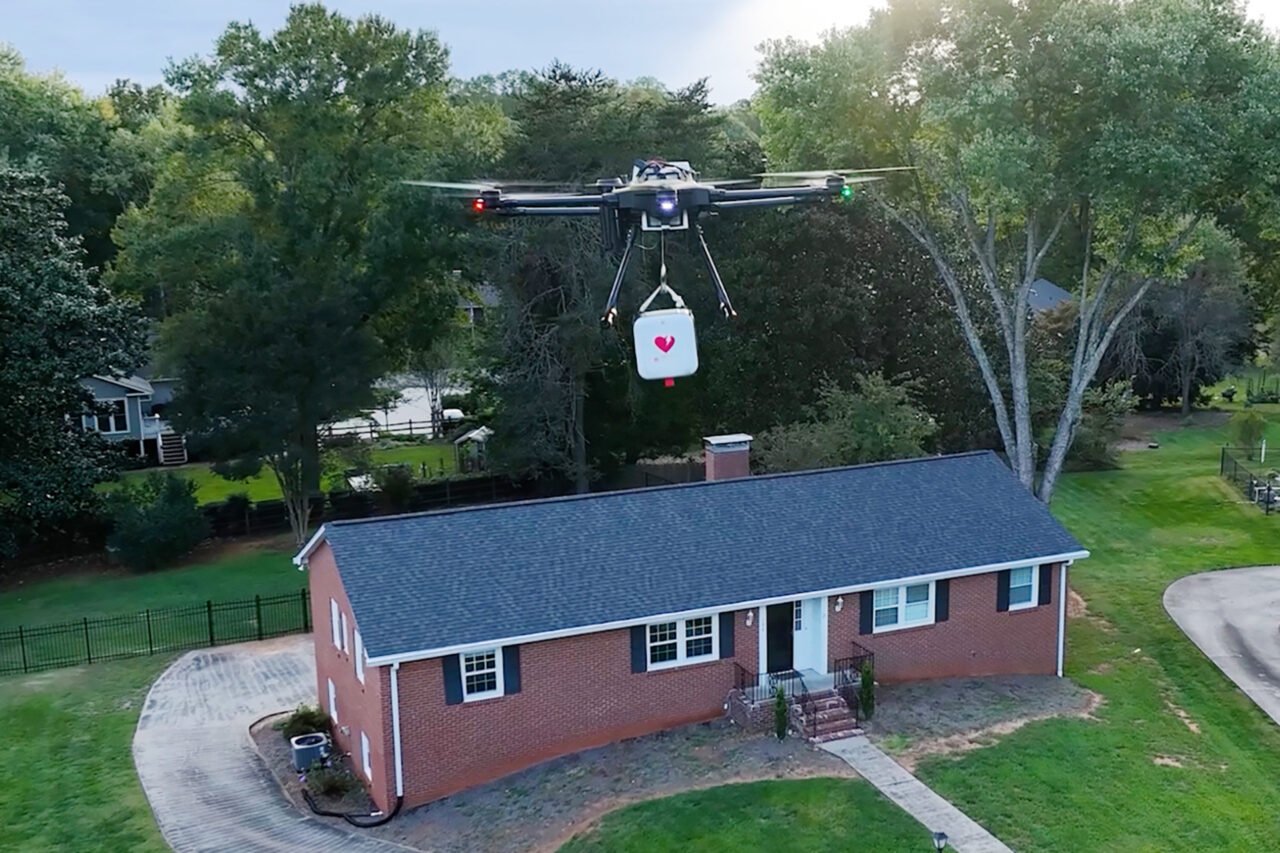
A groundbreaking initiative in Clemmons, North Carolina, has made the town the first in the United States to deploy drones equipped with automated external defibrillators (AEDs) during actual 911 emergencies. This innovative project, led by Duke Health, aims to enhance emergency medical response times for cardiac arrest cases by delivering AEDs directly to bystanders before emergency medical services (EMS) arrive.
The project utilizes drones to transport AEDs, which are crucial devices that can restore a normal heartbeat in individuals experiencing cardiac arrest. According to Monique Starks, a cardiologist at Duke Health and the study’s lead, the initiative is designed to reduce the median response time significantly. The estimated arrival time for the drones is around four minutes, compared to the typical 6- to 7-minute wait for EMS, creating a vital difference in life-threatening situations.
Bobby Kimbrough, Forsyth County Sheriff and a partner in the project, explained how the process works. “Once the call goes in, the drone is launched to that location. The person is on the phone with a 911 operator, guiding them on what to do and what to expect,” he stated. “Minutes later, the drone appears in the sky—carrying an AED.” This rapid deployment aims to provide immediate assistance to victims, enabling bystanders to use the AED as soon as it arrives.
The urgency of this initiative cannot be overstated. Starks highlighted that if a patient receives a shock from an AED within two to five minutes of cardiac arrest, their chances of survival can increase dramatically—by as much as 50 to 70%. Currently, the survival rate in the United States hovers around 10%, primarily due to delays in accessing AEDs during emergencies. She noted that only 1 to 4% of cardiac arrest cases involve a bystander using an AED, largely because these incidents often occur in private homes where immediate access to such devices is limited.
The Clemmons project aims to change this dynamic by empowering bystanders to act swiftly. “We want to get that AED to the bystander so that they can rapidly shock a cardiac arrest patient to help them survive,” Starks said. The ongoing study will also measure the potential increase in AED usage rates among community members, further contributing to the effort to save lives.
This initiative reflects the broader potential of technology to enhance emergency medical response. While the rapid advancement of such technology may raise concerns, the focus remains on its life-saving capabilities. As the study progresses, it could pave the way for similar programs across the country and beyond, proving that innovative solutions can make a significant difference in urgent healthcare situations.