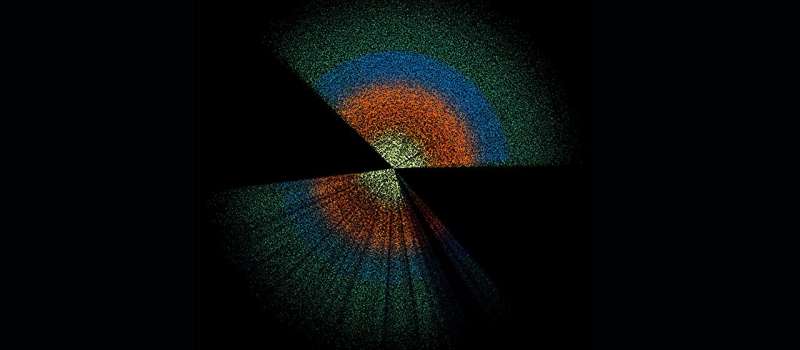
Researchers at the University of California, San Francisco have developed a novel technique to improve the quality of images captured using cryogenic electron tomography (cryoET), a method crucial for visualizing the intricate structures within cells. This advancement promises to enhance the understanding of cellular architecture at an unprecedented level of detail, achieving near-atomic resolution in three-dimensional representations.
CryoET involves shooting electrons through frozen cellular samples, producing images that allow for the reconstruction of a cell’s internal architecture. The process has traditionally faced challenges due to the complexity of capturing fine details of subcellular components. The new combined approach leverages advanced imaging techniques to yield clearer and more accurate cell slices.
Innovative Methodology Yields Results
The refined methodology incorporates both hardware enhancements and sophisticated software algorithms. By optimizing the electron beam and improving sample preparation, researchers can now achieve significantly better image clarity. This breakthrough allows scientists to visualize structures such as organelles and protein complexes in greater detail than previously possible.
According to the research team, the new technique not only improves image resolution but also increases the speed at which researchers can analyze samples. This is particularly vital for studies in cellular biology and medicine, where understanding the precise arrangement of cellular components can lead to insights into disease mechanisms and potential therapeutic targets.
Implications for Future Research
The implications of these advancements are vast. Enhanced imaging capabilities could facilitate groundbreaking research in various fields, including neurobiology and cancer research. As researchers strive to decode the complexities of cell function, tools that provide clearer insights become essential.
The study, published in September 2023, highlights the importance of interdisciplinary collaboration in scientific innovation. By combining expertise in cryoET with advancements in imaging technology, the team has set a new standard for cellular imaging that could significantly impact future biological research.
This development marks a crucial step forward in the quest to understand life at the cellular level. With ongoing advancements in imaging techniques, researchers are better equipped to explore the fundamental processes that govern health and disease.