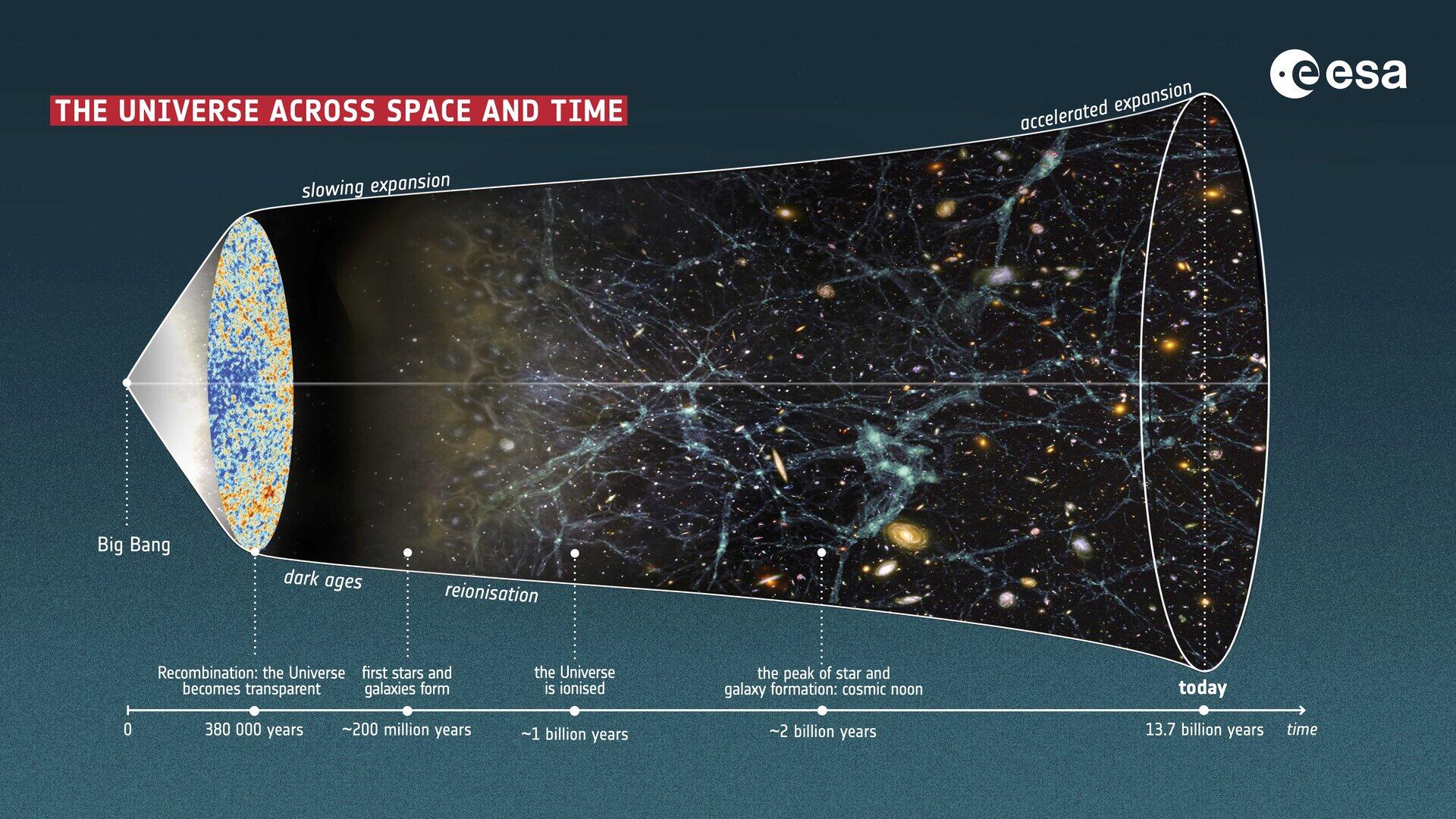
Recent research conducted by astronomers indicates that the universe is experiencing a slowdown in its expansion. The study, led by Professor Young-Wook Lee from Yonsei University in South Korea, suggests that the phenomenon known as the “Hubble residual” reflects this deceleration and is supported by strong statistical evidence.
The findings challenge long-held beliefs regarding the nature of dark energy, the mysterious force that has been driving the accelerated expansion of the universe since its discovery approximately 27 years ago. According to Professor Lee, “Our study shows that the universe has already entered a phase of decelerated expansion at the present epoch and that dark energy evolves with time much more rapidly than previously thought.”
Implications for Cosmology
If confirmed, these results could represent a significant shift in the understanding of cosmology. The implications are profound, as they may alter the foundational principles that have guided scientific inquiry into the universe’s expansion. The concept of an accelerating universe, which has dominated cosmology for nearly three decades, would be called into question.
The research highlights the importance of examining the universe’s past and present dynamics in a new light. By analyzing the data associated with Hubble residuals, the study provides a clearer picture of the universe’s age and expansion rate. This understanding could lay the groundwork for future investigations into the nature of dark energy and its role in cosmic evolution.
The Future of Cosmic Research
As the scientific community digests these findings, further validation will be essential to confirm the study’s assertions. Cosmologists will likely engage in extensive discussions and analyses to evaluate the robustness of the data and its implications. The evolving nature of dark energy, as suggested by the research, raises new questions about its properties and effects over time.
The potential paradigm shift highlighted by this study invites researchers to reconsider existing models of the universe and prompts a re-evaluation of observational strategies. As the quest to understand the cosmos continues, the findings may inspire a new wave of exploration and inquiry into the fundamental mechanics of the universe.
In conclusion, the research spearheaded by Professor Lee and his team represents a critical juncture in cosmological studies. As scientists work to confirm these findings, the future of our understanding of the universe hangs in the balance.