A recent study suggests that the expansion of the universe may be slowing down, challenging the long-held belief that it is accelerating due to dark energy. The findings were published on November 6, 2025, in the journal Monthly Notices of the Royal Astronomical Society. This research could fundamentally alter our understanding of cosmology and the mysterious forces that govern the universe.
For nearly thirty years, astronomers have theorized that dark energy, a force accounting for approximately 70 percent of the universe, is causing galaxies to move apart at an ever-increasing pace. This idea was primarily based on observations of distant type Ia supernovae, leading to the discovery that earned the 2011 Nobel Prize in Physics. However, the new research led by Professor Young-Wook Lee of Yonsei University in South Korea challenges this paradigm.
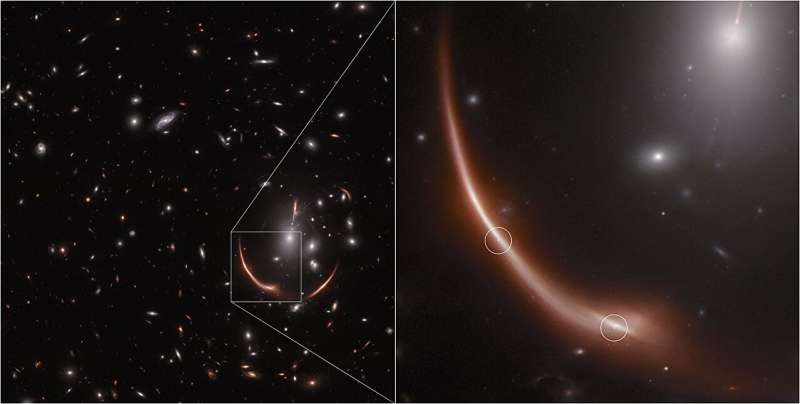
The study reveals that type Ia supernovae, which have been regarded as reliable “standard candles” for measuring cosmic distances, may be affected by the age of their progenitor stars. The researchers analyzed data from 300 host galaxies and found a significant age-related effect: supernovae from younger stars appeared fainter, while those from older stars appeared brighter. This discrepancy was confirmed with an impressive confidence level of 99.999 percent.
By correcting for this age bias, the data no longer conformed to the standard cosmological model that assumes a constant form of dark energy. Instead, it aligned more closely with a newer model proposed by the Dark Energy Spectroscopic Instrument (DESI) project, which suggests that dark energy changes over time. When combined with data from baryonic acoustic oscillations (BAO) and the cosmic microwave background (CMB), the evidence indicates that the universe has entered a phase of decelerated expansion.
Professor Lee stated, “Our study shows that the universe has already entered a phase of decelerated expansion at the present epoch and that dark energy evolves with time much more rapidly than previously thought.” He emphasized that if these findings are confirmed, it would represent a significant shift in our understanding of cosmology since the discovery of dark energy.
The research team is currently conducting an “evolution-free test” to further validate their conclusions. This involves examining only supernovae from young, coeval galaxies, which have stars of similar ages, across various redshift ranges. The early results are already supporting their primary findings.
In the next five years, the Vera C. Rubin Observatory, equipped with the world’s most powerful digital camera, is expected to play a crucial role in this ongoing research. It will enable the discovery of over 20,000 new supernova host galaxies, allowing for precise age measurements that could provide a definitive test of supernova cosmology.
The implications of the study are profound. After the Big Bang, around 13.8 billion years ago, the universe expanded rapidly before gravitational forces began to slow it down. Approximately nine billion years after its inception, scientists observed that expansion began to accelerate again, attributed to dark energy. The new findings raise important questions about this force and its role in the universe’s future.
Despite decades of exploration, dark energy remains one of the greatest mysteries in science. Last year, data from the DESI project hinted that dark energy’s influence might have changed over time, a notion now gaining traction with the latest research from Yonsei University. As astronomers utilize advanced instruments like DESI and the Vera C. Rubin Observatory, they hope to finally uncover the true nature of dark energy and its impact on the cosmos.