Research led by Dr. Matías Medina and colleagues has uncovered significant insights into the craft production of bone arrow points in prehistoric Argentina. Their study, published in the International Journal of Osteoarchaeology, sheds light on the manufacturing techniques used by communities in the Sierras de Córdoba during the Late Prehispanic Period, approximately 1220 to 330 cal BP. This research addresses a long-standing gap in understanding how these ancient populations organized their daily lives and tool-making practices.
Understanding the Late Prehispanic Period in Argentina has been challenging due to limited archaeological evidence. Communities at that time practiced mixed economies, blending hunting, gathering, and farming. This adaptability allowed them to thrive in seasonal camps, but the materials they left behind were often sparse and difficult to analyze. Dr. Medina notes that comprehensive studies on bone technology have been rare, particularly in South America, where many findings were reduced to simple descriptions in site reports.
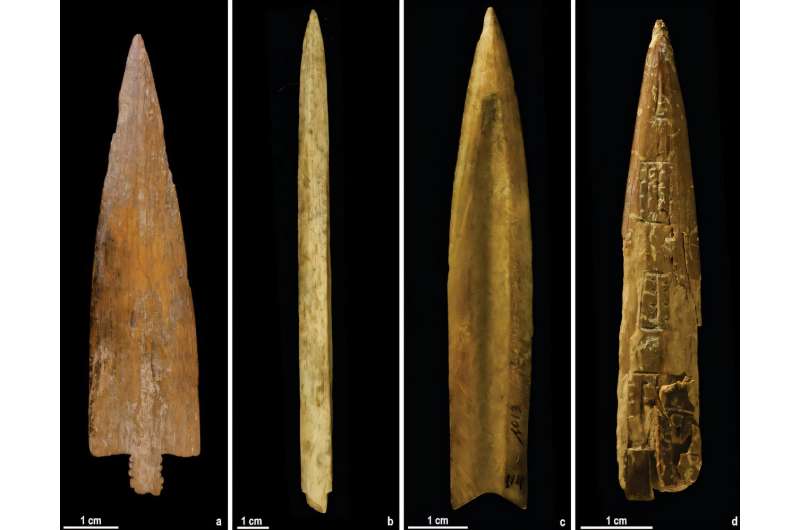
To fill this knowledge gap, the research team examined 117 bone artifacts from the Museo Arqueológico Numba Charava. These artifacts were collected throughout the 20th century from various sites in the Southern Punilla Valley. The primary material identified was bone from the guanaco, a species hunted for sustenance. The analysis revealed that the bones were primarily metapodia, which were initially split and then shaped into arrowheads through a detailed process involving grinding and scraping.
The findings indicate that the crafting of bone arrow points was not just functional but also had social significance. While most points were plain, a few exhibited incised decorations, which were rare. Dr. Medina emphasized that these decorative features likely served to convey social identity and cultural affiliation, suggesting that these tools were primarily used in warfare rather than for hunting.
The implications of this research extend beyond the immediate findings. The study illustrates how tool production in the Southern Punilla Valley was organized, suggesting a familial transmission of knowledge and skills. Each point was unique, reflecting individual craftsmanship, yet the overall production process was standardized.
Dr. Medina advocates for further comparisons with neighboring regions, such as the Low Paraná and Uruguay River floodplains, to better understand the evolution of bone technology across different environments. Such comparisons could reveal how variations in raw material availability influenced the manufacturing techniques and subsistence strategies in these areas.
This research not only contributes valuable information about the prehistoric communities of Argentina but also lays the groundwork for future investigations into ancient craft production practices. The meticulous work of Dr. Matías Medina and his colleagues highlights the importance of understanding our past to appreciate the complexities of human adaptation and social organization.