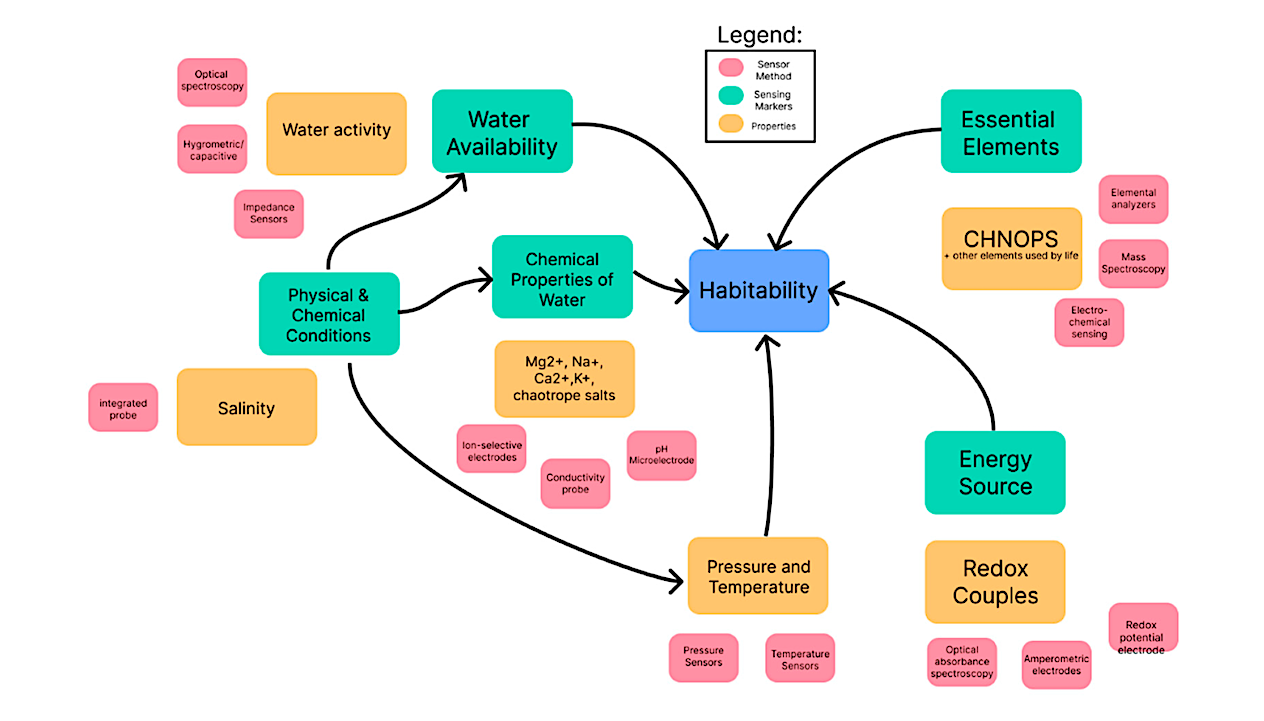
Research into the potential for life beyond Earth has taken a significant step forward with the design of a bioinspired integrated instrument aimed at assessing the habitability of other planetary bodies. This instrument, referred to as a ‘Total Habitability Instrument’, seeks to measure essential indicators necessary for life, including liquid water, CHNOPS elements (carbon, hydrogen, nitrogen, oxygen, phosphorus, and sulfur), nutrients, and energy supplies.
Astrobiology, the scientific field dedicated to exploring the conditions that support life in the universe, stands to benefit from this innovative approach. The instrument combines various sensing technologies into one compact device, enhancing efficiency and streamlining data collection during planetary exploration missions.
Key Features of the Total Habitability Instrument
The Total Habitability Instrument is designed to assess multiple environmental factors that are crucial for determining whether a planetary environment could support life. By focusing on liquid water, researchers can confirm the presence of this critical resource, which is fundamental for all known life forms.
Moreover, the inclusion of CHNOPS elements is vital, as these elements form the building blocks of biological molecules. The instrument will also be capable of detecting other essential nutrients, facilitating a comprehensive analysis of the environment’s overall habitability.
Energy supplies, another critical aspect, will be evaluated to ascertain whether potential life forms could sustain themselves in the given environment. This multifaceted approach is expected to yield more accurate and reliable data than previous methods, which often relied on separate instruments for each measurement.
Implications for Future Research
The development of the Total Habitability Instrument represents a promising advancement in the field of astrobiology. As space missions to Mars and beyond become more ambitious, the ability to gather extensive environmental data from a single device will significantly enhance the efficiency of these missions.
According to experts in the field, the integration of multiple sensing technologies into one instrument could reduce mission costs and increase the likelihood of successful data collection. This advancement aligns with ongoing efforts to explore whether other planets or moons within our solar system, such as Europa or Enceladus, could harbor life.
As research progresses, the effectiveness of the Total Habitability Instrument will be rigorously tested in various environments, potentially leading to its deployment in future space missions. The continued exploration of other planetary bodies could ultimately provide insights into the origins of life on Earth and the potential for life elsewhere in the universe.
In conclusion, the creation of a bioinspired instrument capable of assessing habitability signals a significant leap in our understanding of astrobiological potential across the cosmos. As scientists continue to innovate and refine technologies for planetary exploration, the dream of discovering life beyond Earth may become a reality.