Ph.D. candidate Federico Capannoli recently defended his thesis on the dynamics of opinion formation among large groups, highlighting the mathematical underpinnings of how opinions evolve. The defense took place on November 19, 2025, at Leiden University, where Capannoli has been engaged in groundbreaking research on complex networks.
Capannoli’s work examines how opinions can be modeled mathematically, a field that extends beyond sociology into areas like biology and epidemiology. “Many processes in real life are too complex to analyze exactly as they are,” he explains, emphasizing that mathematical models can simplify these complexities, allowing for a better understanding of various phenomena.
Understanding Social Interactions as Networks
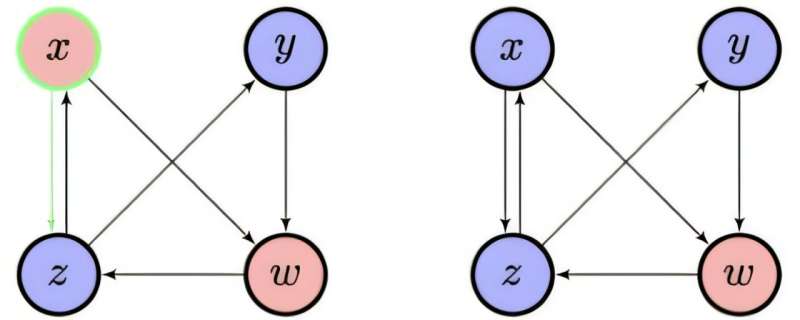
In his research, Capannoli visualizes individuals as dots on a network, with their opinions represented by different colors. Connections between individuals, depicted as lines, illustrate friendships and interactions within social groups. This framework enables a clearer analysis of opinion dynamics, particularly during influential moments like elections.
“The recent elections are a good example,” Capannoli notes. As individuals discuss their political preferences, the colors of the dots—their opinions—shift over time. His theoretical model predicts that, eventually, a shared consensus emerges. The research delves into how long it takes to reach this consensus and identifies key factors that influence this timeframe.
Capannoli’s findings indicate that the time required to achieve consensus is directly proportional to the number of individuals involved. Moreover, the number of connections among these individuals significantly impacts the speed of opinion convergence. For instance, if a few individuals have extensive networks, their influence can lead to quicker consensus among the broader group.
The Role of Bias and Polarization in Opinion Formation
Capannoli’s research also addresses how bias influences opinions, particularly during electoral campaigns. He models scenarios where conversations between two individuals may lead one to adopt a biased viewpoint, potentially due to propaganda. “If this bias is high, the time to reach consensus is cut drastically,” he explains. In contrast, a lower bias results in minimal impact on consensus timing.
The complexities of social interactions extend beyond mere opinion shifts. Capannoli highlights the potential for friendships to dissolve when individuals hold differing views or for new connections to emerge from discussions. This co-evolution of opinions and relationships complicates the study of social networks, as it can lead to polarization, where groups become isolated and cease to communicate with one another.
Reflecting on the implications of his research, Capannoli expresses concern about the dangers of social media. “It’s quite scary if you think about it,” he remarks. “It keeps you in your bubble. It’s important to interact with other points of view.”
Leiden University stands at the forefront of this research area, particularly under the guidance of experts like Frank den Hollander and Rajat Subhra Hazra. Their work aims to further unravel the complexities of how social networks shape opinions, providing valuable insights into the dynamics of human interaction.
Through his research, Capannoli contributes to a deeper understanding of the mathematical frameworks that can explain complex social phenomena, shedding light on the intricate relationships between opinion formation, bias, and polarization. As society grapples with increasingly divided sentiments, such studies become vital in fostering dialogue and understanding among diverse perspectives.